Which Tumbler Sleeve with Handle Works Best for Corporate Promotional Gifts?
Picking the wrong promotional gift wastes your budget and your brand's reputation. Most companies get it wrong. Here is how to get it right.
A silicone tumbler sleeve with handle is one of the strongest choices for corporate promotional gifts. It is practical, durable, and gets used every day. Daily use means daily brand exposure. That is what makes it worth the spend.
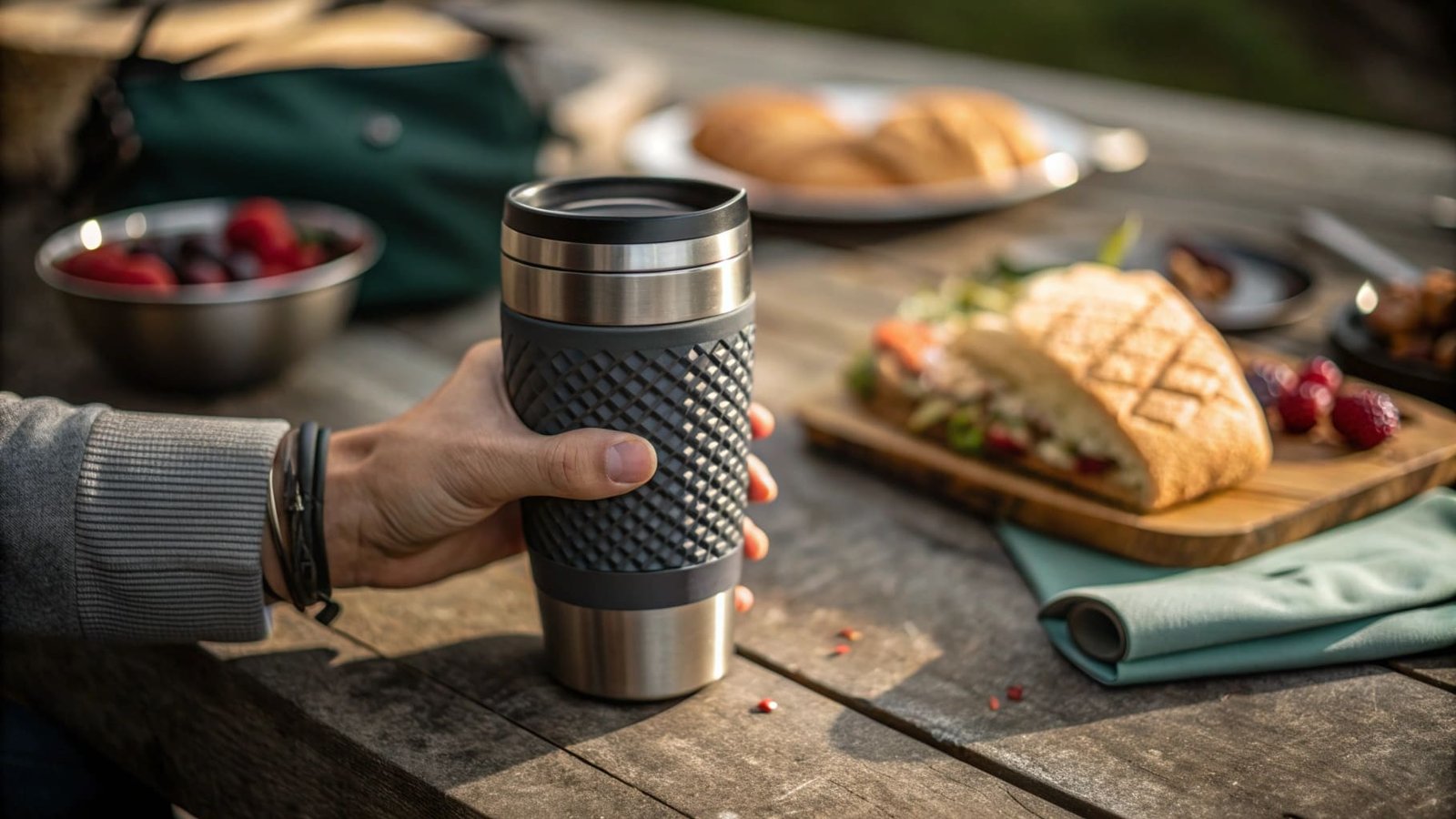
Corporate gifting has changed. Buyers are no longer happy with pens and notepads. They want gifts that people actually use. Drinkware accessories have moved to the top of that list1, and for good reason. A tumbler sleeve goes everywhere with the person who owns it. It sits on their desk, travels in their bag, and ends up in photos. Your brand goes with it. The question is not whether a tumbler sleeve works as a gift. The question is which one works best.
Are Personalized Tumblers Good Gifts?
Most promotional gifts end up in a drawer. Personalized tumblers do not. The difference is real, and it matters for your budget.
Yes, personalized tumblers are excellent corporate gifts. They are used daily, which keeps your brand visible for a long time.2 A customized tumbler sleeve with a handle adds function and a personal touch. That combination makes recipients more likely to keep and use the product, giving your brand consistent exposure over months or even years.
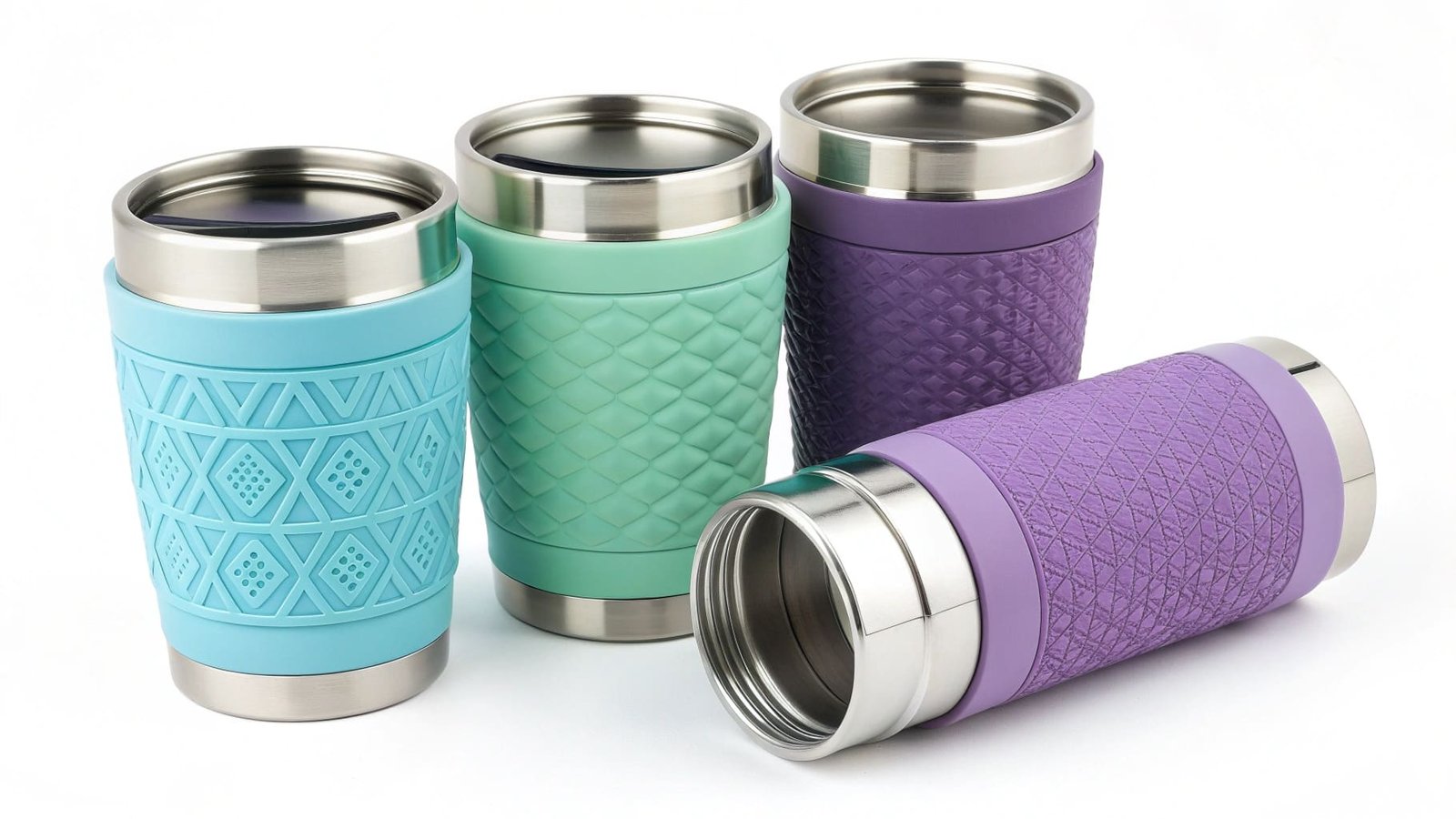
A generic gift says nothing about your company. A personalized tumbler sleeve says that you paid attention. It shows that you put thought into what the recipient actually needs. That emotional connection is worth more than most marketing teams realize.
The key word here is "functional." A tumbler sleeve solves real problems. It stops a hot cup from burning your hand. It keeps a cold drink from leaving water rings on a desk. It gives you a better grip when you are rushing between meetings. These are problems that professionals face every single day. When your branded product solves those problems, the person using it does not think of it as a promotional item. They think of it as a useful tool that happens to carry your logo.
Why Silicone Outperforms Other Materials
| Material | Durability | Customization Options | Feel in Hand | Dishwasher Safe |
|---|---|---|---|---|
| Silicone | High | Deboss, screen print, color match | Soft, non-slip | Yes |
| Neoprene | Medium | Screen print only | Spongy, absorbs odors | No |
| Fabric | Low | Embroidery, screen print | Rough, wears quickly | No |
Silicone holds its shape and color far better than neoprene or fabric.3 For a corporate gift that carries your brand, this matters. A sleeve that looks worn after three months sends the wrong message. A silicone sleeve that still looks sharp after two years sends the right one.
I have worked with buyers who switched from fabric sleeves to silicone after their first large promotional run. The feedback from recipients was immediate. The product felt premium. That feeling transfers directly to how people perceive the brand behind the gift.
Customization on silicone also holds up better over time.4 A debossed logo does not fade. A Pantone-matched color does not wash out. These details matter when you are investing in long-term brand visibility.
What Is the Best Insulated Tumbler on the Market?
There are hundreds of tumblers on the market. Choosing the wrong one for your corporate program is an expensive mistake.
The best insulated tumbler for a corporate gifting program is one that pairs well with a high-quality silicone sleeve. Brands like YETI, Stanley, and Hydro Flask are widely recognized and trusted. A silicone sleeve with handle designed to fit these tumblers adds grip, protection, and branding space without modifying the tumbler itself.
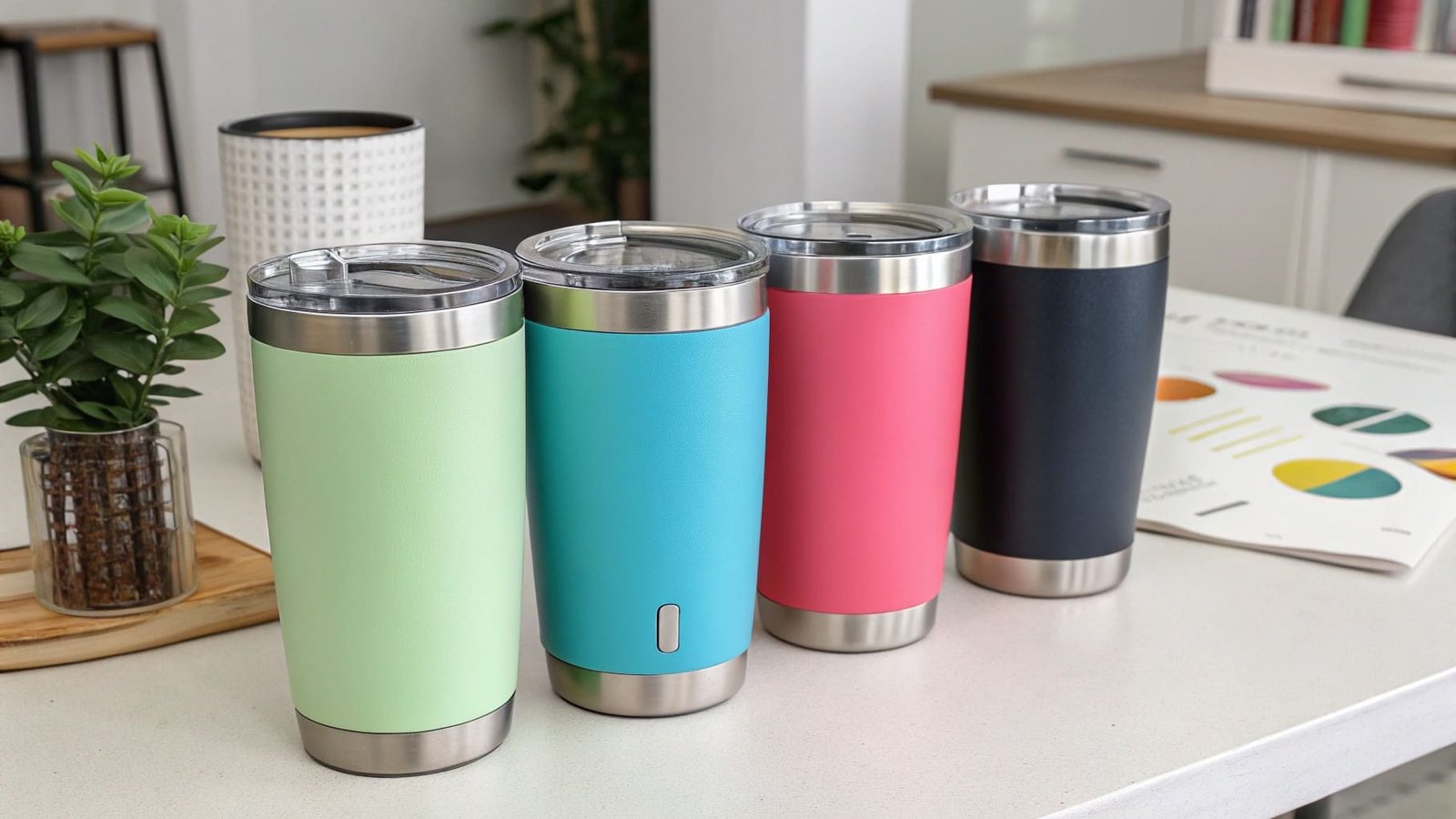
The "best" tumbler is not a single answer. It depends on your use case, your audience, and your budget. However, there are clear criteria that any procurement team should use when making this decision.
How to Evaluate Tumblers for Corporate Gifting
Temperature Performance
Premium silicone sleeves handle temperatures from -40°C to 230°C.5 That range covers both hot coffee and iced drinks. It also means the sleeve protects office furniture from condensation. That is a small detail, but professionals notice it. They keep products that respect their workspace.
Compatibility with Popular Brands
Not all sleeves fit all tumblers. Before placing a bulk order, confirm that the sleeve fits the tumbler you plan to use. A mismatch in sizing leads to a loose, unprofessional-looking product that recipients will not use.
Certification and Food Safety
For corporate buyers, this is non-negotiable. The sleeve will be in contact with beverages. It must carry food-grade certification. Request documentation before finalizing any order. Suppliers who cannot provide clear certification paperwork are a risk you do not need.
| Evaluation Criteria | Why It Matters | What to Look For |
|---|---|---|
| Food-grade certification | Direct beverage contact | FDA or LFGB documentation |
| Heat resistance | Hot and cold beverage use | -40°C to 230°C range |
| Grip ergonomics | Daily handling comfort | Handle design and sleeve texture |
| Brand compatibility | Fit and appearance | Sizing specs for YETI, Stanley, Hydro Flask |
| Logo durability | Long-term brand visibility | Deboss or color-match options |
I have seen procurement officers receive beautiful-looking samples, only to discover later that the certification paperwork was either missing or fraudulent. This is one of the most common pain points in cross-border sourcing. Always verify documentation independently. Request third-party test reports where possible.
What Is the Best Way to Personalize Tumblers?
Personalization done wrong wastes money and looks cheap. Personalization done right turns a sleeve into a brand statement.
The best way to personalize a silicone tumbler sleeve depends on your order size and your branding goals. For smaller runs, laser engraving gives clean, permanent results. For larger orders, Pantone-matched custom molding and debossed or embossed logos deliver the best combination of visual impact and long-term durability.
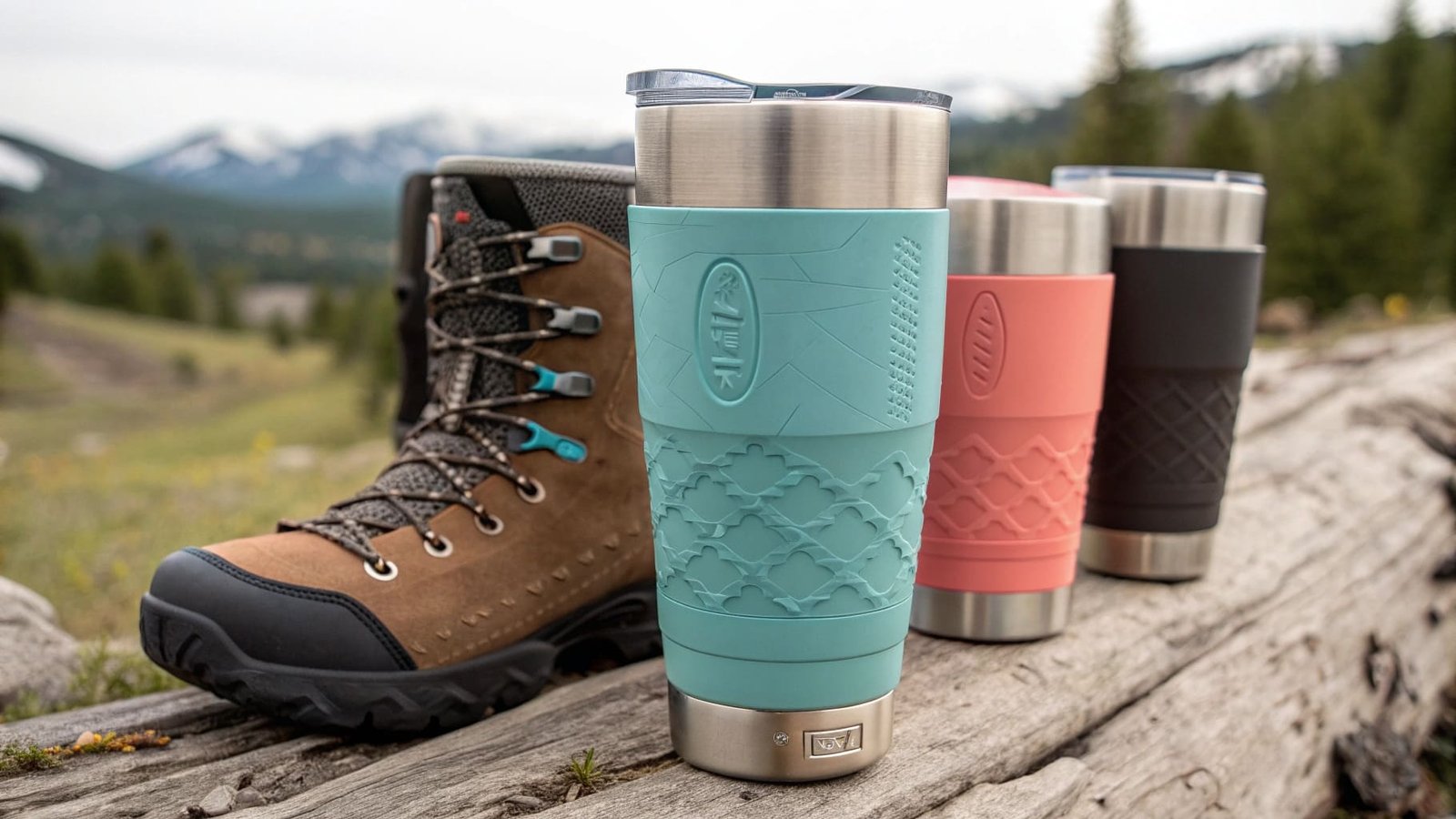
Corporate buyers often ask me which method they should choose. My answer is always the same: test before you commit. Request samples of each method and run them through at least ten dishwasher cycles. What you see after that test is what your recipients will see six months into using the product.
Breaking Down the Main Personalization Methods
Laser Engraving
Laser engraving removes a thin layer of the silicone surface to reveal the design beneath.6 The result is clean and precise. It handles complex logos and fine text well. The contrast is high, and the finish does not fade or peel. This method works best for orders where design detail is the priority.
Screen Printing
Screen printing applies ink directly to the sleeve surface. It allows for full-color designs, which makes it a strong choice when color accuracy matters. The trade-off is durability. Screen-printed designs can wear over time, especially with heavy daily use or frequent washing.7 For products meant to last two or more years, this method carries more risk.
Debossed and Embossed Logos
Debossing presses the design into the surface. Embossing raises it. Both methods create a tactile finish that feels premium in the hand. Neither fades or wears. For corporate gifts, this is often the best choice. It adds a physical dimension to the brand that screen printing cannot replicate.
Pantone-Matched Custom Molding
This is the highest-end option. The sleeve itself is produced in a color that matches your corporate identity exactly. The result is a product where the brand is built into the material, not applied to the surface. Minimum order quantities are higher, but the branding impact is stronger than any other method.
| Method | Best For | Durability | Min Order | Color Options |
|---|---|---|---|---|
| Laser Engraving | Complex logos, fine text | Very high | Low | Single tone |
| Screen Printing | Full-color designs | Medium | Medium | Full color |
| Debossed / Embossed | Tactile premium feel | Very high | Medium | Limited |
| Pantone-Matched Molding | Full brand identity programs | Highest | High | Exact match |
The choice between these methods comes down to three things: your budget, your order volume, and how long you want the branding to last. For a one-time event, screen printing may be sufficient. For an ongoing gift program that represents your brand over years, debossed or Pantone-matched options are the stronger investment.
One thing I always tell buyers is this: the personalization method you choose reflects your brand. A faded logo on a cheap sleeve communicates one thing. A clean, permanent debossed mark on a food-grade silicone sleeve communicates something very different. Your recipients will feel that difference every time they pick up their drink.
Conclusion
Silicone tumbler sleeves with handles are practical, customizable, and durable. They solve real problems and keep your brand visible every single day.
-
"137+ Promotional Product Statistics: What Works, What Doesn't, and ...", https://www.giftafeeling.com/pages/promotional-product-statistics-2026?srsltid=AfmBOopfSmmTteA8iBd3h9DJ9J_YNGpBe9l7JRmaFEpD0WeJ3SIxHMkb. Industry survey data on promotional-product categories identify drinkware as a frequently selected and retained category, providing contextual support for its prominence in corporate gifting programs. Evidence role: statistic; source type: institution. Supports: An industry association or market report should show that drinkware is a leading or commonly selected promotional-product category.. Scope note: Category-level data may refer to drinkware broadly and not specifically to silicone tumbler sleeves. ↩
-
"Promotional Product Effectiveness - Brand Guidelines", https://brand.missouri.edu/apply-the-brand/apparel-merchandise-promo-items/promotional-product-effectiveness/. Research on promotional-product impressions indicates that items retained for regular use generate repeated brand exposures over their useful life, a finding that is contextually applicable to drinkware used in daily routines. Evidence role: general_support; source type: research. Supports: A promotional-products study should support that frequently used items, including drinkware, generate repeated impressions and longer-term brand recall.. Scope note: The source may support repeated exposure for promotional products generally rather than proving daily use for every personalized tumbler. ↩
-
"Color stability of thermochromic pigment in maxillofacial silicone", https://pmc.ncbi.nlm.nih.gov/articles/PMC3675297/. Materials references describe silicone rubber as having strong resistance to heat, weathering, and aging, which provides a mechanistic basis for better long-term shape and appearance retention than many textile or elastomer alternatives. Evidence role: mechanism; source type: research. Supports: A materials reference should support silicone rubber’s resistance to heat, aging, weathering, and deformation compared with common elastomers or textiles.. Scope note: This would be contextual materials evidence and may not directly compare finished tumbler sleeves under identical use conditions. ↩
-
"Effects of Surface Roughness on Direct Plasma Bonding between ...", https://pmc.ncbi.nlm.nih.gov/articles/PMC9753519/. Materials and manufacturing literature on silicone marking distinguishes integral or surface-modifying methods, such as laser marking and molded relief, from applied inks, supporting the view that non-coating methods can better resist fading or peeling under wear. Evidence role: mechanism; source type: research. Supports: A materials or manufacturing source should explain why markings formed by engraving, molding, embossing, or debossing are less prone to surface wear than printed coatings.. Scope note: The evidence would support the mechanism of durability, not the performance of every supplier’s customization process. ↩
-
"Characterization of Mechanical and Dielectric Properties of ...", https://pmc.ncbi.nlm.nih.gov/articles/PMC8197861/. Materials-property references commonly report silicone rubber as retaining useful elastomeric properties across a broad temperature range that can extend from approximately -40°C to above 200°C, supporting the stated heat- and cold-resistance range for suitable grades. Evidence role: mechanism; source type: research. Supports: A materials science source should document the typical operating or service-temperature range of silicone rubber.. Scope note: Exact limits depend on silicone formulation, additives, thickness, and test conditions. ↩
-
"Laser engraving - Wikipedia", https://en.wikipedia.org/wiki/Laser_engraving. Studies of laser marking and ablation describe how focused laser energy can remove or modify the surface of polymeric materials, including elastomers, providing technical support for the description of laser engraving on silicone. Evidence role: mechanism; source type: paper. Supports: A paper or technical source should describe laser ablation or laser marking of silicone rubber surfaces.. Scope note: Specific appearance and depth depend on laser type, power settings, pigments, and silicone formulation. ↩
-
"The Experimental Comparison of Abrasion Resistance of Extruded ...", https://pmc.ncbi.nlm.nih.gov/articles/PMC11990594/. Research on printing silicone rubber notes that ink adhesion and surface treatment are key determinants of print durability, supporting the caution that surface-printed designs may wear under repeated handling or washing. Evidence role: mechanism; source type: research. Supports: A technical source should explain that printed inks are surface coatings whose durability depends on adhesion and resistance to abrasion or washing.. Scope note: The evidence is process-dependent; high-quality inks and surface treatments can improve durability. ↩