What Are Standard O-Ring Dimensions for Custom Water Bottle Manufacturing?
You ordered a bulk shipment of custom water bottles. They looked perfect. Then the leaks started. The O-rings were the wrong size, and no one caught it in time.
Standard O-ring dimensions for custom water bottle manufacturing are defined by three measurements: Inner Diameter (ID), Outer Diameter (OD), and Cross-Section (CS). For most water bottle applications, the ID ranges from 40mm to 80mm, and the CS falls between 2mm and 4mm depending on the lid and groove design.
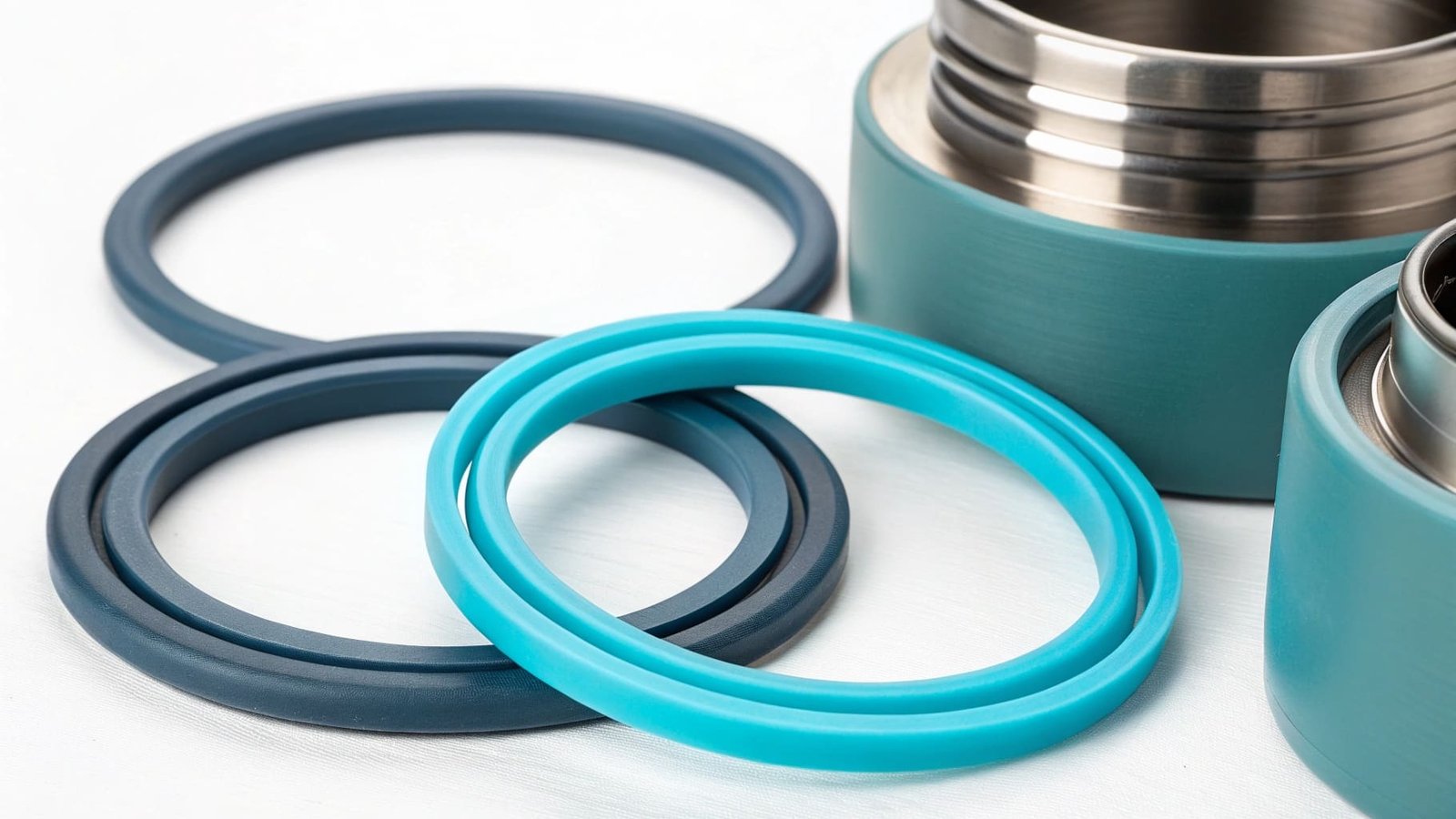
Getting the O-ring size right is one of the most overlooked steps in custom water bottle sourcing. Most buyers focus on material and color. They forget that a 0.5mm error in cross-section can turn a premium product into a leaking liability. I have worked with B2B clients in the drinkware space for over a decade, and this mistake comes up more often than it should. The sections below break down exactly what you need to know before you place your next order.
What Are the Three Dimensions Used to Determine O-Ring Sizes?
You request an O-ring for your custom bottle lid. The supplier asks for the size. You send the inner diameter. The parts arrive and the seal fails. That one missing number cost you time, money, and a client relationship.
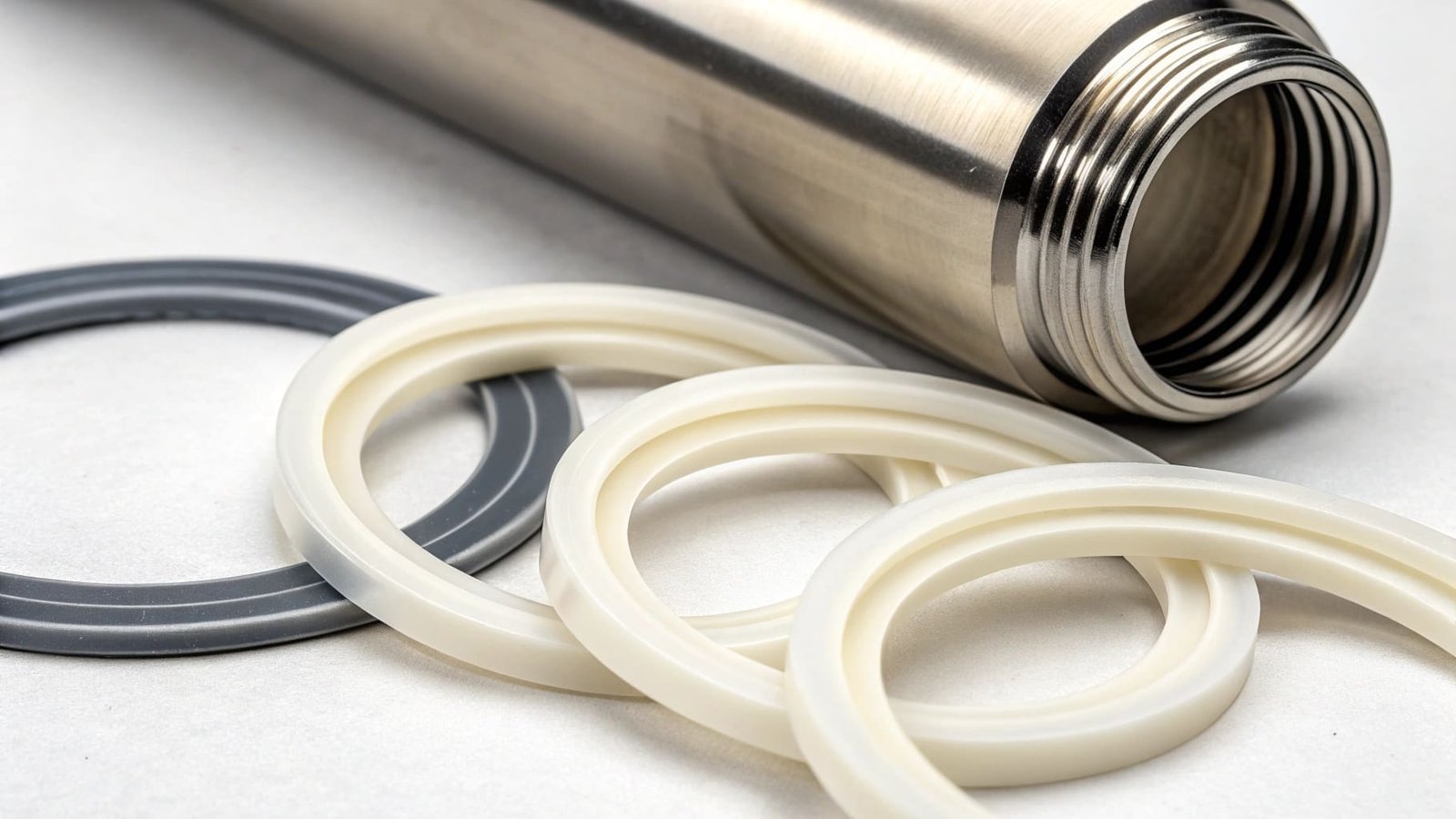
The three dimensions that define an O-ring are Inner Diameter (ID), Outer Diameter (OD), and Cross-Section (CS). ID is the diameter of the hollow center. OD is the full outer diameter of the ring. CS is the thickness of the ring material itself. All three work together to determine whether the ring fits and seals correctly.
Why All Three Numbers Matter
Most buyers I work with send only the inner diameter when requesting a quote. That is the most common mistake I see in early-stage sourcing conversations. The inner diameter tells you where the ring sits. The cross-section tells you how it seals. The outer diameter confirms the ring fits inside the groove without bunching or slipping.
Here is a simple way to think about it. Imagine a rubber ring sitting inside a groove in your bottle lid. The ID must match the groove diameter closely. The CS must be large enough to compress against both walls of the groove. If the CS is too thin, there is no compression and the seal leaks. If the CS is too thick, the lid will not close properly.
Below is a reference table for common O-ring dimensions used in water bottle manufacturing:
| Application | Inner Diameter (ID) | Cross-Section (CS) | Common Use |
|---|---|---|---|
| Standard lid seal | 40mm – 55mm | 2mm – 2.5mm | Cold drink bottles |
| Wide-mouth lid seal | 60mm – 75mm | 2.5mm – 3mm | Sports and gym bottles |
| Insulated tumbler seal | 70mm – 80mm | 3mm – 4mm | Hot and cold tumblers |
| Straw hole plug seal | 8mm – 15mm | 1.5mm – 2mm | Straw-top lids |
These are starting points, not universal rules. Every bottle design has its own groove geometry, and that geometry must drive your O-ring specification.
The Role of Outer Diameter
The OD is calculated from the ID and CS. The formula is simple: OD equals ID plus two times CS. For example, an O-ring with a 50mm ID and a 3mm CS will have an OD of 56mm. If your groove diameter cannot fit a 56mm ring, the ring will deform during installation and the seal will fail under pressure. I always ask clients to confirm all three dimensions before we move to sampling. It saves weeks of back-and-forth later.
Do O-Rings Need to Be Exact Size?
You ask your supplier for a 2mm cross-section O-ring. They ship you 1.8mm. The difference feels small. But once your bottles are filled and shipped, the returns start coming in.
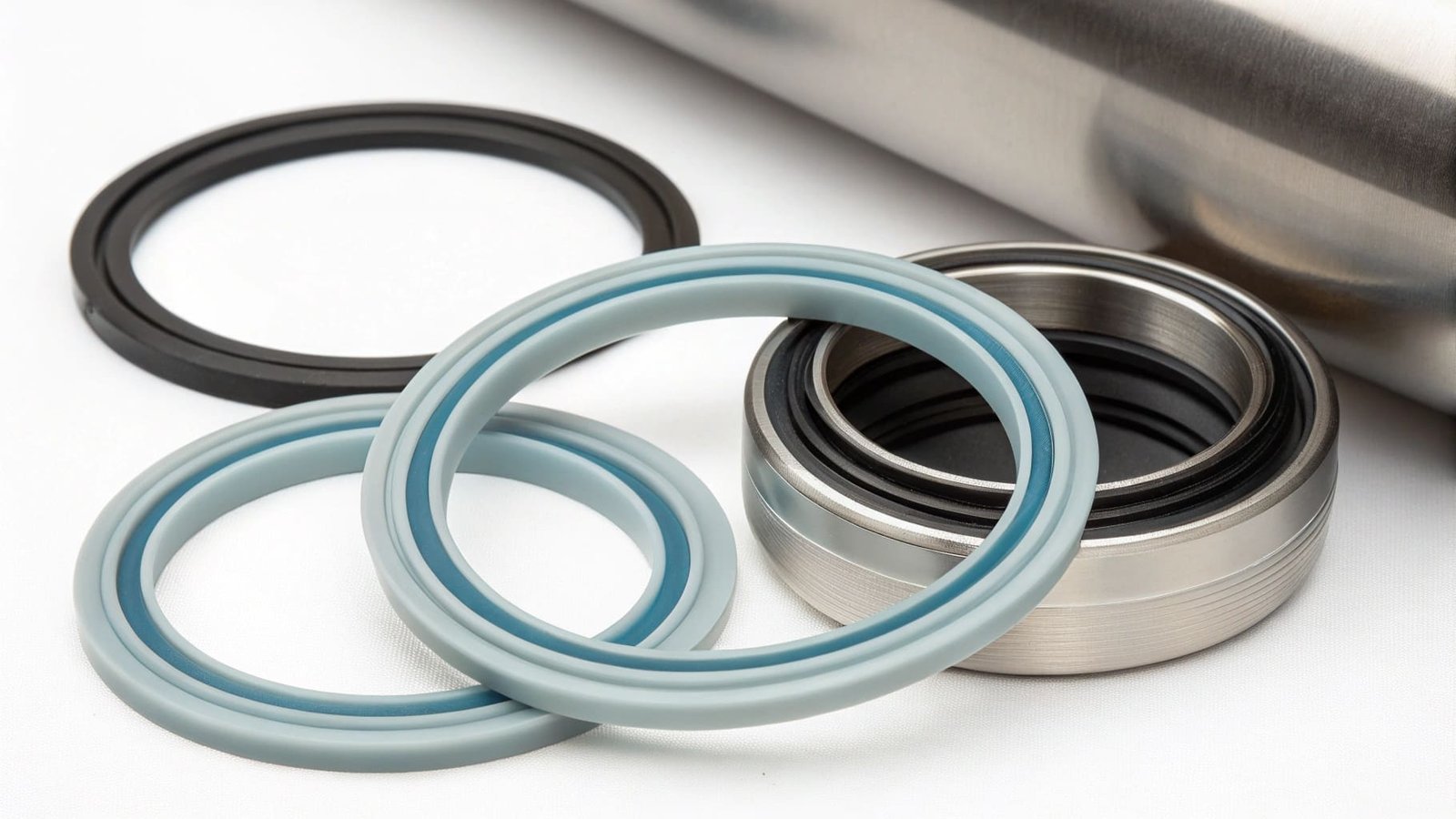
O-rings do not need to be perfectly exact, but dimensional tolerance has a direct impact on seal performance. Industry-standard tolerances for silicone O-rings are plus or minus 0.3mm to 0.5mm for most water bottle sizes. Beyond that range, seal reliability drops sharply.
Tolerance vs. Compression Rate
There is a difference between dimensional tolerance and functional performance. A ring can be within tolerance on paper and still fail in practice if the groove design does not allow for the right compression rate.
For water bottle seals, the effective compression range is 15% to 25% of the cross-section1. This means if your O-ring has a 3mm CS, your groove depth should compress it by 0.45mm to 0.75mm. That compression creates the pressure that keeps liquid inside the bottle.
Here is what happens outside that range:
| Compression Rate | Result | Visible Sign |
|---|---|---|
| Below 15% | Under-compression | Leaking around lid |
| 15% – 25% | Correct range | No leaks, smooth lid close |
| Above 25% | Over-compression | Cracking, deformation over time |
| Above 35% | Severe over-compression | Ring splits, lid jams |
I had a client in the early days of my business who pushed for a tighter lid feel on his tumbler line. His factory increased the groove depth slightly to make the lid snap more firmly. The O-rings were compressed at nearly 35%. Within three months, customers were reporting cracked seals. We had to redesign the groove and replace the rings across the entire production run. That was an expensive lesson in compression rates.
How Material Hardness Affects Tolerance
Silicone O-rings are measured in Shore A hardness.2 For water bottle applications, the standard range is 50 to 70 Shore A. A softer ring at 50 Shore A can absorb small dimensional errors more easily because it deforms under less force.3 A harder ring at 70 Shore A requires a more precise groove match because it resists compression.
When you are sourcing O-rings for the first time, I recommend requesting samples in 60 Shore A as a baseline. From there, you can adjust based on your lid design and the amount of force you want the user to apply when opening and closing the bottle.
How Do You Determine What Size O-Ring You Need?
You have a bottle design ready. Your factory needs the O-ring spec. You do not know where to start, and your supplier is waiting. Getting this wrong means weeks of delays and a failed first production run.
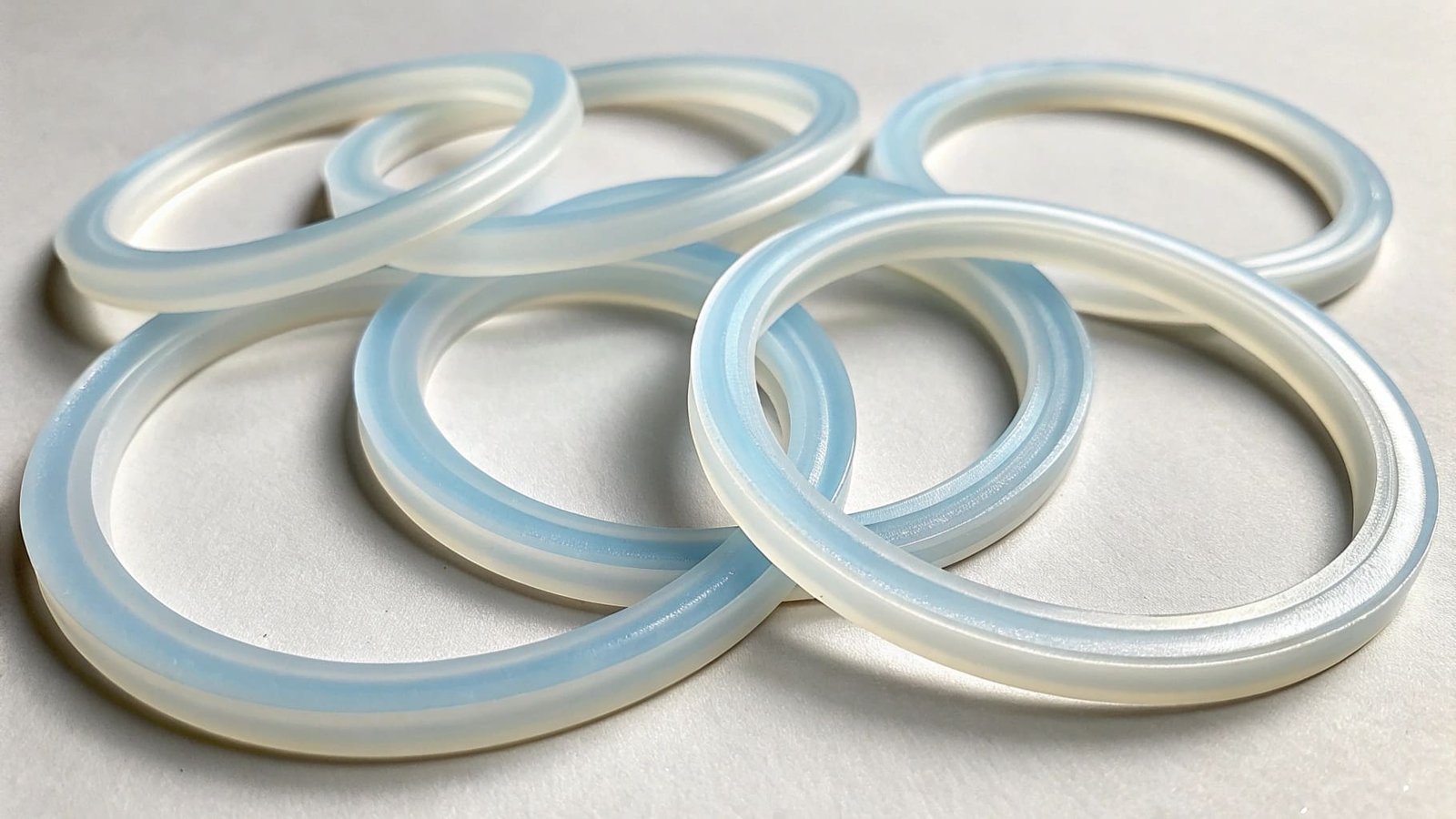
To determine the correct O-ring size, you must measure your bottle lid groove directly. Measure the groove width, groove depth, and the diameter of the groove centerline. The O-ring cross-section should be 10% to 20% larger than the groove depth to achieve the correct compression.4 The groove centerline diameter should match the O-ring inner diameter closely.
The Step-by-Step Sizing Process
Most overseas buyers I work with receive a CAD file from their design team or bottle manufacturer. If you have the CAD file, the groove dimensions are already inside it. You just need to know where to look and what to extract.
If you do not have a CAD file, here is how to measure from a physical sample:
| Step | Action | Tool Needed |
|---|---|---|
| Measure groove diameter | Measure the diameter at the center of the groove channel | Digital calipers |
| Measure groove depth | Measure how deep the groove is cut into the lid | Digital calipers |
| Measure groove width | Measure the width of the groove opening | Digital calipers |
| Calculate CS | CS = groove depth × 1.15 (minimum compression factor) | Calculator |
| Calculate ID | ID = groove centerline diameter | From groove diameter measurement |
Once you have these numbers, you can match them to standard O-ring sizes or send the specs to your silicone supplier for a custom run.
Why Standard Sizes Rarely Work Without Verification
I hear this assumption from new clients regularly: "We will just use a standard O-ring and it will fit." Standard O-rings are made to fit standard grooves. Custom water bottles almost never have standard grooves. The groove geometry is designed around the bottle's wall thickness, lid thread pitch, and aesthetic requirements. Those variables push the groove dimensions outside what standard O-rings are built for.
This does not mean you always need a fully custom O-ring. It means you need to verify the fit before you commit to bulk production. I always require a physical sample approval from my clients before we start a production run. A sample costs almost nothing compared to a failed shipment of ten thousand units.
Adjusting for Different Use Cases
The intended use of the bottle also changes the O-ring specification. Hot beverage bottles experience thermal expansion, which means the groove and ring both change size slightly when filled. Cold drink bottles can cause slight material contraction. Sports bottles face repeated mechanical stress from opening and closing dozens of times per day.
| Use Case | Recommended CS | Shore A Hardness | Key Risk |
|---|---|---|---|
| Hot beverages | 3mm – 4mm | 60 – 70 | Thermal expansion leaks |
| Cold drinks | 2mm – 3mm | 50 – 60 | Material contraction |
| Sports and gym | 2.5mm – 3.5mm | 60 – 70 | Repeated mechanical stress |
| Carbonated drinks | 3mm – 4mm | 65 – 70 | Pressure seal failure |
Matching your O-ring spec to the use case is not optional. It is the difference between a product that lasts two years and one that fails in the first month.
Conclusion
Getting O-ring dimensions right starts with three numbers: ID, OD, and CS. Tolerance and compression rate decide whether the seal holds. Always measure your groove before you spec your ring.
-
"Understanding O-Ring Squeeze, Stretch & Compression", https://www.marcorubber.com/o-ring-groove-design-considerations.htm/. O-ring design references commonly recommend controlled squeeze in the approximate 15–25 percent range for many static elastomer sealing applications to maintain contact pressure without excessive deformation. Evidence role: expert_consensus; source type: institution. Supports: A design handbook or standards-based source should identify typical recommended O-ring squeeze percentages for static sealing applications.. Scope note: The cited range would be general static-seal guidance and may require adjustment for a specific lid geometry and elastomer compound. ↩
-
"Shore hardness", https://en.wikipedia.org/?title=Shore_hardness&redirect=no. ASTM durometer testing defines Shore A hardness as a standard scale for measuring the indentation hardness of flexible elastomeric materials, including silicone rubber. Evidence role: definition; source type: institution. Supports: A materials testing standard should define Shore A durometer hardness as a method used for elastomers such as silicone rubber.. ↩
-
"Shore Hardness - an overview | ScienceDirect Topics", https://www.sciencedirect.com/topics/engineering/shore-hardness. Elastomer mechanics literature associates lower Shore A hardness with lower resistance to indentation and compression, allowing softer seals to conform more readily under a given load. Evidence role: mechanism; source type: paper. Supports: A materials or seal-mechanics source should explain that lower durometer elastomers require less force to deform and can conform more easily to mating surfaces.. Scope note: This supports the deformation mechanism but does not quantify the amount of dimensional error a specific bottle seal can absorb. ↩
-
"Understanding O-Ring Squeeze, Stretch & Compression", https://www.marcorubber.com/o-ring-groove-design-considerations.htm/. O-ring gland design guidance specifies groove depth in relation to cross-sectional diameter so that installation produces a controlled squeeze, commonly in the low double-digit percentage range for static seals. Evidence role: expert_consensus; source type: institution. Supports: A technical O-ring gland design reference should confirm that groove depth is selected to produce a target squeeze percentage relative to cross-section.. Scope note: The source would support the design principle; exact percentages vary by seal type, material, and operating conditions. ↩