What Is the Best Rubber Rejuvenator for Industrial Gasket Maintenance?
Rubber gaskets fail silently. By the time you notice the cracks, the leaks have already started—and so has the downtime. Here is what you need to know before it gets worse.
The best rubber rejuvenator for industrial gasket maintenance depends on your rubber type. For silicone rubber, use a silicone-compatible conditioning agent with plasticizers. For EPDM or nitrile, choose a compound-specific rejuvenator. Avoid petroleum-based products on silicone—they cause swelling and speed up failure.1
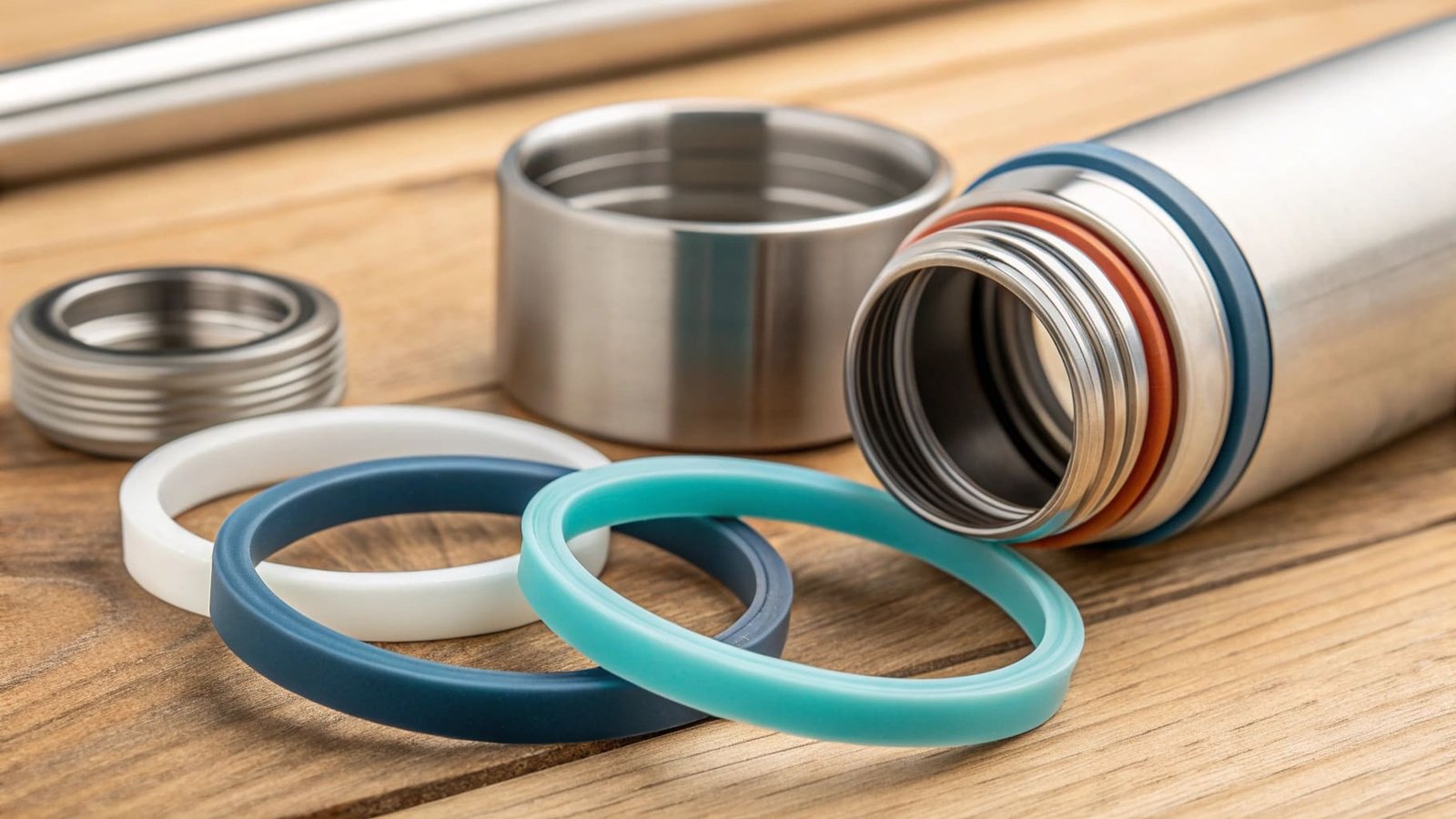
Most people search for a quick fix. They want one product, one spray, one solution. But the truth is, rejuvenation alone is not a strategy—it is a delay. The real question is not just which product to buy. It is how to build a maintenance approach that stops the problem before it starts. Let me walk you through that.
What to Use to Rejuvenate Rubber Seals?
Your seals feel brittle. They have lost their grip. You press them and they do not bounce back the way they used to. That is a sign you are already behind.
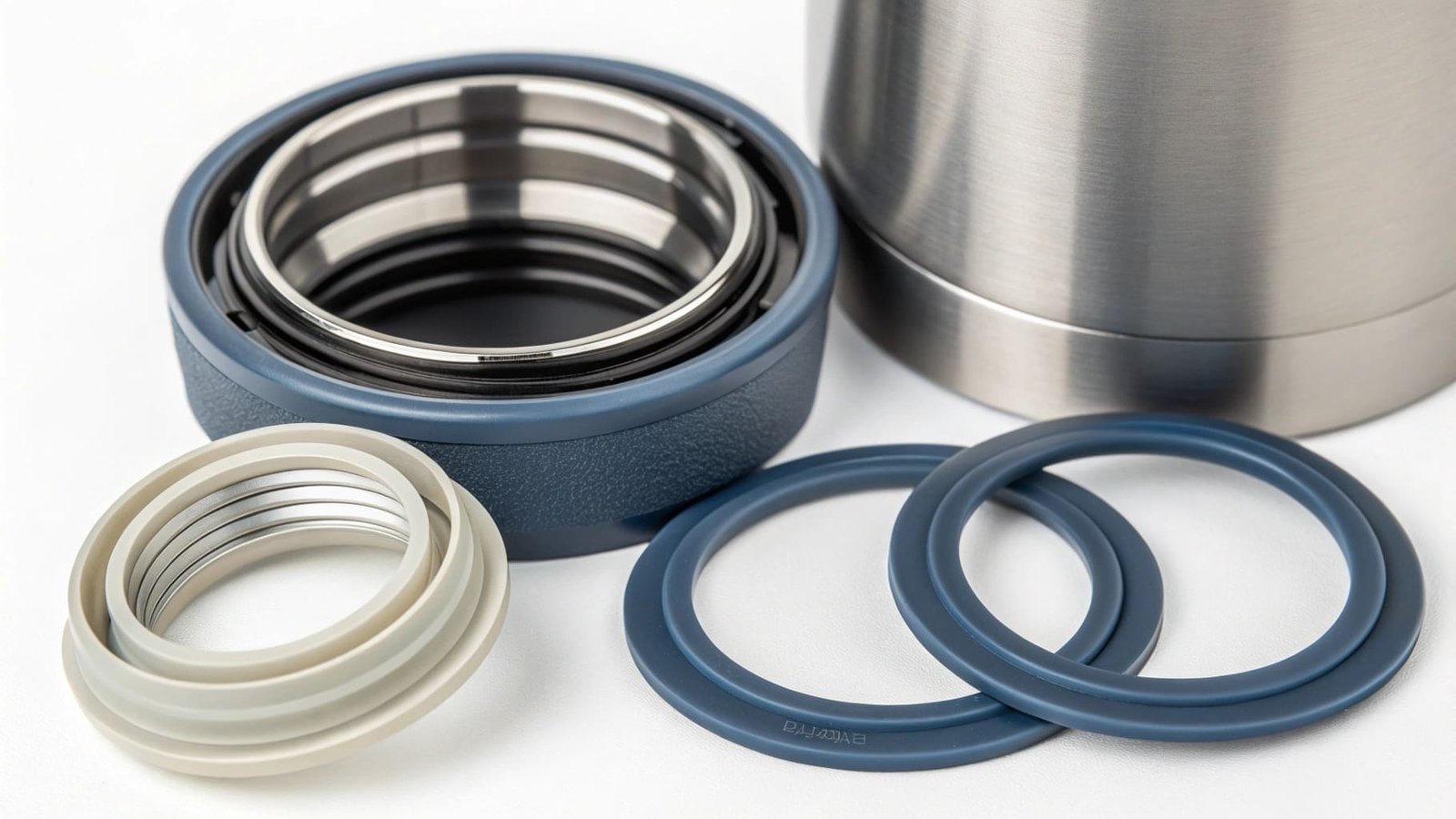
For rubber seal rejuvenation, silicone-based conditioners work on the surface but do not restore deep flexibility.2 Compound-specific rejuvenators with plasticizers perform better. Match the product to your rubber type—EPDM, nitrile, or silicone—before buying anything.
Why Rubber Type Matters More Than You Think
Most procurement managers focus on price when buying a rejuvenator. That is the wrong starting point. The rubber compound your seal is made from determines which products will help it—and which ones will destroy it faster.3
Here is a simple breakdown:
| Rubber Type | Compatible Rejuvenator | Products to Avoid |
|---|---|---|
| Silicone | Silicone-compatible conditioners with plasticizers | Petroleum-based products |
| EPDM | EPDM-specific plasticizer blends | Solvent-heavy formulas |
| Nitrile (NBR) | Nitrile-compatible conditioning agents | Silicone-based sprays |
Petroleum-based products are one of the most common mistakes I see in industrial settings. They work fine on natural rubber. But when you apply them to silicone rubber, they cause swelling. The seal looks soft at first—then it loses its dimensional stability. It no longer fits the groove correctly. The leak you were trying to prevent gets worse.
Silicone-based lubricants are safer for silicone seals, but they mostly coat the surface. They do not reach the molecular structure that has broken down. They are useful for temporary protection and reassembly, but they are not a long-term restoration solution.
The products that actually work on degraded rubber are those containing plasticizers—chemical agents that restore flexibility by re-entering the polymer chain.4 These are industrial-grade and usually sold through specialty chemical suppliers or direct from the manufacturer. They are not cheap. But compared to the cost of a failed seal in a production line, they are very cheap.
My advice: before you buy anything, get the material data sheet for your current gasket or seal. Find out the exact rubber compound. Then match the rejuvenator to that compound. This one step will save you from most of the bad decisions I see repeated every year.
How to Keep Rubber Gaskets from Drying Out?
The damage does not happen all at once. It builds up quietly—month by month—until one day the seal no longer does its job. Most of that damage is preventable.
To keep rubber gaskets from drying out, control the storage and operating environment. Keep temperature stable, limit UV exposure, and store unused gaskets in sealed packaging away from ozone sources like electric motors.5 Apply a compatible protective coating on a regular schedule.
The Real Cost of Ignoring Gasket Storage
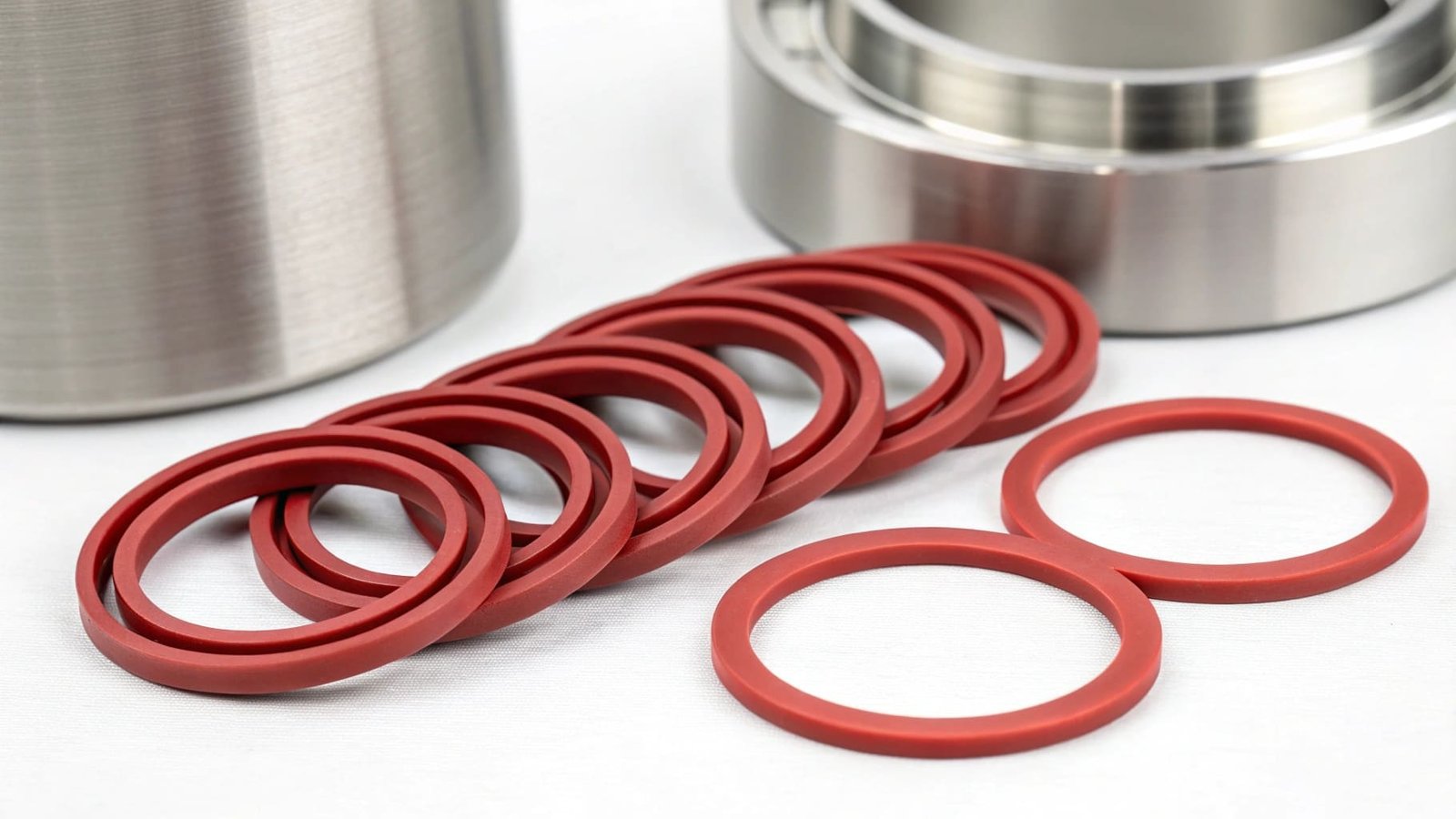
A lot of companies spend money on quality gaskets and then store them badly. I have seen silicone gaskets stored in open bins next to welding equipment. Ozone from nearby motors. Direct sunlight from a warehouse window. Cardboard boxes that trap moisture. Every one of these conditions shortens the service life of the gasket before it is even installed.
Here is what a proper storage setup looks like versus a typical one:
| Factor | Poor Practice | Best Practice |
|---|---|---|
| Temperature | Uncontrolled warehouse | 15–25°C, stable |
| Light | Exposed to sunlight | Opaque packaging, away from UV |
| Ozone sources | Near motors or welders | Isolated storage area |
| Packaging | Open bins or loose bags | Sealed polyethylene bags |
| Humidity | Uncontrolled | Moderate, not damp |
Now consider the financial side. A premium silicone gasket costs more upfront than a standard rubber gasket. But European and North American buyers—especially those sourcing at volume—have shifted their thinking. They are no longer asking "what is the cheapest unit price?" They are asking "what is the total cost over 24 months?"
When you factor in replacement frequency, labor for installation, production downtime, and the risk of a seal failure causing a larger equipment problem, the cheaper gasket often costs more in the end.6
I work with buyers across North America and Europe, and the ones who switch to premium silicone gaskets with enhanced UV and ozone resistance report a consistent result: maintenance calls drop, and the product lasts years longer than the alternative. The upfront cost difference disappears within the first replacement cycle.
Preventive maintenance is not just about storage. It also means cleaning gaskets regularly to remove chemical residue, checking them on a fixed schedule before failure shows up, and applying compatible protective coatings at set intervals. These steps cost almost nothing compared to emergency replacement.
How to Soften Rubber That Has Gone Hard?
You pull out a gasket and it feels like plastic. It will not compress the way it should. Forcing it into place risks cracking it completely. You need to act before that happens.
To soften rubber that has gone hard, apply a compound-specific plasticizer or rubber conditioning agent.7 Let it absorb over several hours. For minor stiffness, silicone oil works as a short-term fix. For deep hardening, a penetrating plasticizer is the only real option—surface treatment will not be enough.
When Rejuvenation Works—and When It Does Not
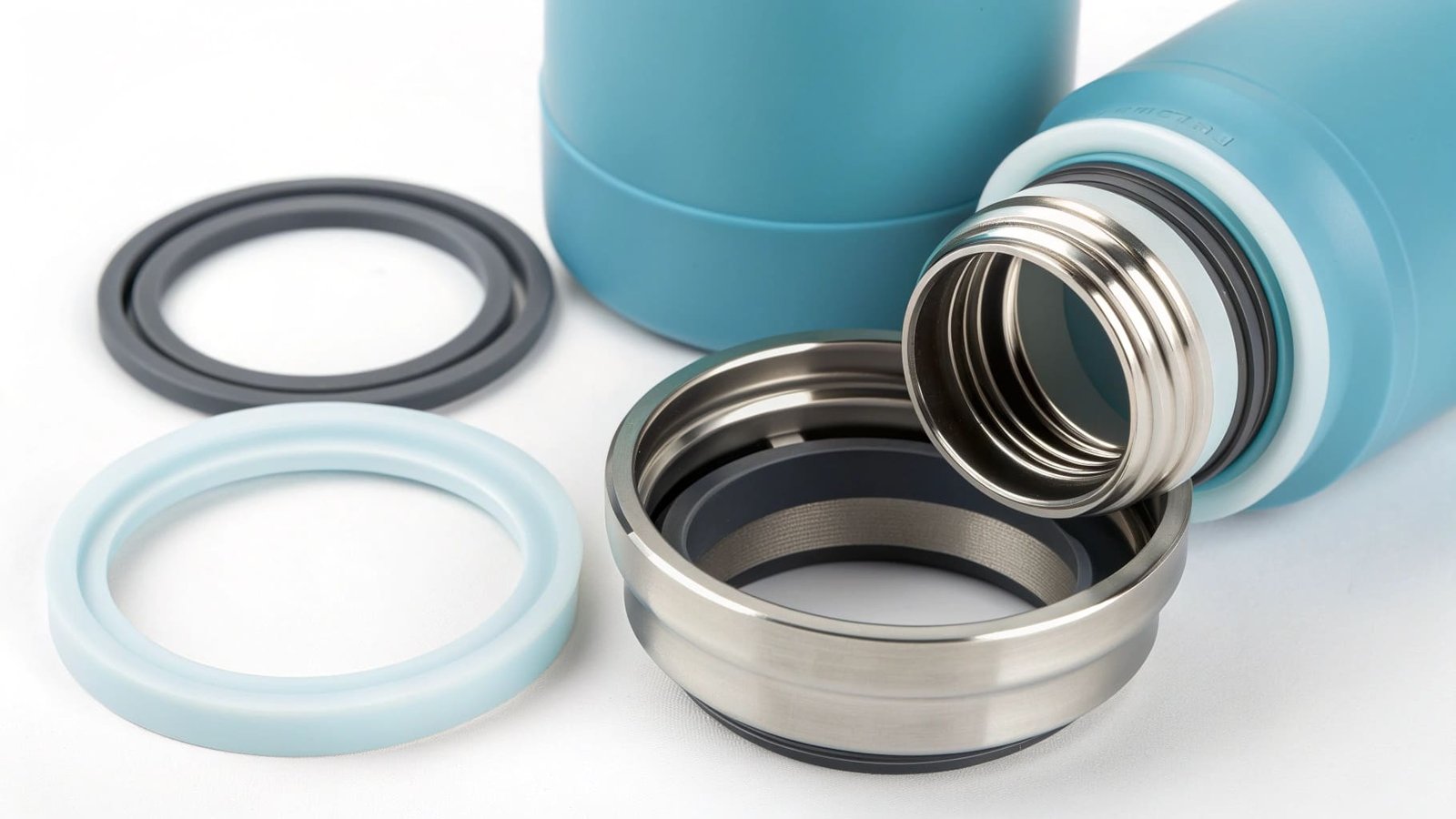
This is the part most product listings do not tell you. Rubber rejuvenation has a ceiling. It works within a certain range of degradation. Past that range, no product will bring a gasket back to spec. Knowing where that line is will save you from wasting money—and from trusting a gasket that is not safe to use.
Here is a practical guide:
| Degradation Level | Description | Rejuvenation Outcome |
|---|---|---|
| Mild | Slightly stiff, surface dryness | Good—conditioning agent restores flexibility |
| Moderate | Noticeable hardness, small surface cracks | Partial—may extend life short-term |
| Severe | Deep cracks, brittleness, shape distortion | Poor—replacement is the only safe option |
If the gasket has reached the severe stage, do not try to rejuvenate it. Replace it. A rejuvenated gasket that looks better on the surface can still fail under pressure.8 In industrial applications, that failure can mean leaks, equipment damage, or safety incidents—none of which are worth the small saving on a replacement part.
For gaskets in the mild to moderate range, the process matters. Apply the plasticizer or conditioner evenly across the whole surface. Do not rush it. Give it time to penetrate—usually several hours for a moderately hardened piece. If the rubber responds and gains flexibility without cracking further, it is likely safe to use for a limited time. Schedule its replacement anyway. Rejuvenation is a bridge, not a permanent fix.
What I recommend to most procurement managers I work with is this: build a replacement schedule into your maintenance plan. Do not wait for a gasket to fail or harden before you act. Set a replacement interval based on the manufacturer's recommendation and your operating conditions. Use rejuvenating products only to extend that window when a scheduled replacement is not yet possible—not as a substitute for the replacement itself.
Conclusion
Match the rejuvenator to your rubber type, store gaskets properly, and replace on schedule. Prevention always costs less than repair—especially in high-volume industrial operations.
-
"[PDF] Elastomer O-Ring Seal Swell Measurements for Sustainable ...", https://ecommons.udayton.edu/cgi/viewcontent.cgi?article=1380&context=uhp_theses. Studies of elastomer–solvent interactions report that silicone rubber may swell in hydrocarbon oils or solvents, which can change seal dimensions and mechanical performance; the magnitude depends on formulation, exposure time, and fluid composition. Evidence role: mechanism; source type: paper. Supports: Silicone rubber can swell when exposed to compatible nonpolar hydrocarbon oils or solvents, altering dimensions and mechanical properties.. Scope note: Contextual support; it supports the swelling mechanism but does not prove that every petroleum-based product will cause rapid failure in every silicone gasket. ↩
-
"Analysis of Mechanical Properties and Mechanism of Natural ... - PMC", https://pmc.ncbi.nlm.nih.gov/articles/PMC8271995/. Polymer-aging studies describe oxidation, chain scission, and crosslinking as bulk or near-surface degradation processes that are not fully reversed by surface lubrication; this supports treating silicone conditioners as temporary surface treatments. Evidence role: mechanism; source type: paper. Supports: Surface-applied oils or conditioners may lubricate or condition an elastomer surface but do not necessarily reverse bulk aging mechanisms such as oxidation, chain scission, or crosslinking.. Scope note: Contextual support; the depth of penetration varies with conditioner chemistry, rubber formulation, temperature, and exposure time. ↩
-
"[PDF] Material Compatibility of Seal Materials with Low GWP Refrigerants ...", https://docs.lib.purdue.edu/cgi/viewcontent.cgi?article=3885&context=icec. Elastomer compatibility references and test standards classify fluid resistance by rubber type, showing that silicone, EPDM, nitrile, and other compounds respond differently to oils, solvents, ozone, and heat. Evidence role: expert_consensus; source type: institution. Supports: Elastomer compatibility varies by polymer family and compounding, so maintenance fluids should be selected according to the seal material.. Scope note: General support; compatibility tables and standards guide material selection but cannot substitute for testing a specific proprietary gasket formulation. ↩
-
"Review of Recent Developments of Glass Transition in PVC ... - PMC", https://pmc.ncbi.nlm.nih.gov/articles/PMC8708294/. Polymer science literature describes plasticizers as additives that enter a polymer matrix, increase molecular mobility, and lower stiffness or glass-transition behavior, thereby improving flexibility. Evidence role: mechanism; source type: paper. Supports: Plasticizers can diffuse into polymer matrices, increase free volume, lower glass-transition behavior, and increase flexibility.. Scope note: Contextual support; plasticizers can soften rubber, but they do not necessarily reverse irreversible oxidation, cracking, or crosslink-density changes in aged gaskets. ↩
-
"ISO 2230:2026(en), Rubber products — Guidelines for storage", https://www.iso.org/obp/ui/en/#!iso:std:89162:en. Rubber-storage standards such as ISO 2230 identify heat, light, ozone, oxygen, humidity, and contamination as storage hazards and recommend controlled conditions and protective packaging for vulcanized rubber products. Evidence role: expert_consensus; source type: institution. Supports: Rubber storage guidance commonly recommends protection from heat, light, oxygen/ozone, deformation, and contamination.. Scope note: General support; exact storage limits may vary by elastomer type, product geometry, and the applicable industry standard. ↩
-
"Major Equipment Life-cycle Cost Analysis - MnDOT Digital Library", https://mdl.mndot.gov/items/201516. Life-cycle cost analysis frameworks used in public and industrial procurement evaluate costs across acquisition, operation, maintenance, replacement, and downtime, supporting the claim that the lowest unit price may not minimize total cost. Evidence role: general_support; source type: government. Supports: Lifecycle-cost analysis includes acquisition cost, maintenance, replacement, downtime, and failure consequences rather than purchase price alone.. Scope note: Contextual support; it supports the cost-analysis principle but does not quantify costs for the specific gaskets discussed in the article. ↩
-
"A Review of the Effect of Plasticizers on the Physical ... - PMC - NIH", https://pmc.ncbi.nlm.nih.gov/articles/PMC10534897/. Experimental studies of plasticized elastomers show that absorbed plasticizers can reduce hardness and modulus by increasing polymer-chain mobility, provided the plasticizer is compatible with the rubber compound. Evidence role: mechanism; source type: paper. Supports: Compatible plasticizers can reduce hardness and increase flexibility in some elastomers by diffusing into the polymer matrix.. Scope note: Contextual support; the effect may be temporary or limited when hardening is caused by irreversible oxidative aging or crosslinking. ↩
-
"Mechanical Aging Test and Sealing Performance of Thermoplastic ...", https://pmc.ncbi.nlm.nih.gov/articles/PMC10145779/. Research on elastomer seal performance shows that leakage and pressure failure depend on mechanical properties such as compression set, modulus, cracking, and contact stress, so an improved surface appearance alone does not establish pressure integrity. Evidence role: general_support; source type: research. Supports: Seal performance depends on compression, elasticity, crack state, and mechanical integrity, not only surface appearance.. Scope note: Contextual support; it supports the inspection principle but does not evaluate any specific rejuvenated gasket without pressure or material testing. ↩