Which Waterproof Gasket Materials Last Longest in High-Temperature OEM Uses?
Picking the wrong gasket material for a high-heat application costs you more than money. It costs you time, trust, and sometimes your entire production line.
Silicone rubber lasts longest in most high-temperature OEM uses.1 It handles temperatures up to 450°F (232°C), stays flexible through thousands of heat cycles, and resists water well. For extreme heat beyond that range, fluorosilicone (FVMQ) or fluorocarbon (FKM) are the better options2.
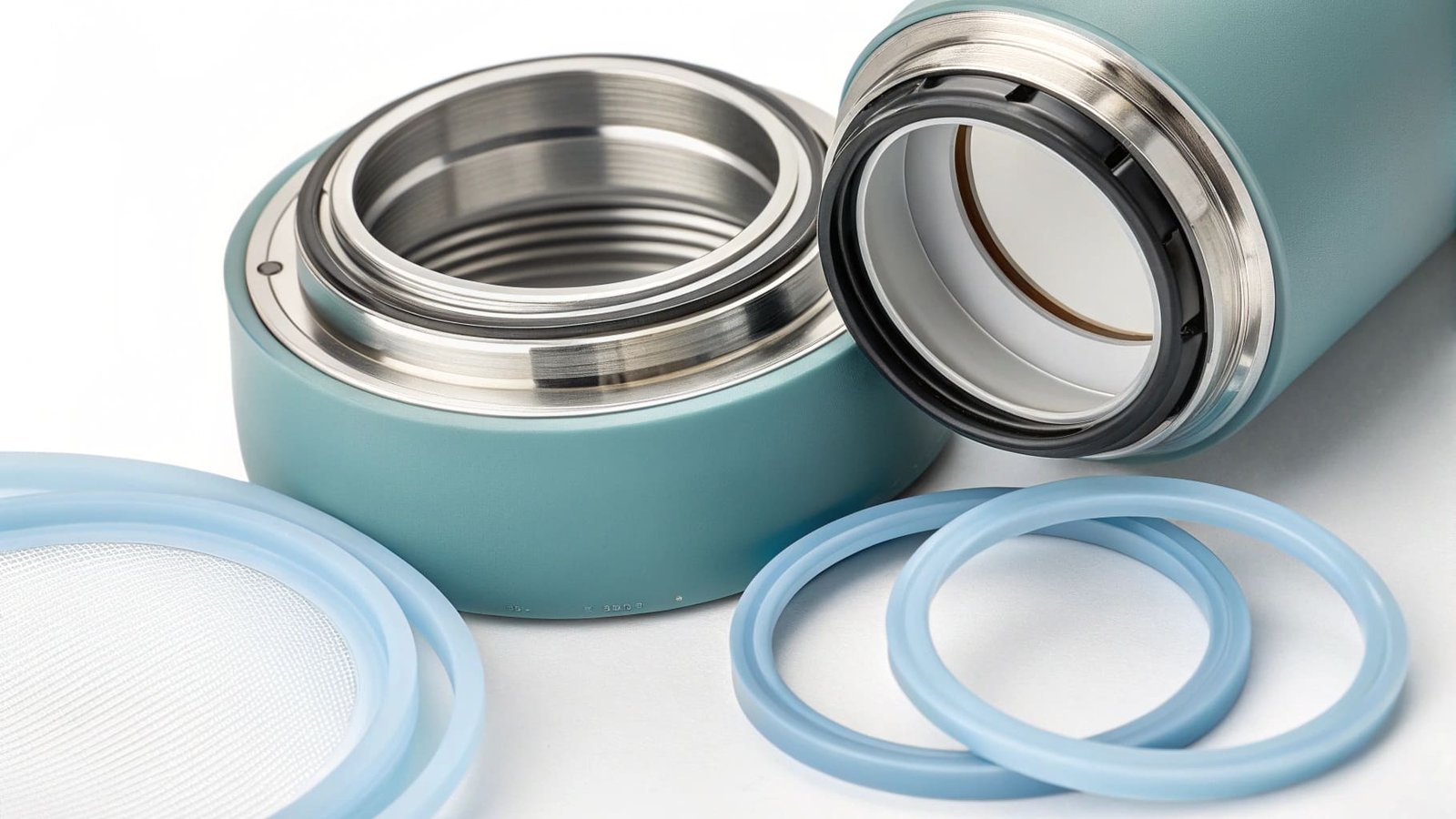
I have worked with B2B buyers who came to me after a bad experience. They chose the cheapest gasket material. It failed in three months. The replacement cost was five times the original savings. That is why material selection matters more than most buyers think. In the next sections, I will walk you through each key question so you can make a confident sourcing decision.
What Is the Best Gasket for High Temperature?
Most buyers ask this question once. Then they buy the wrong material. Then they ask it again, this time with urgency.
The best gasket for high-temperature use is silicone rubber for standard industrial applications. It balances heat resistance, flexibility, and cost better than most alternatives. For extreme conditions above 450°F, fluorocarbon (FKM/Viton) takes the lead.
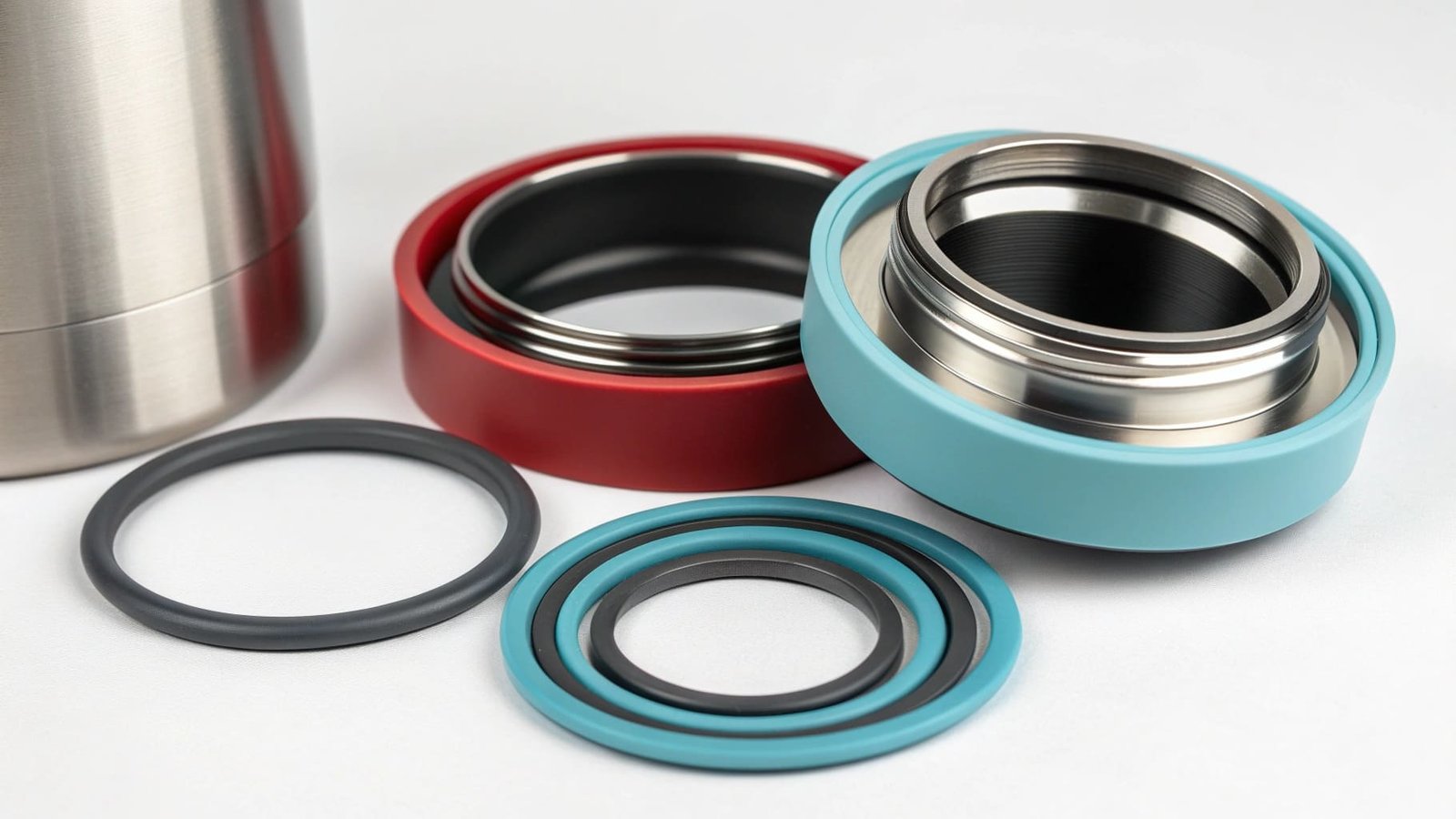
The answer depends on three things: the temperature range, the chemical environment, and how long the gasket needs to last. These three factors work together. A gasket that handles heat well but fails under chemical exposure is still the wrong choice.
Here is a breakdown of the most common high-temperature gasket materials and where each one fits best:
How Do Common High-Temperature Gasket Materials Compare?
| Material | Max Temp (°F) | Max Temp (°C) | Chemical Resistance | Best Use Case |
|---|---|---|---|---|
| Silicone (VMQ) | 450°F | 232°C | Moderate | Industrial seals, food equipment, ovens |
| Fluorosilicone (FVMQ) | 500°F | 260°C | High | Fuel systems, aerospace, automotive |
| Fluorocarbon (FKM/Viton) | 600°F | 315°C | Very High | Chemical processing, engines |
| EPDM | 300°F | 149°C | Moderate | Outdoor seals, water systems |
| Neoprene | 250°F | 121°C | Moderate | General industrial |
Silicone is the most practical choice for most OEM buyers. It performs well across a wide temperature range. It does not harden or crack easily under repeated heating and cooling. I supply silicone waterproof gasket kits to buyers across North America and Europe. The most common feedback I hear is that silicone holds up far longer than the rubber materials they used before.
EPDM is cheaper. But it starts to break down above 300°F.3 If your application runs hot, you will replace EPDM gaskets far more often than silicone ones. The cost adds up quickly.
For buyers sourcing at volume, the total cost of ownership matters more than the unit price. Silicone costs more upfront. It saves more over time.
What Is the Best Material for Gaskets in Very High-Temperature Areas?
Standard silicone works for most cases. But some applications go beyond its limit. That is where many OEM buyers get into trouble.
For temperatures above 450°F (232°C), fluorosilicone (FVMQ) and fluorocarbon (FKM) are the best materials. Both maintain their sealing properties at extreme heat. FKM handles up to 600°F (315°C)4 and resists most aggressive chemicals.
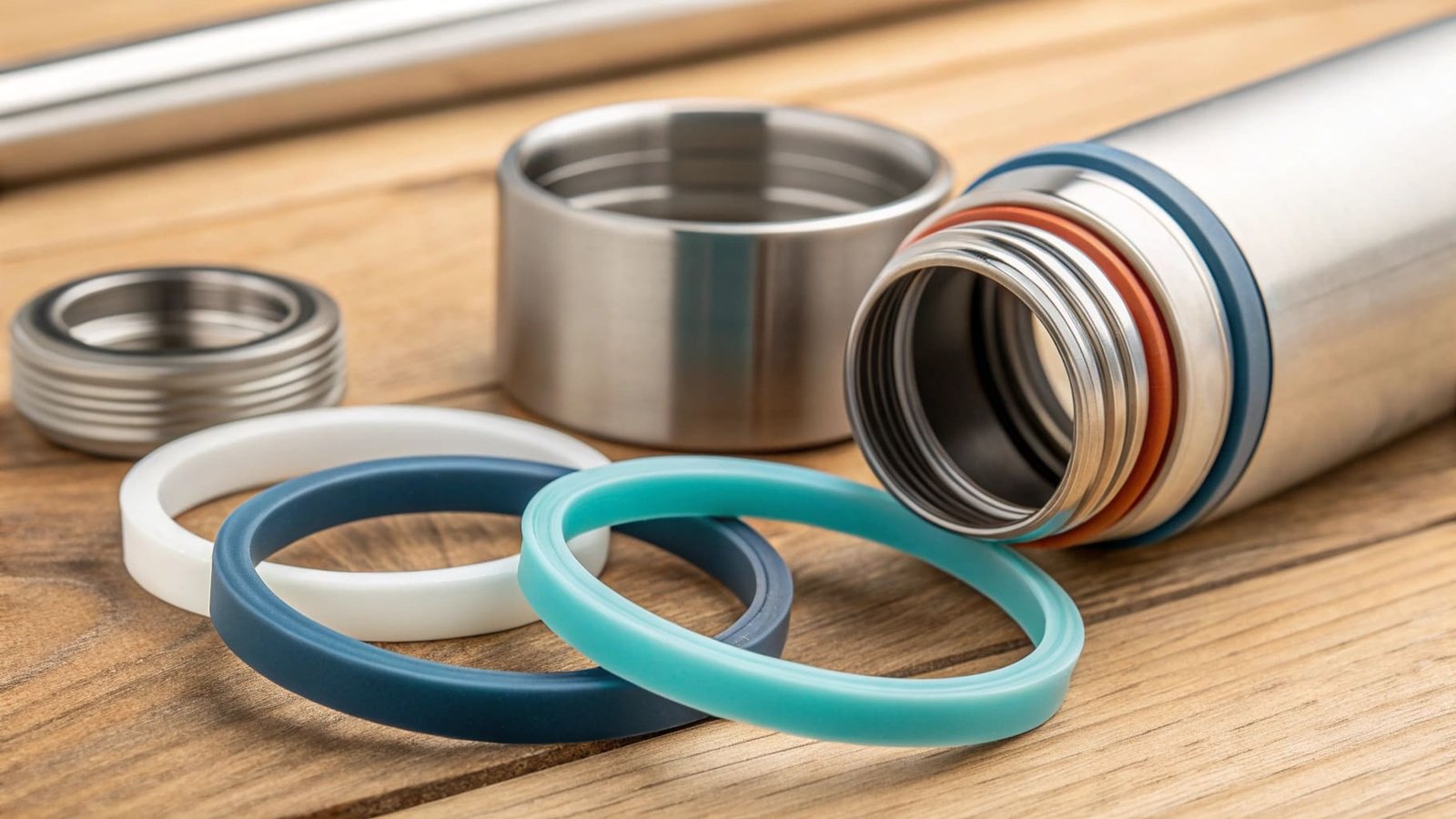
I want to be direct here. Very high-temperature applications are not just about heat resistance. They are about what else is happening inside that environment. Chemical exposure, pressure, mechanical stress, and vibration all affect how long a gasket lasts. Picking a material based on temperature rating alone is one of the most common mistakes I see from procurement teams.
What Should You Look at Beyond Temperature Rating?
Chemical Exposure
Fluorocarbon (FKM) handles oils, fuels, acids, and hydraulic fluids very well.5 If your application involves aggressive chemicals at high heat, FKM is a strong candidate. Fluorosilicone also handles fuel and oil exposure better than standard silicone. If your process uses water-based fluids at high temperatures, silicone performs reliably and costs less.
Mechanical Stress
Here is something many buyers overlook. High-temperature fluorosilicone has lower tear strength than standard silicone.6 If the gasket faces pressure or physical compression cycles, tear strength matters. A material that handles 500°F but tears under pressure is still the wrong material for that job. I always ask buyers to describe the full operating environment, not just the temperature. That one question prevents a lot of failures.
Thermal Cycling
Thermal cycling means the gasket heats up and cools down repeatedly. Every cycle stresses the material. Silicone handles this better than most alternatives.7 It keeps its elastic properties through thousands of cycles. Materials like neoprene or EPDM harden and crack after repeated cycling in high-heat environments.8
| Factor | Silicone (VMQ) | Fluorosilicone (FVMQ) | FKM/Viton |
|---|---|---|---|
| Heat Resistance | Good | Very Good | Excellent |
| Chemical Resistance | Moderate | High | Very High |
| Tear Strength | Good | Moderate | Good |
| Thermal Cycling | Excellent | Good | Good |
| Cost | Low-Moderate | Moderate-High | High |
The table above shows why silicone is the default starting point. It only makes sense to move up to fluorosilicone or FKM when the application truly demands it. Moving up without reason just increases cost without adding value.
What Is the Longest Lasting Rubber?
Buyers want gaskets that last. That is a reasonable goal. But "longest lasting" means different things in different conditions.
In high-temperature applications, silicone rubber lasts the longest for standard industrial use. Fluorocarbon (FKM) lasts the longest in extreme heat with heavy chemical exposure. No single rubber is the longest lasting in every situation.
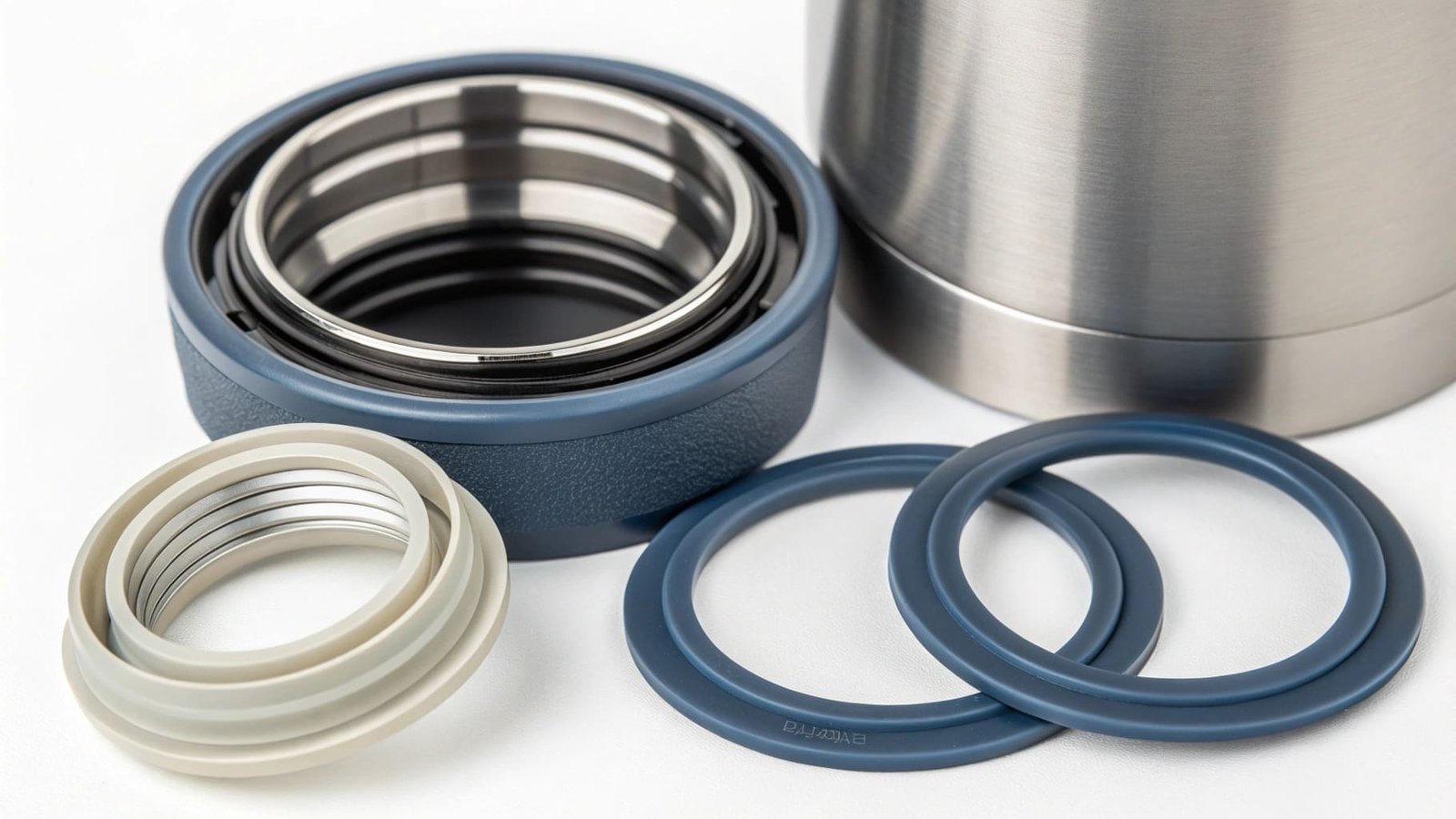
I get this question often from buyers like Mark, a company owner in Canada who sources silicone products to rebrand and distribute locally. His concern is always the same: will this product hold up long enough to protect his brand reputation? That is the right question to ask. And the answer starts with understanding what causes rubber gaskets to fail early.
What Causes Gaskets to Fail Early?
Wrong Material for the Temperature
This is the most common cause. EPDM placed in a 350°F environment will harden and crack. It is not a defect. It is a mismatch. Matching the material to the actual operating temperature is the first step to long gasket life.
Poor Compression Set Resistance
Compression set is what happens when a gasket stays compressed for a long time and stops bouncing back. A gasket with poor compression set resistance loses its sealing ability even before it breaks. Silicone has excellent compression set resistance. This is one reason it outlasts many cheaper alternatives in long-term sealing applications.
Chemical Attack
Even a heat-resistant gasket can fail fast if the chemicals in your process attack the rubber. A buyer once told me their gaskets were failing in weeks. The temperature was within range. But their cleaning agents were the problem. Once we switched to fluorosilicone, the failures stopped.
Inferior Raw Materials
This is a pain point I hear often from buyers who source from low-cost suppliers without proper quality checks. Gaskets made from recycled or off-spec silicone may look identical but perform very differently. I have seen certificate fraud in this space. Buyers received documents claiming food-grade or high-heat compliance. The actual material did not meet those standards. Working with a verified supplier who can provide traceable certifications is not optional. It is essential.
| Failure Cause | Risk Level | How to Prevent |
|---|---|---|
| Wrong temperature rating | High | Match material to actual operating temp |
| Poor compression set | Medium | Choose high-grade silicone or FKM |
| Chemical attack | High | Test material against specific chemicals |
| Inferior raw material | High | Request certifications and test samples |
| Improper installation | Medium | Provide installation guidelines to end users |
Long gasket life is not just about material selection. It is about the full picture. The right material, from the right supplier, with proper documentation, installed correctly, will outlast cheap alternatives by years.
Conclusion
The longest-lasting waterproof gasket material for high-heat OEM use is silicone for most applications. For extreme conditions, FKM wins. Always match the material to your real operating environment.
-
"Comparison of accelerated aging of silicone rubber gasket material ...", https://hero.epa.gov/reference/4370805/. A materials-engineering source should be cited to show that silicone rubber is widely specified for elevated-temperature sealing because of its thermal stability and retained elasticity; this supports the article's general ranking but does not prove superior life in every OEM design. Evidence role: expert_consensus; source type: research. Supports: Silicone elastomers are commonly used for high-temperature sealing because they retain elastomeric properties over a relatively wide thermal range compared with many general-purpose rubbers.. Scope note: The support is contextual because actual gasket life also depends on compression, chemicals, geometry, and installation. ↩
-
"What Is The Difference Between FVMQ And FKM? - Linde Seals", https://www.lindeseals.com/news/what-is-the-difference-between-fvmq-and-fkm-77449864.html. A neutral elastomer reference should be cited to show that FVMQ and FKM are selected for elevated-temperature sealing where fuel, oil, or chemical resistance is required; this supports the material-selection rationale but not a blanket superiority claim. Evidence role: general_support; source type: research. Supports: FVMQ and FKM are fluoroelastomer families associated with improved fuel, oil, or chemical resistance and elevated-temperature service relative to many general-purpose elastomers.. Scope note: The best material depends on the specific chemical, temperature, pressure, and mechanical loading. ↩
-
"Performance of Thermal-Oxidative Aging on the Structure and ... - PMC", https://pmc.ncbi.nlm.nih.gov/articles/PMC10221044/. A polymer-materials reference should be cited to support that EPDM generally has an upper service-temperature range near 150°C, which is consistent with degradation risk above roughly 300°F; the source may not substantiate relative purchase cost. Evidence role: statistic; source type: education. Supports: EPDM is generally rated for lower maximum service temperatures than silicone or fluoroelastomers, often around 150°C depending on formulation.. Scope note: The cost comparison may require a separate market source, and high-temperature EPDM grades can differ. ↩
-
"Viton® (FKM) O-Ring Temperature Range: What It Really Means", https://detroitsealing.com/feeds/blog/viton-o-ring-temperature-range. A technical elastomer reference should be cited to verify the reported 315°C upper temperature for FKM and to clarify whether that value refers to intermittent rather than continuous service. Evidence role: statistic; source type: institution. Supports: FKM fluoroelastomers can have high service-temperature ratings, with some sources distinguishing continuous-use and intermittent upper limits.. Scope note: A single maximum temperature does not apply to all FKM grades or exposure durations. ↩
-
"FKM Chemical Resistance Guide - Mission Rubber", https://www.missionrubber.com/fkm-chemical-resistance-guide/. A chemical-compatibility reference should be cited to support that FKM is generally resistant to petroleum oils, fuels, and many industrial fluids; this should be limited because compatibility varies by acid type, concentration, temperature, and FKM grade. Evidence role: general_support; source type: institution. Supports: FKM fluoroelastomers are generally resistant to petroleum oils, fuels, and many chemicals used in industrial sealing.. Scope note: FKM may be unsuitable for some amines, ketones, hot water, steam, or specific hydraulic-fluid chemistries. ↩
-
"Effect of Fluorosilicone Rubber on Mechanical Properties, Dielectric ...", https://pmc.ncbi.nlm.nih.gov/articles/PMC10458874/. A comparative elastomer-property source should be cited to document typical tear-strength ranges for VMQ and FVMQ materials; the comparison is formulation-dependent and should not be read as applying to every compound. Evidence role: statistic; source type: paper. Supports: Mechanical-property data comparing VMQ and FVMQ can show whether fluorosilicone compounds tend to have lower tear strength than standard silicone compounds.. Scope note: Fillers, cure system, hardness, and test method can change tear-strength rankings. ↩
-
"Neoprene or Silicone for Heat Resistance? - Alanto", https://www.alanto.co.uk/neoprene-vs-silicone-heat-resistance/. A thermal-cycling study should be cited to support that silicone rubber often retains elasticity under repeated heating and cooling better than some general-purpose elastomers; the finding should be limited to the tested formulations and cycle conditions. Evidence role: mechanism; source type: paper. Supports: Thermal-aging or thermal-cycling data can show how silicone rubber maintains mechanical properties under repeated heating and cooling compared with other elastomers.. Scope note: Thermal-cycle amplitude, dwell time, oxygen exposure, and compression state affect the outcome. ↩
-
"An Interval Prediction of Chloroprene Rubber Crack Propagation ...", https://pmc.ncbi.nlm.nih.gov/articles/PMC10255112/. A rubber heat-aging study should be cited to show that elevated-temperature exposure can increase hardness and reduce elongation in EPDM or neoprene, mechanisms associated with cracking; this supports the failure pathway rather than predicting a fixed service life. Evidence role: mechanism; source type: paper. Supports: Heat aging can increase hardness, reduce elongation, and promote cracking in elastomers such as EPDM and neoprene under unsuitable service conditions.. Scope note: Failure depends on compound formulation, oxygen and ozone exposure, strain, and the exact temperature cycle. ↩