What Role Do O-Rings Play in Water Bottle Sealing for OEM Manufacturing?
If your water bottle leaks, your brand takes the hit. One small rubber ring is often the reason a product succeeds or fails on shelves.
O-rings are compression seals placed between a bottle lid and its body.1 They block liquid from escaping and stop air from getting in. For OEM manufacturers, they are one of the smallest parts on a bottle but one of the biggest factors in product quality.
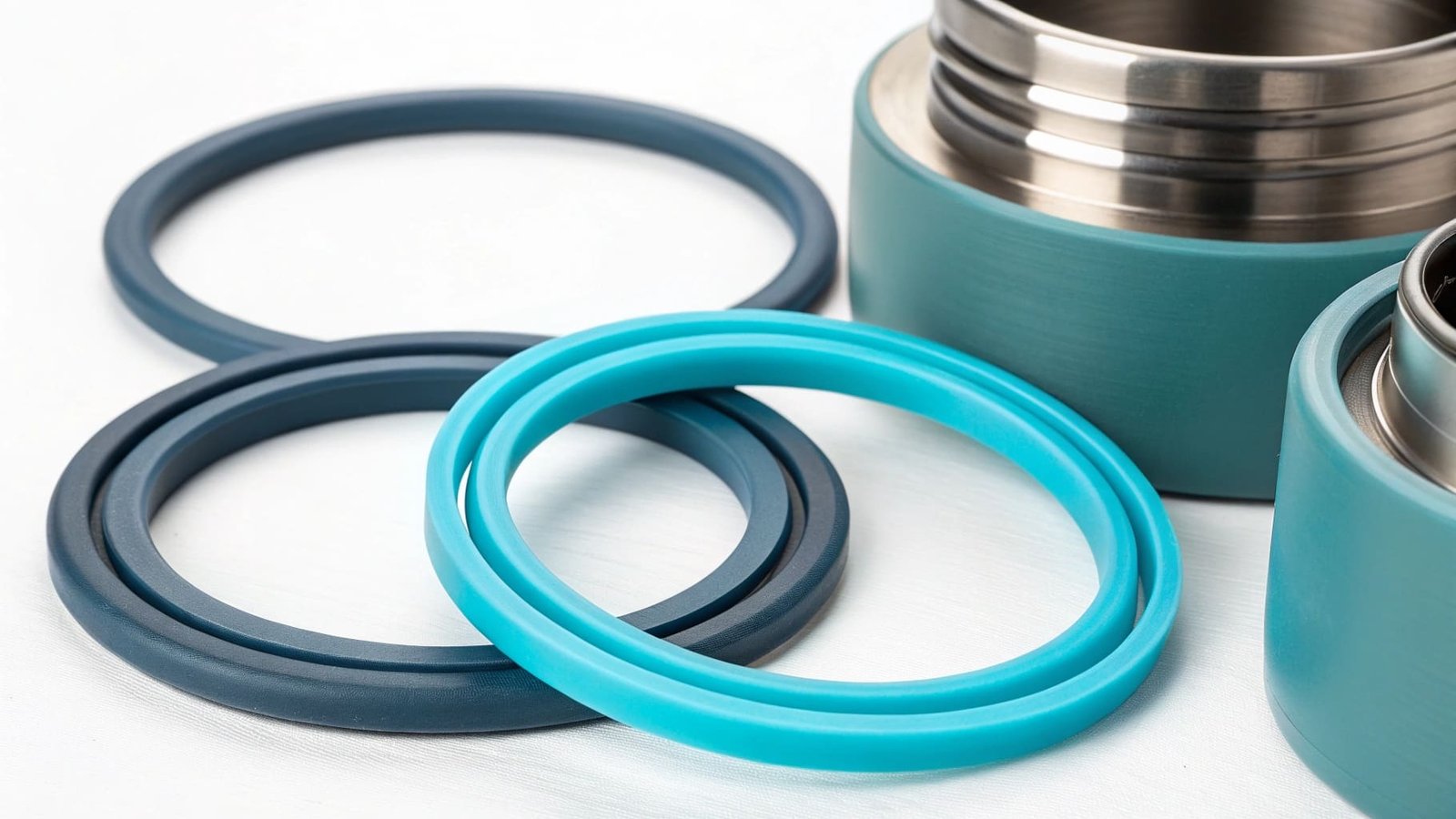
I've spent years working with water bottle components, and one thing I keep seeing is this: brands that pay close attention to their O-rings have fewer returns, fewer complaints, and stronger customer loyalty. Brands that don't often find out the hard way. Let me break down exactly what O-rings do, why they matter, and where they're used — so you can make better decisions for your product line.
What Is the Purpose of the O-Ring Seal?
Most product failures don't start with big design flaws. They start with small parts that nobody checked carefully enough. The O-ring is usually one of them.
An O-ring sits in a groove between two parts of a bottle — usually the lid and the bottle body. When you tighten or press the lid down, the O-ring gets compressed. This compression creates a tight barrier. Liquid cannot get out. Air cannot get in.
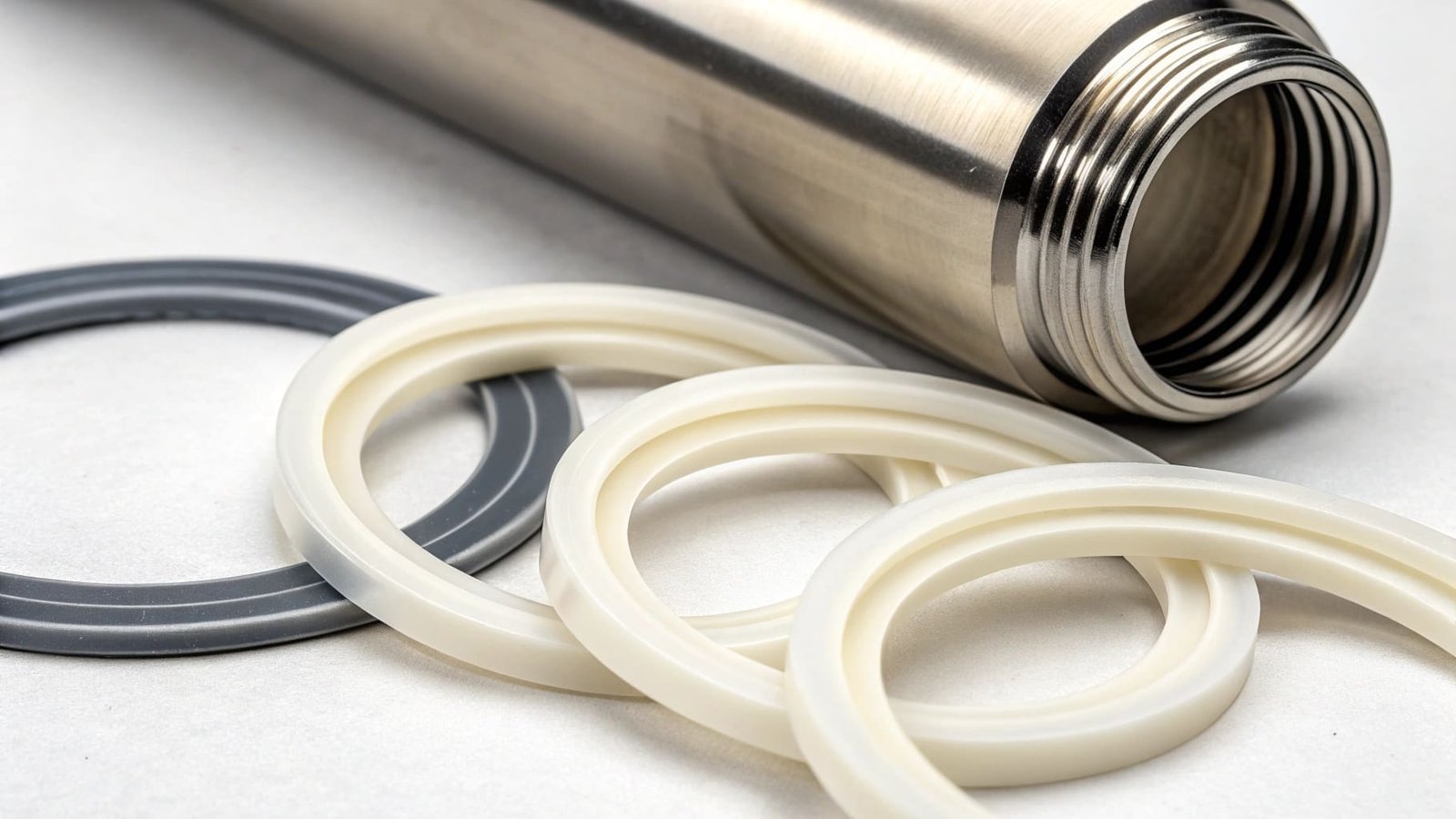
This might sound simple, but what's happening physically is more precise than most people think. The O-ring doesn't just sit there and block gaps. It deforms under pressure in a controlled way. That deformation fills the tiny surface imperfections between two mating parts — imperfections that are invisible to the eye but large enough to cause leaks.
For OEM production, this matters a lot. Every unit coming off the line needs to perform the same way. The O-ring makes that consistency possible, as long as it's made to the right dimensions and compressed at the right rate.
Here's a breakdown of what the O-ring seal actually does in a water bottle:
| Function | What It Does | Why It Matters |
|---|---|---|
| Liquid seal | Blocks water from leaking out of the lid | Prevents product damage and customer complaints |
| Air seal | Stops outside air from entering the bottle | Keeps beverages fresh longer |
| Vibration resistance | Maintains seal during movement and transport | Reduces leaks during shipping and daily use |
| Pressure compensation | Adjusts to pressure changes inside the bottle | Critical for hot and carbonated beverages |
The O-ring creates what engineers call a "static seal."2 It's not moving. It just sits compressed between two surfaces. That simplicity is exactly why it works so well. Fewer moving parts mean fewer failure points.
Are O-Rings Necessary?
Some manufacturers try to cut costs by removing O-rings or replacing them with cheaper alternatives. It usually backfires.
Yes, O-rings are necessary — especially if you're selling into markets like North America or Europe. Buyers in these markets test products hard. They expect zero leaks. They expect bottles to hold up after hundreds of wash cycles.
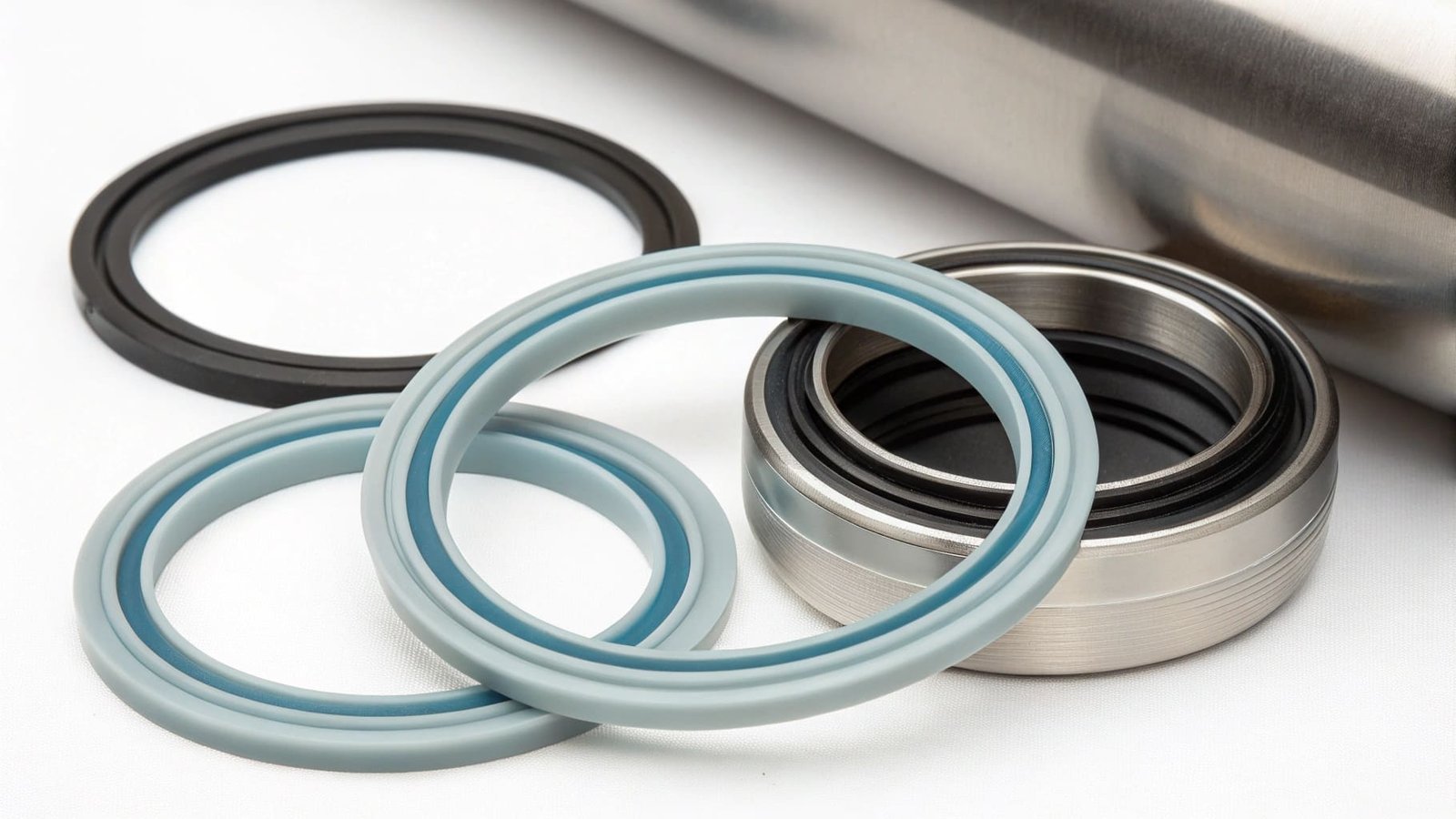
I've talked to procurement officers who've had to pull entire shipments because of leaking lids. The cost of that one problem — returns, replacements, lost reorders — is always far higher than the cost of a proper O-ring.3 The math is simple when you look at it that way.
Let's look at what happens when brands choose to keep O-rings versus when they try to remove them:
| Scenario | With O-Ring | Without O-Ring |
|---|---|---|
| Leak rate | Very low when made correctly | Higher, depends on lid tolerance |
| Return rate | Low | Often higher |
| Price positioning | Premium or mid-range | Usually budget only |
| Wash cycle durability | High with silicone O-rings | Drops faster with press-fit seals |
| Consumer trust | Strong | Weaker, especially after first leak |
Some bottle designs use press-fit lids or snap mechanisms without O-rings. These can work for low-cost, low-demand products. But they are not a real alternative for any brand that wants to compete in the premium or active-use segment.
Here's something else worth knowing. Adding a quality silicone O-ring to a bottle usually costs a very small amount per unit. But it can raise the retail value of the finished product by a meaningful margin. For brands that rebrand and resell, that gap between cost and perceived value is where profit lives.
There's also a compliance angle. Many retail chains in the US and Europe require FDA or LFGB food-safety certification for products that contact beverages. A proper food-grade silicone O-ring helps you meet those requirements. Removing it — or replacing it with an uncertified material — can block you from certain markets entirely.
What Type of Fitting Uses an O-Ring to Help Seal Its Joint?
Not every part of a water bottle uses an O-ring. Knowing where they're placed — and why — helps you design better products and ask the right questions when sourcing.
O-rings are used wherever two separate parts need to form a liquid-tight connection. In water bottles, that happens in more places than most people expect.
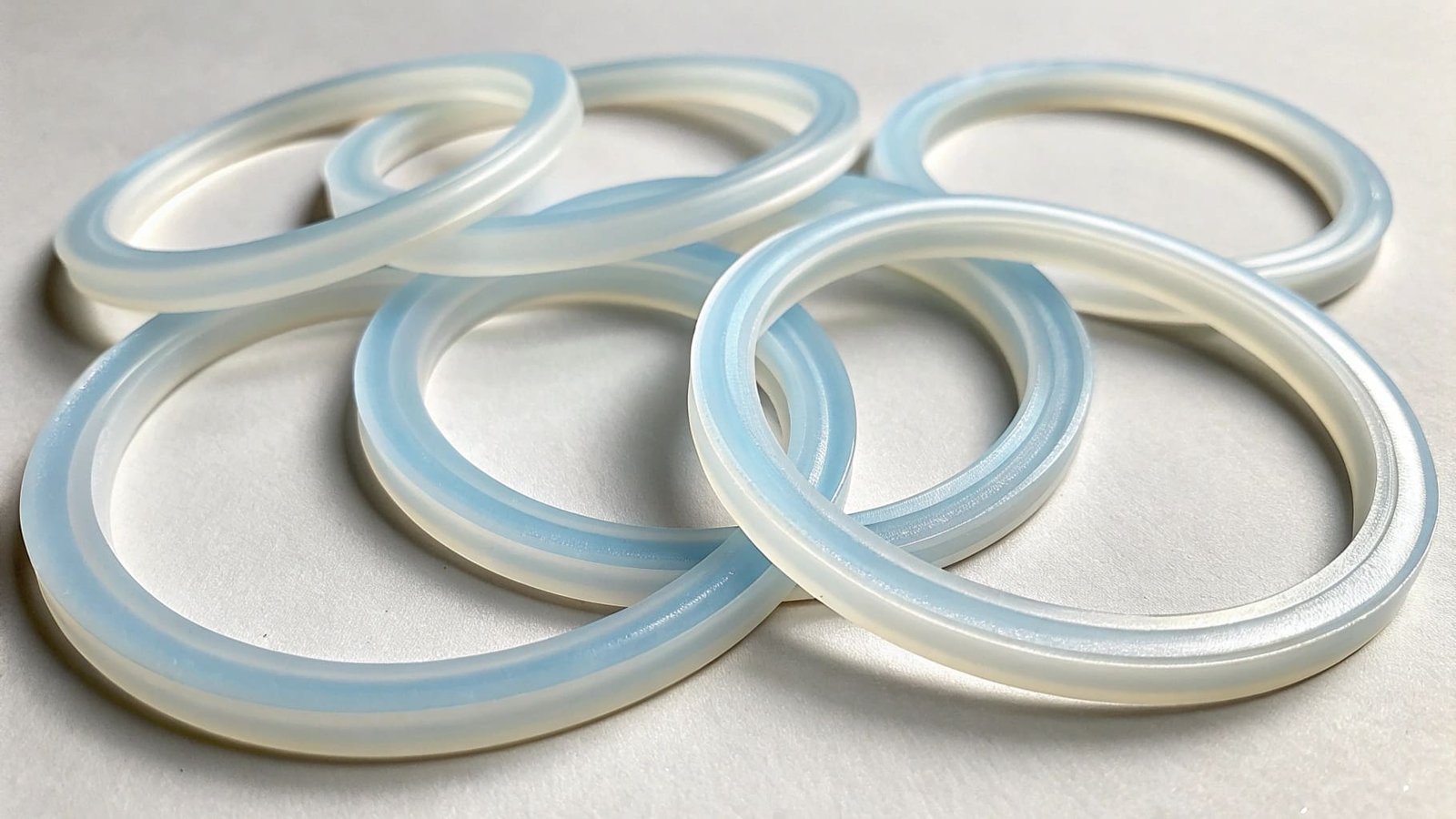
The most common place is the threaded cap assembly. When you screw a lid onto a bottle, the threads alone don't create a seal.4 There are tiny gaps between the threads. The O-ring sits at the base of the cap and gets compressed as you tighten the lid. That's what actually stops the leaking — not the threads themselves.
Here's a full look at where O-rings appear in common water bottle designs:
| Fitting Type | Where the O-Ring Sits | What It Seals |
|---|---|---|
| Threaded cap | Base of the cap, inside the rim | Main lid-to-body joint |
| Flip-top lid | Around the spout or hinge area | Spout opening when lid is closed |
| Press-fit lid | Outer groove of the lid | Friction-sealed lid edge |
| Straw lid assembly | Around the straw hole opening | Gap between straw and lid |
| Bite valve | Inside the valve housing | Liquid flow control point |
| Hydration bladder connector | Around the tube fitting | Connection between tube and bladder |
For OEM manufacturing, groove design is one of the most important technical details. The groove that holds the O-ring must be machined or molded to the right depth and width. If the groove is too shallow, the O-ring over-compresses and degrades quickly. If it's too deep, the O-ring under-compresses and won't seal properly.5
Standard OEM practice targets a compression rate between 10% and 30% of the O-ring's cross-sectional diameter.6 Most reliable manufacturers build their tooling around this range and verify it during the mold qualification stage. If a supplier can't tell you what compression rate their groove is designed for, that's a red flag worth taking seriously.
Material also plays a role here. Silicone O-rings are the preferred choice for premium water bottles. They stay flexible at both high and low temperatures. They don't absorb odors or flavors from beverages. They hold up well after repeated dishwasher cycles. And they meet the food-safety standards that North American and European buyers require.
Conclusion
O-rings seal bottles, protect your brand, and support compliance. They are a small part with a large impact on product quality and buyer confidence.
-
"O-ring - Wikipedia", https://en.wikipedia.org/wiki/O-ring. An engineering reference defines an O-ring as a circular elastomeric gasket designed to create a seal when compressed between mating surfaces. Evidence role: definition; source type: encyclopedia. Supports: An O-ring is a circular elastomeric gasket that seals by being compressed between two or more parts.. ↩
-
"O-ring - Wikipedia", https://en.wikipedia.org/wiki/O-ring. Engineering references distinguish static seals as seals between surfaces with no relative motion, a category that commonly includes compressed O-rings. Evidence role: definition; source type: education. Supports: Static seals are used between parts that do not move relative to each other, and O-rings are common static seals.. ↩
-
"What is Cost of Quality (COQ)? - ASQ", https://asq.org/quality-resources/cost-of-quality?srsltid=AfmBOor577BB560WSWsHZ4xcnO6_Yp2sW3Y2vVE0PtKSvPCpq7Pi9-ST. Quality-management studies classify returns, replacements, warranty service, and lost customer goodwill as external failure costs that can exceed the cost of preventive quality measures. Evidence role: general_support; source type: paper. Supports: Quality failures can generate external failure costs such as returns, replacements, warranty handling, and lost sales.. Scope note: This supports the cost-of-quality logic generally, not a quantified comparison for O-rings in water bottles specifically. ↩
-
"O-ring", https://en.wikipedia.org/wiki/O-ring. Mechanical-design references note that threads provide clamping or engagement, while fluid-tight threaded joints commonly require an additional sealing element such as a gasket or O-ring. Evidence role: mechanism; source type: education. Supports: Threaded joints often rely on a separate sealing element such as a gasket or O-ring when fluid tightness is required.. ↩
-
"Understanding O-Ring Squeeze, Stretch & Compression", https://www.marcorubber.com/o-ring-groove-design-considerations.htm/. O-ring design handbooks explain that gland depth and width determine seal squeeze, and that excessive squeeze can accelerate damage while insufficient squeeze can prevent an effective seal. Evidence role: mechanism; source type: institution. Supports: O-ring gland dimensions control squeeze, and both excessive and insufficient squeeze are recognized causes of seal problems.. ↩
-
"[PDF] Parker O-ring Handbook", https://wp.optics.arizona.edu/optomech/wp-content/uploads/sites/53/2016/10/Parker-O-ring-handbook.pdf. O-ring design guidance commonly specifies seal squeeze as a percentage of cross-sectional diameter, with typical static-seal ranges often falling near 10% to 30% depending on material, gland design, and service conditions. Evidence role: expert_consensus; source type: institution. Supports: Common O-ring design guidance recommends percentage squeeze ranges that often fall within roughly 10% to 30%, depending on application and material.. Scope note: The acceptable range varies by application, material hardness, temperature, and whether the seal is static or dynamic. ↩