Why Do Wholesale Buyers Prefer Silicone Rings Over Rubber Seals for Tumblers?
You sourced a batch of tumblers. The seals failed within months. Your client is angry, and your reputation takes the hit. Sound familiar?
Wholesale buyers prefer silicone rings over rubber seals for tumblers because silicone handles extreme temperatures, resists chemical degradation, and meets food-safety standards like FDA and LFGB without extra additives1. These three factors lower return rates, protect brand reputation, and reduce compliance risk at scale.
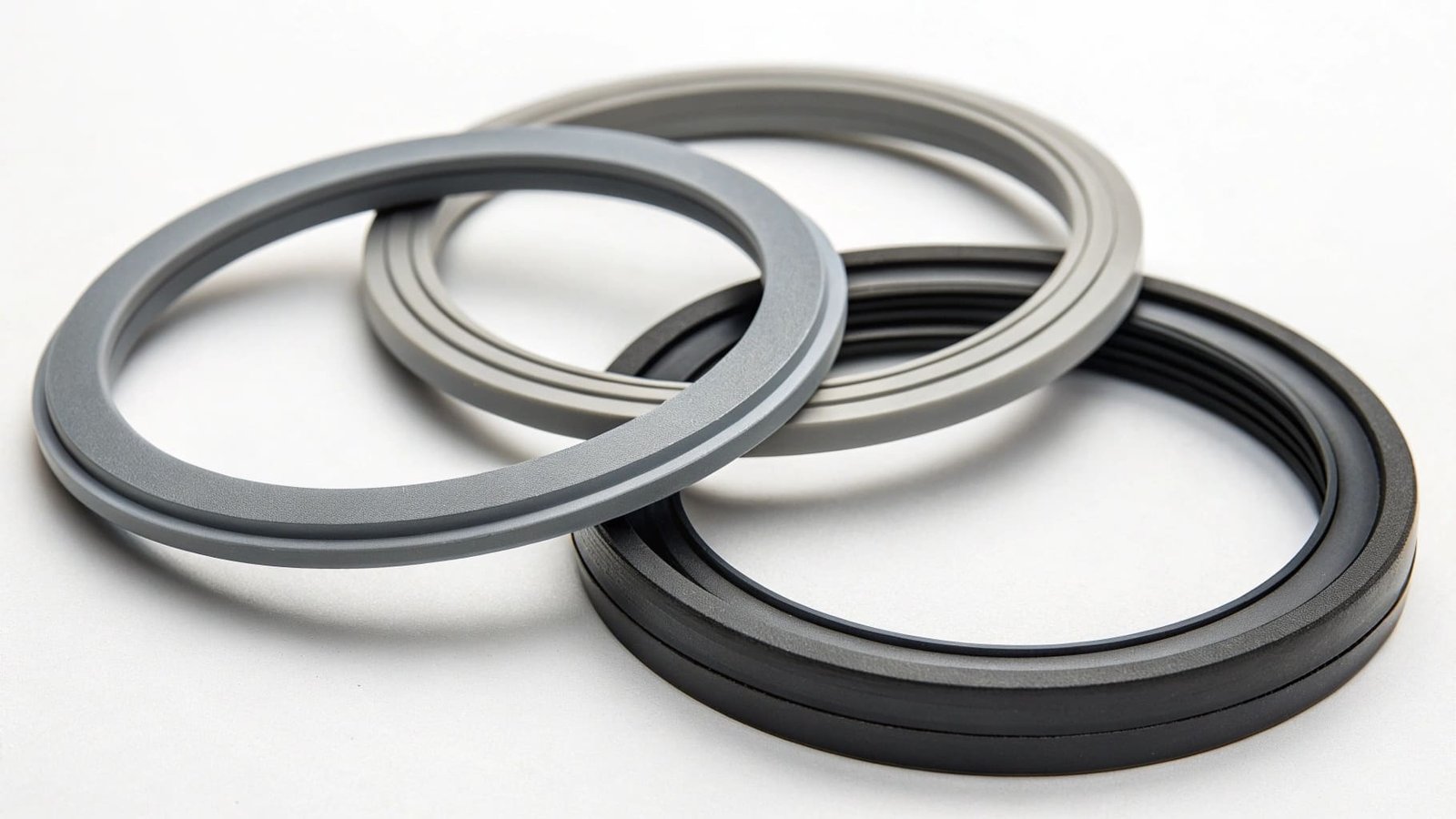
I have worked with tumbler buyers from North America and Europe for years. The same question comes up again and again. "Why should I pay more for silicone when rubber costs less?" I used to spend a lot of time explaining this on calls. Now I want to lay it out clearly, once and for all, so buyers like you can make a faster, smarter decision.
Are Silicone O-Rings Better Than Rubber?
You bought rubber seals because they were cheap. Then your customer called. The seal cracked. The tumbler leaked. Now you are paying for returns.
Silicone O-rings outperform rubber seals in tumbler applications because they stay flexible and maintain a tight seal across a temperature range from -20°F to over 400°F.2 Rubber becomes brittle in cold conditions and breaks down fast when exposed to hot beverages repeatedly.3
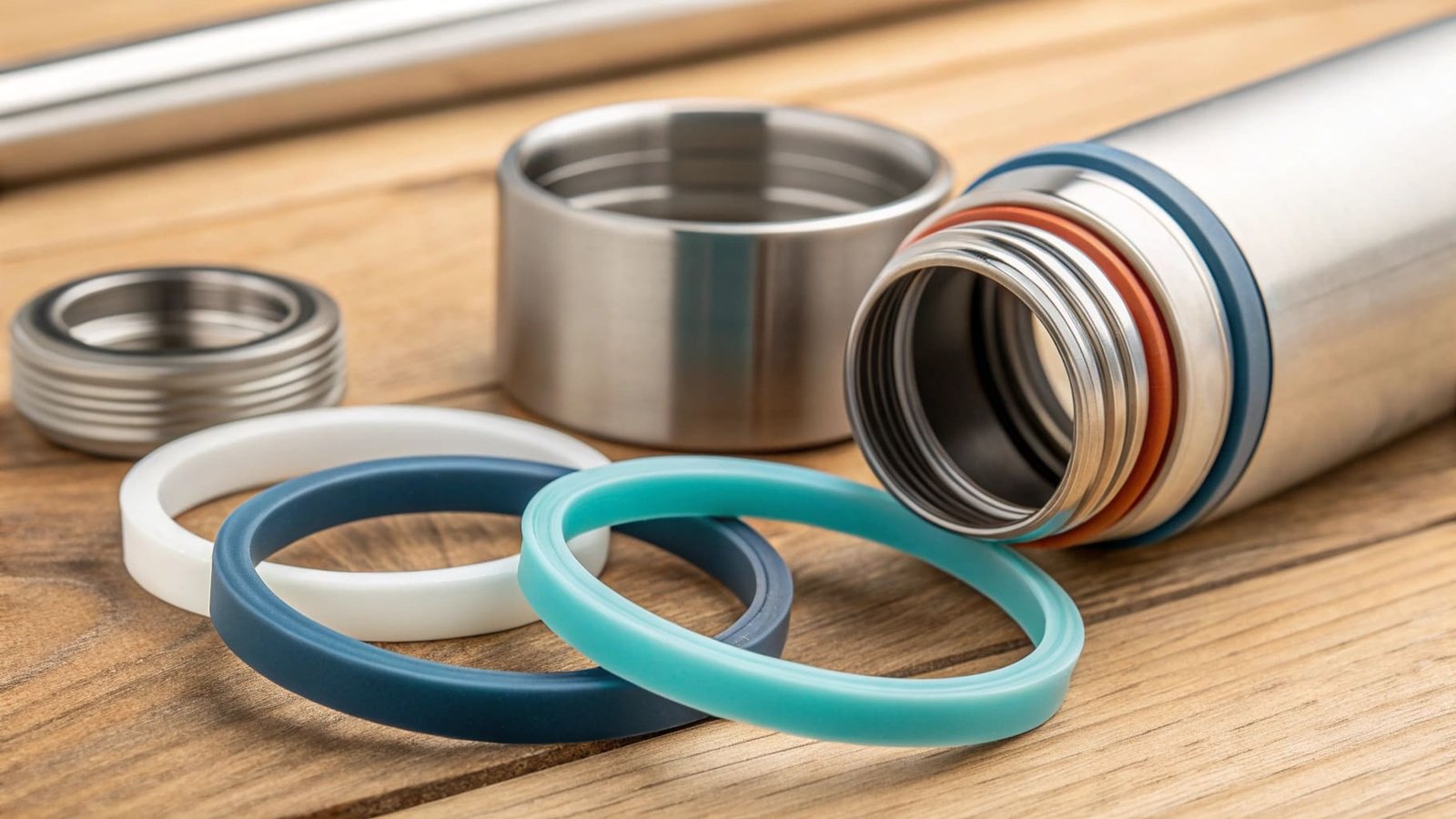
This is not a small difference. It is the kind of difference that shows up in your return rate data after one selling season.
I have seen buyers switch from rubber to silicone after just one bad batch. The cost of customer complaints, replacement shipments, and lost reorders far exceeded the price gap between the two materials.
Here is a direct comparison that I use when talking with procurement officers:
How Do Silicone and Rubber Seals Compare on Performance?
| Performance Factor | Silicone O-Ring | Rubber Seal |
|---|---|---|
| Temperature Range | -20°F to 400°F+ | -4°F to 212°F (typical) |
| Cold Weather Flexibility | Stays flexible | Becomes brittle and cracks |
| Hot Beverage Resistance | Stable, no deformation | Degrades, loses shape |
| Return Rate Impact | Low | High in extreme climates |
| Lifespan in Daily Use | 2+ years | Often under 12 months |
If you are supplying tumblers to retail chains or corporate gifting companies in Canada or the northern United States, temperature performance is not a nice-to-have. It is a basic requirement. A seal that cracks in winter is a liability. Silicone removes that risk from the equation.
The fifteen to thirty percent price premium at wholesale volumes starts to look very small when you compare it against the cost of one large return claim.
Which Is Better, Rubber or Silicone?
Your tumbler seal smells strange after a month of coffee use. Your client notices. They stop reordering. You never find out why.
Silicone is better than rubber for tumbler seals because it does not absorb acidic drinks, oils, or cleaning agents. Rubber seals swell, hold odors, and lose sealing ability after repeated contact with coffee, citrus juice, and dishwasher chemicals.4
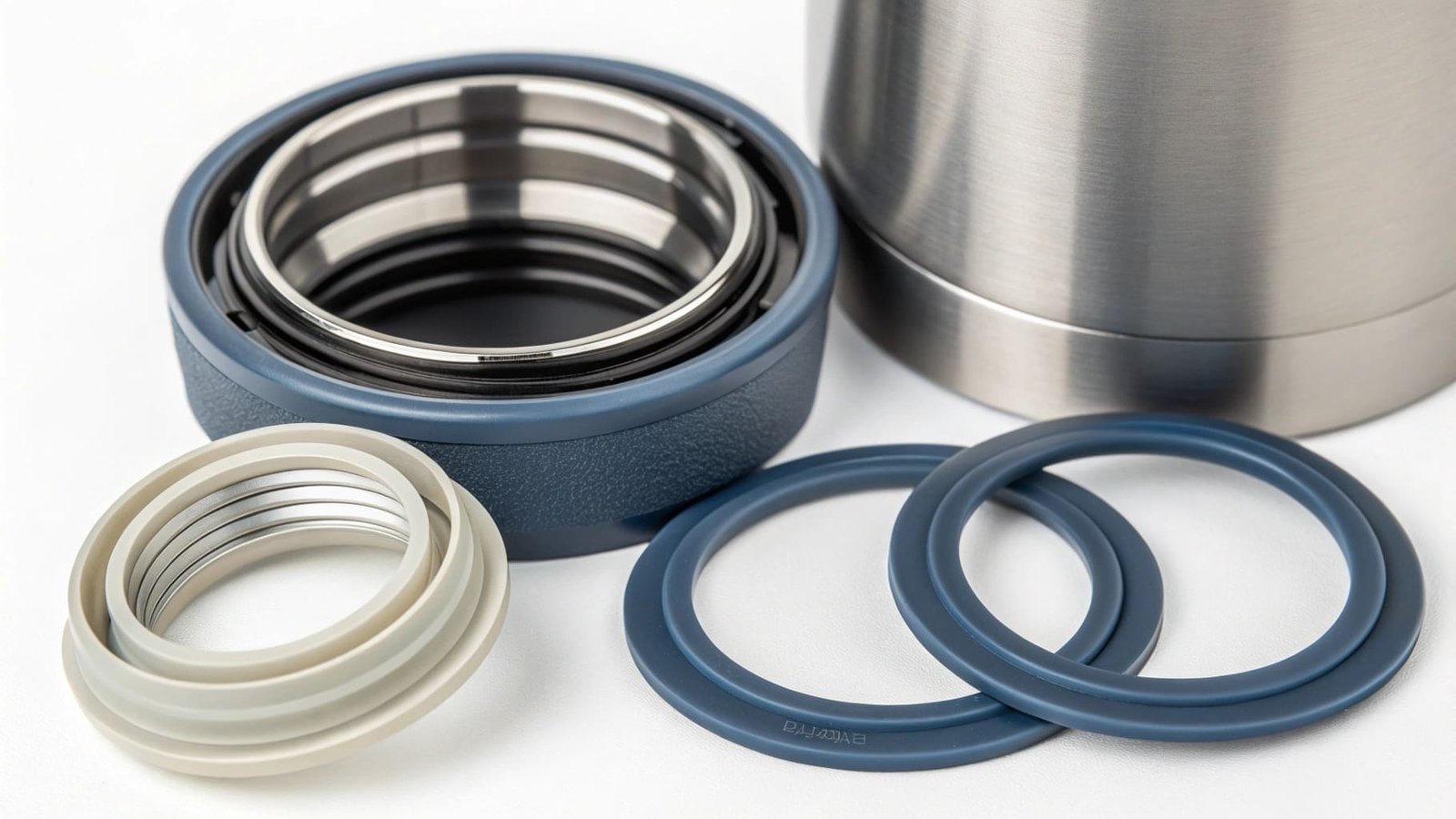
I had a customer once who came to me after switching suppliers twice. Each time, the rubber seals on their branded tumblers started failing around the three-month mark. The seals were absorbing coffee oils. They expanded slightly, then lost their grip. The tumbler lid felt loose. The customer blamed the whole product.
This is a chemical resistance problem, and rubber simply does not solve it well.
Why Does Chemical Resistance Matter So Much for Tumblers?
Tumblers face a tough environment. They hold hot coffee in the morning, get washed with strong dish soap at noon, and sit in a freezing car overnight.5 Each of these moments puts stress on the seal.
Here is what happens to rubber versus silicone under real-world conditions:
| Exposure Type | Silicone Behavior | Rubber Behavior |
|---|---|---|
| Coffee and acidic drinks | No absorption, no odor | Absorbs oils, retains odor |
| Dishwasher chemicals | Chemically stable | Swells and softens over time |
| Citrus-based beverages | No degradation | Gradual surface breakdown |
| Repeated heating and cooling | Maintains shape | Warps and loses seal integrity |
| Oil-based cleaning products | Unaffected | Absorbs and weakens |
For wholesale buyers, this matters on two levels.
First, it affects the product lifecycle. A silicone seal that lasts two years means your client reorders because they want more tumblers, not because the old ones failed. That is a very different kind of reorder conversation.
Second, it affects brand perception. If you are a distributor who rebrands tumblers and sells them at a premium in Canada, a seal failure is not just a product problem. It is a brand problem. Your name is on the product. The end consumer does not know who made the original seal. They only know your brand failed them.
Silicone protects the product lifecycle and the brand at the same time. That is the real argument for paying more per unit.
Why Do People Use Silicone Rings?
You found a cheaper seal option. Then your biggest retail client asked for your food safety certification. You had nothing to show them.
People use silicone rings because silicone is naturally food-grade and meets FDA and LFGB standards without needing chemical additives like plasticizers or stabilizers.6 Rubber often requires these additives, which can leach into beverages over time.7
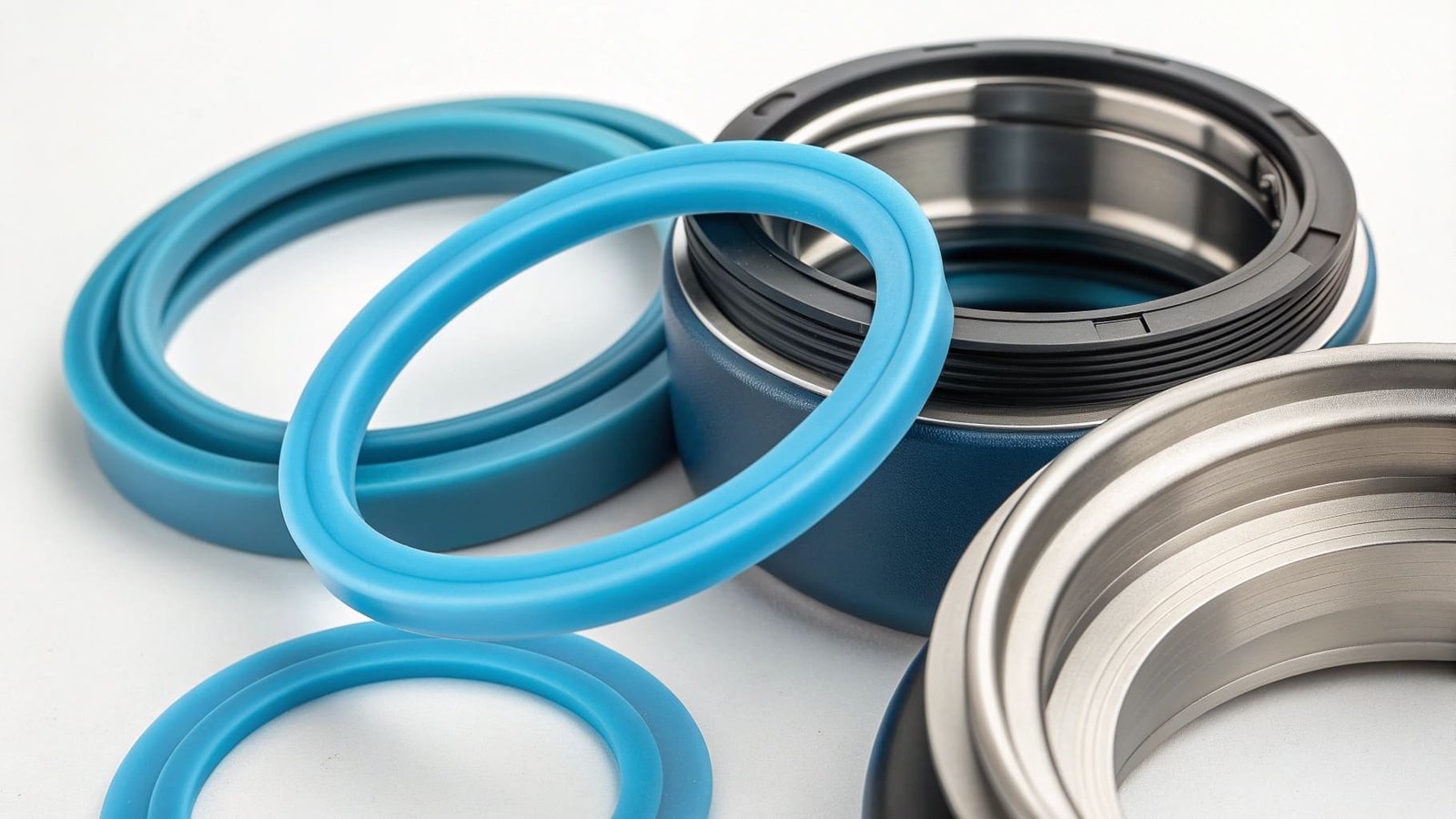
This is the compliance argument, and it is becoming more important every year.
I have seen this situation play out more than once. A buyer sources rubber seals from a low-cost supplier. The certifications look fine at first glance. Then a retail chain or a corporate client asks for detailed documentation. The supplier cannot provide clean test reports. The deal falls through, or worse, the product gets pulled from shelves.
What Makes Silicone the Safer Compliance Choice?
The core issue is what goes into the material. Rubber compounds often need additional chemicals to achieve the right flexibility and durability. These additives may not be safe for food contact. They can migrate into liquid over time, especially when exposed to heat.
Silicone does not have this problem at the base material level. It is stable, inert, and does not require plasticizers to perform.
Here is a breakdown of the compliance picture:
| Compliance Factor | Silicone O-Ring | Rubber Seal |
|---|---|---|
| FDA Food Contact Compliance | Standard for quality grades | Requires careful formulation |
| LFGB (European Standard) | Achievable without additives | Often requires additive review |
| Chemical Migration Risk | Very low | Higher, especially under heat |
| Certificate Verification Ease | Straightforward | More complex, additive-dependent |
| Regulatory Trend Direction | Favored | Under increasing scrutiny |
For buyers who supply into the United States and Europe, this is not an abstract concern. Regulatory bodies in both regions are tightening food contact material rules.8 Health-conscious consumers are reading labels and asking questions.
If your tumbler product carries your brand, the seal inside it is part of your product. A seal that does not meet clean food safety standards is a legal and reputational risk you are carrying without realizing it.
Silicone removes most of that risk. The certification process is cleaner. The test results are easier to verify. And when your client asks for documentation, you have something solid to send them.
This is also where supplier trust becomes critical. I always recommend that buyers ask for independent third-party test reports, not just certificates issued by the supplier. Real food-grade silicone stands up to scrutiny. If a supplier hesitates on that request, that is a signal worth paying attention to.
Conclusion
Silicone rings beat rubber seals on temperature range, chemical resistance, and food safety compliance. For wholesale buyers, the price gap is worth it.
-
"Inventory of Food Contact Substances Listed in 21 CFR", https://hfpappexternal.fda.gov/scripts/fdcc/index.cfm?search=silicone&set=IndirectAdditives. Materials-science literature describes silicone elastomers as having broad thermal stability, relatively high chemical inertness, and common use in food-contact components, supporting the material basis for preferring silicone seals in tumbler applications. Evidence role: general_support; source type: research. Supports: A neutral materials-science source should support silicone elastomers’ broad service-temperature range, chemical inertness, and suitability for food-contact applications.. Scope note: This would support the material-property rationale, but it would not directly prove lower return rates or buyer preference. ↩
-
"[PDF] Elastomer Characteristics", https://www.nrc.gov/docs/ML0720/ML072040257.pdf. Published materials references report that silicone rubber retains useful elastomeric properties over a wide temperature range, commonly extending below freezing and to approximately 200°C, supporting its use where sealing performance must persist under hot and cold conditions. Evidence role: mechanism; source type: research. Supports: A materials reference should document the typical operating-temperature range and flexibility retention of silicone rubber.. Scope note: The cited range may vary by silicone grade and formulation, so it should be treated as typical rather than universal. ↩
-
"Study on the Mechanical Behavior of Nitrile Rubber Materials Under ...", https://pmc.ncbi.nlm.nih.gov/articles/PMC12941664/. Polymer-aging studies show that many rubber elastomers undergo low-temperature stiffening or embrittlement and heat-accelerated oxidative degradation, providing a mechanistic basis for reduced sealing reliability under repeated cold and hot exposure. Evidence role: mechanism; source type: paper. Supports: A polymer-aging study should explain low-temperature stiffening and heat-related degradation in common rubber elastomers.. Scope note: The evidence is general to rubber elastomers and may not apply equally to all specialty rubber compounds. ↩
-
"Toxicological Risk Assessment of Coffee Oil (Coffee Seed Oil ... - PMC", https://pmc.ncbi.nlm.nih.gov/articles/PMC12297953/. Studies of elastomer swelling show that absorption of liquids can change rubber dimensions and mechanical properties, which can reduce sealing effectiveness after repeated chemical exposure. Evidence role: mechanism; source type: paper. Supports: A polymer or seal-engineering study should link chemical uptake or swelling in rubber to dimensional change and reduced sealing performance.. Scope note: The evidence may support swelling and sealing loss generally, while odor retention from coffee or citrus may require a more specific food-contact study. ↩
-
"Strain Effects Upon the Degradation of Fluoroelastomers.", https://ntrl.ntis.gov/NTRL/dashboard/searchResults/titleDetail/PB89170054.xhtml. Elastomer-aging research indicates that temperature cycling and chemical exposure can alter hardness, elasticity, swelling, and compression-set behavior, explaining why everyday tumbler conditions can stress lid seals. Evidence role: mechanism; source type: paper. Supports: A seal-aging or elastomer-degradation study should explain that combined heat, cold, and chemical exposure accelerates changes in elastomer properties.. Scope note: The cited mechanism would be contextual unless the study tests tumbler seals specifically. ↩
-
"21 CFR 177.2600 -- Rubber articles intended for repeated use. - eCFR", https://www.ecfr.gov/current/title-21/chapter-I/subchapter-B/part-177/subpart-C/section-177.2600. Food-contact regulations recognize certain silicone materials for food-contact applications when they meet specified compositional and migration requirements, supporting the claim that properly formulated silicone rings can be certified for food use. Evidence role: definition; source type: government. Supports: Regulatory sources should define food-contact requirements for silicone materials and clarify that compliant grades must meet migration or composition limits.. Scope note: This does not mean all silicone is inherently food-grade; compliance must be verified for the specific formulation and test conditions. ↩
-
"Migration of Chemical Compounds from Packaging Materials into ...", https://pmc.ncbi.nlm.nih.gov/articles/PMC11475518/. Research on food-contact elastomers reports that additives and low-molecular-weight compounds can migrate from rubber materials into food simulants, supporting concern about additive migration in beverage-contact seals. Evidence role: mechanism; source type: paper. Supports: A food-contact-materials study should document migration of additives from rubber or elastomer materials into food simulants.. Scope note: Migration levels depend on the exact rubber formulation, temperature, contact time, and food simulant. ↩
-
"Food Packaging & Other Substances that Come in Contact with Food", https://www.fda.gov/food/food-ingredients-packaging/food-packaging-other-substances-come-contact-food-information-consumers. Recent government materials on food-contact substances in the United States and European Union document ongoing regulatory review, updated guidance, and modernization efforts, providing context for increased compliance scrutiny. Evidence role: historical_context; source type: government. Supports: Government sources should show recent revisions, consultations, enforcement priorities, or modernization efforts related to food-contact materials.. Scope note: Such sources may show regulatory activity and scrutiny rather than proving a uniform tightening of every rule in both regions. ↩