Where to Find Stanley Tumbler Boots for Wholesale Distribution?
You want to sell Stanley tumbler boots. But you don't know where to start. The wrong supplier will waste your time and money.
Stanley tumbler boots are sold by many silicone accessory manufacturers in China. The best ones offer food-grade silicone, full size ranges, private label options, and stable production capacity. Look for suppliers on Google, at trade shows, or through verified B2B platforms.
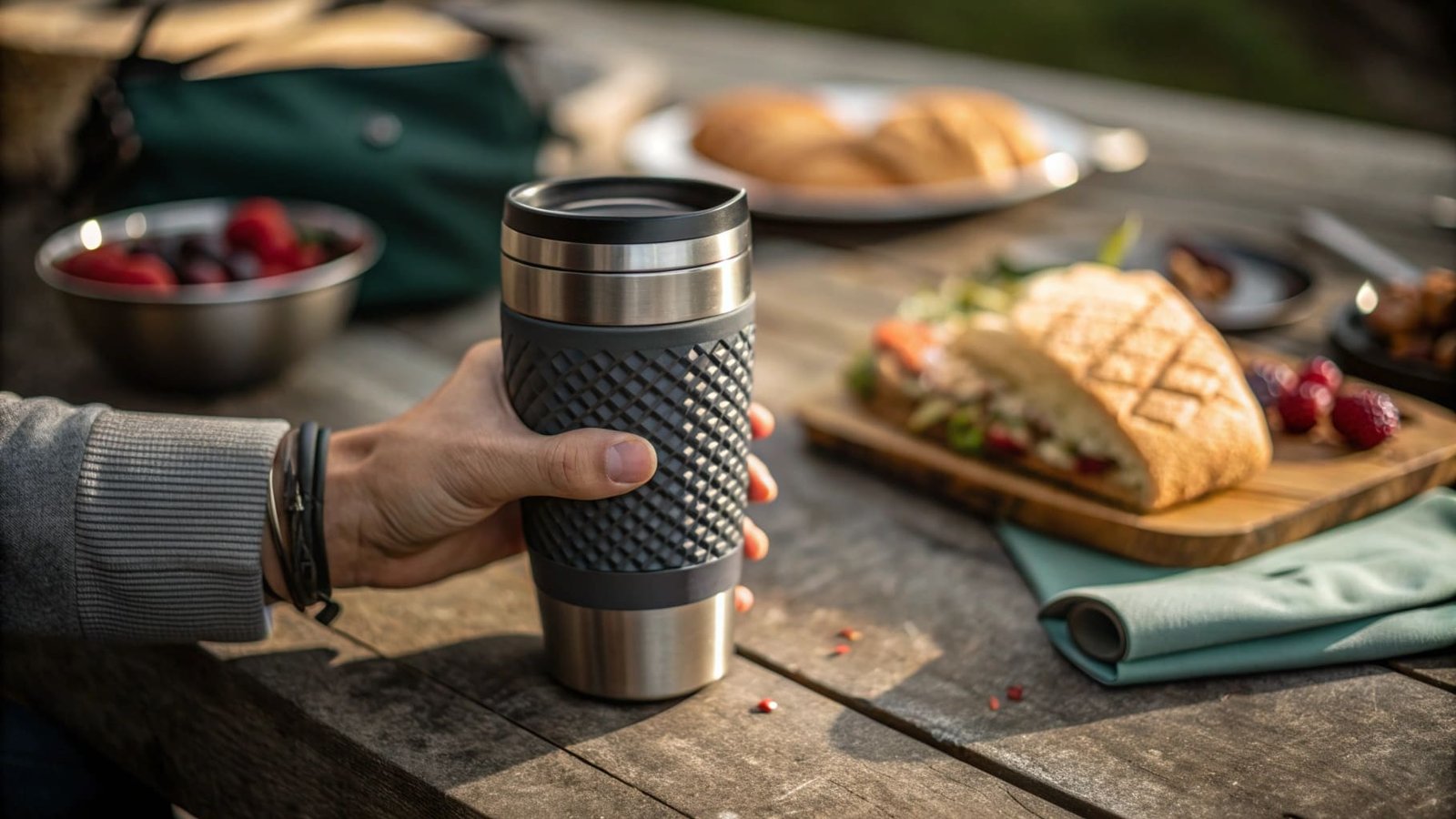
This market is growing fast. More people are buying Stanley tumblers, and they want accessories to protect them. That means more buyers like you are looking for reliable wholesale sources. Before you pick a supplier, you need to understand the product itself. You need to know why the boot exists, which sizes matter most, and whether the boot works across different tumbler brands. That knowledge will help you ask better questions and make smarter buying decisions.
Why Do Stanley Cups Need a Boot?
You drop your tumbler. It scratches your table. It slides off your desk. These small problems frustrate customers every single day.
A Stanley tumbler boot solves these problems.1 It is a silicone sleeve that fits over the bottom of the cup. It protects floors and surfaces from scratches, stops the cup from sliding, and absorbs shock when the cup is dropped. Most boots are made from food-grade silicone.2
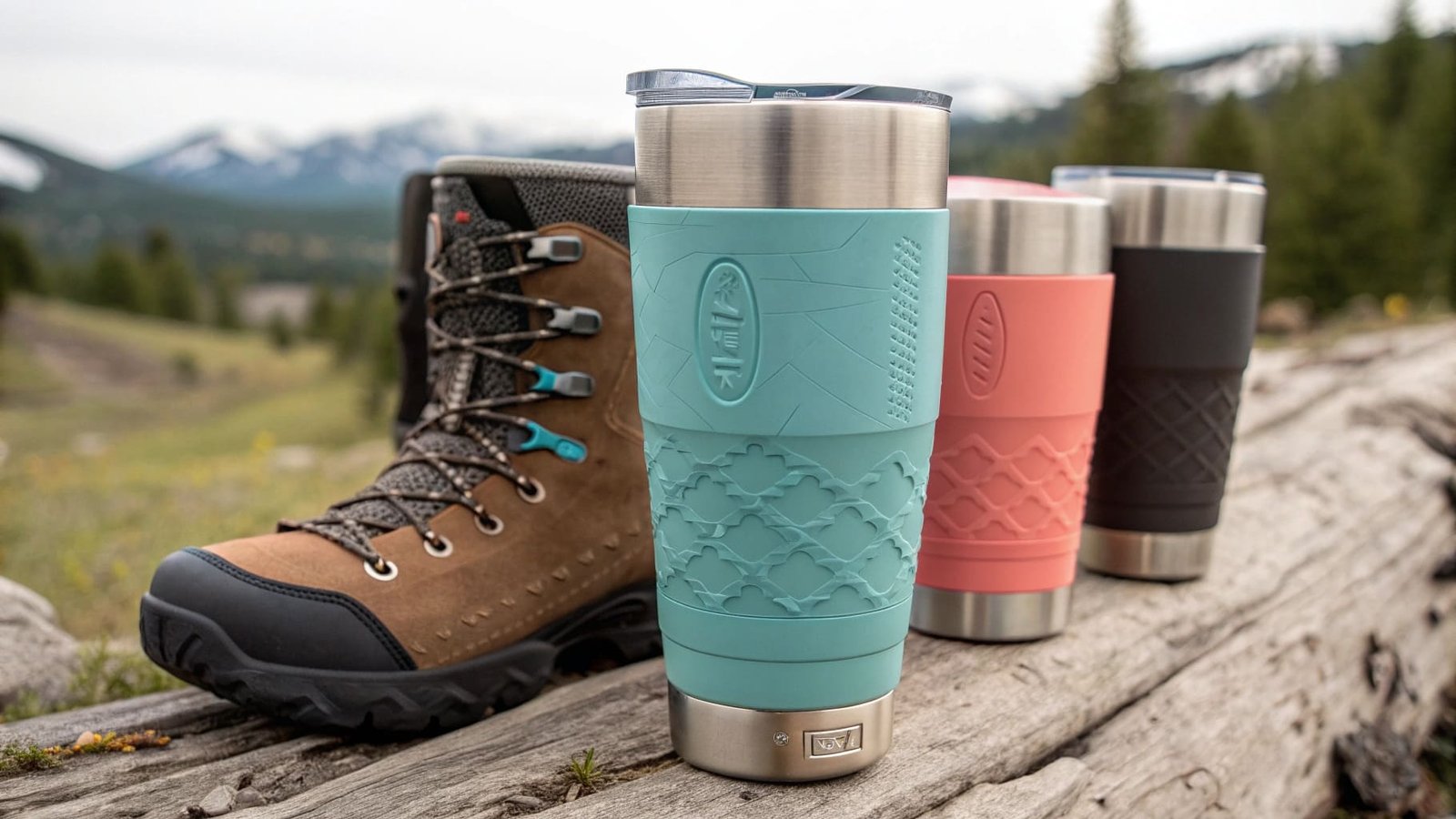
The boot looks simple. But it does several jobs at the same time. Let me break them down.
What Does the Boot Actually Do?
| Function | Explanation |
|---|---|
| Scratch protection | The soft silicone sits between the hard cup base and your table or countertop |
| Slip resistance | Silicone grips most surfaces better than bare stainless steel3 |
| Impact absorption | The flexible material cushions the cup when it falls or is placed down hard |
| Noise reduction | Silicone dampens the sharp clacking sound when the cup hits a hard surface4 |
Each of these functions matters to the end customer. That is why the boot has become a popular add-on product in the drinkware accessories space.
Now, here is what matters for you as a wholesale buyer. The boot must be made from food-grade silicone. This is not just a quality preference. It is a baseline expectation in the North American market.5 Your customers will ask about it. Your buyers will check for it. When I source these products, I always ask for food-grade certification upfront. Do not skip this step.
The material also needs to handle temperature changes well. Stanley tumblers are used for both hot and cold drinks. A boot that cracks in cold weather or deforms in heat will come back as a return. Good silicone handles temperatures from well below freezing to well above boiling without losing its shape.6 This is one of the main reasons silicone won out over rubber or plastic for this application.
One more thing. The fit has to be tight but not too tight. If the boot falls off during normal use, customers will be unhappy. If it is so tight that it tears during installation, that is also a problem. Precision in the mold dimensions is what separates a good manufacturer from a bad one. I have seen boots that looked fine in photos but failed in the field because the manufacturer did not control tolerances closely enough.
What Is the Largest Stanley Cup Size?
You want to stock the most popular sizes. But you are not sure which ones sell and which ones sit on the shelf.
The largest Stanley tumbler in the mainstream lineup is the 40oz Quencher.7 It is also the most popular size on the market right now. The 30oz, 20oz, and 14oz versions also have strong demand, but the 40oz drives most of the conversation.
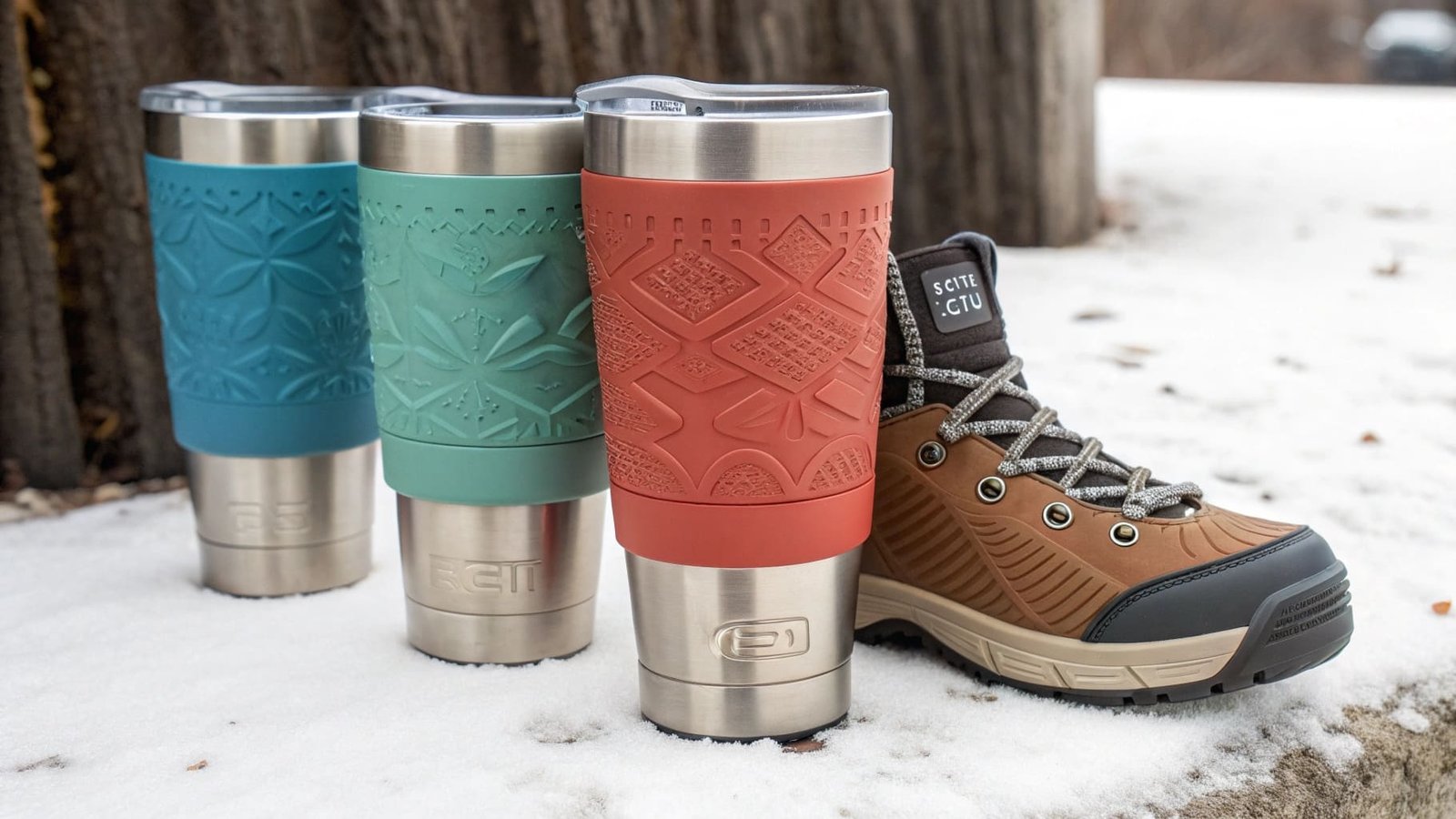
Each size has a different base diameter. That means each size needs its own boot. This is important for your inventory planning.
Stanley Tumbler Sizes and Boot Fit
| Cup Size | Notes |
|---|---|
| 40oz Quencher | Largest and most popular. Highest demand for boots. |
| 30oz Tumbler | Second most popular. Steady demand across all seasons. |
| 20oz Tumbler | Popular for hot drinks and smaller everyday use. |
| 14oz Mug | Smaller size, often used for children or travel. |
Each size requires a boot that is made to its specific base dimensions. A 30oz boot will not fit a 40oz cup. A 40oz boot will be too loose on a 20oz cup. This is not a minor issue. A poor fit means the boot falls off or bunches up. Either way, the customer is not happy.
For you as a wholesale distributor, this creates a real inventory challenge. You need to carry multiple SKUs. But it also creates an opportunity. Many smaller distributors only stock the 40oz size. If you carry the full range, you can serve customers that others cannot. I have seen buyers come back specifically because a distributor had the 30oz and 14oz in stock when everyone else was out.
When you talk to a supplier, ask whether they make boots for all four sizes. Ask whether the molds are standardized or custom. Ask whether they can guarantee consistent fit across batches. These questions will tell you quickly whether you are talking to a serious manufacturer or a middleman with no real production control.
Do Stanley Boots Fit Yeti?
You want one boot that fits every tumbler brand. That would make your inventory simple. But does it actually work?
Most Stanley boots are designed for Stanley's specific base dimensions. They do not fit Yeti tumblers perfectly. The base diameters and curve profiles are different between the two brands. A universal-fit boot may work on both, but it often fits neither one well.
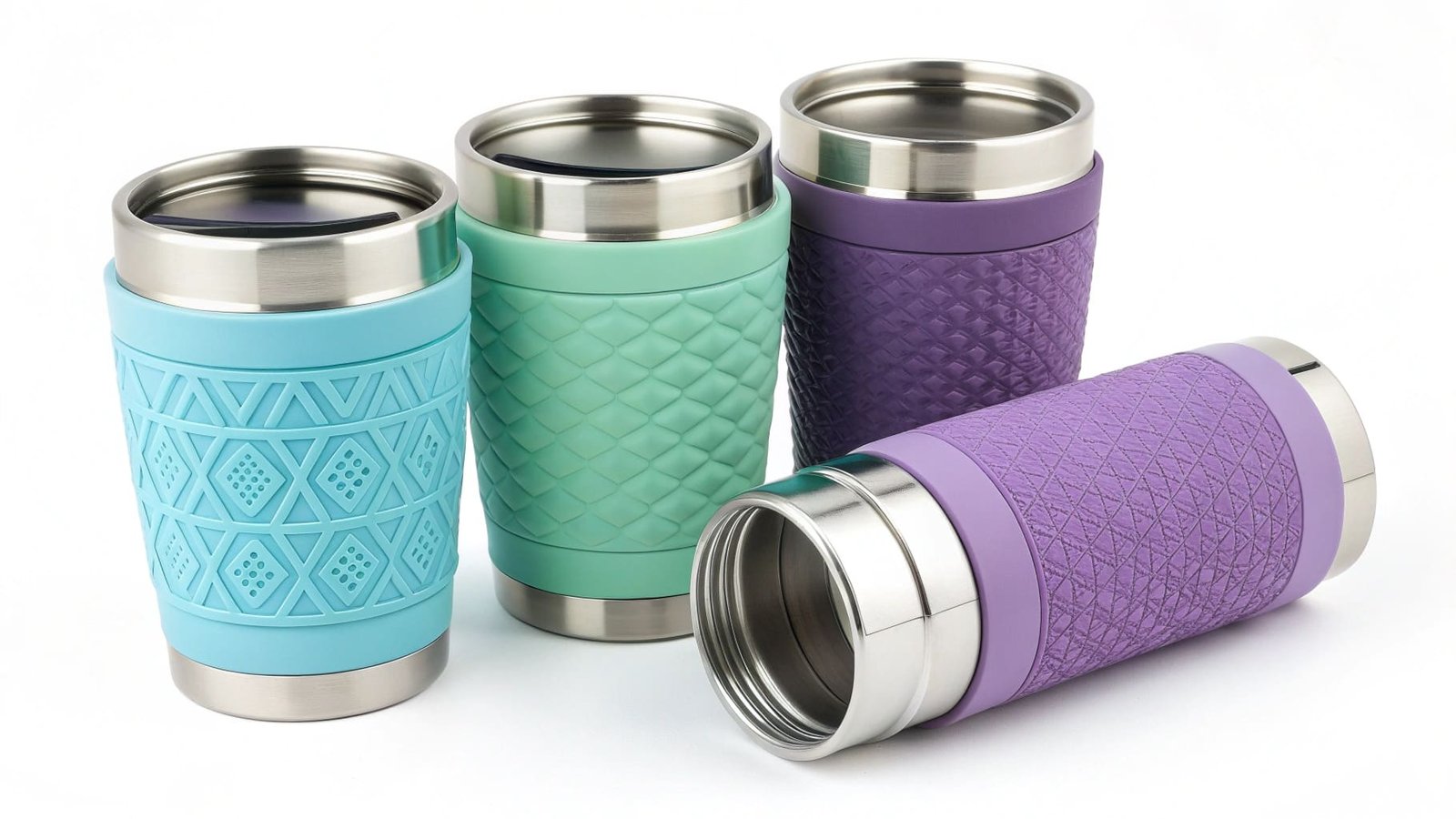
This is one of the most common questions I get from buyers who are new to this product category. The answer is not a simple yes or no. Let me explain the full picture.
Brand-Specific vs. Universal-Fit Boots
| Option | Pros | Cons |
|---|---|---|
| Brand-specific boots | Precise fit, better customer satisfaction, fewer returns | More SKUs to manage, higher inventory cost |
| Universal-fit boots | Fewer SKUs, simpler inventory | Looser fit, more customer complaints, compromise on quality |
The base of a Stanley tumbler and the base of a Yeti tumbler are close in size, but they are not the same. The difference might be just a few millimeters. But in silicone, a few millimeters changes how the boot grips the cup. A boot that is slightly too wide will slide off. A boot that is slightly too tight will be hard to put on and may stretch out over time.
Some manufacturers advertise their boots as universal fit. In my experience, this usually means the boot fits the most popular size from the most popular brand, and it sort of works on others. That is not a quality story you want to tell your customers.
If you are building a brand in the North American market, I would recommend going with brand-specific boots. Yes, you carry more SKUs. But your return rate will be lower, your reviews will be better, and your customers will trust your products. That trust is what brings them back for repeat orders.
There is another angle here. If you offer private label products, brand-specific boots give you a stronger story. You can say your boots are made specifically for Stanley tumblers, tested for fit, and certified for food-grade materials. That is a much easier sell than a vague claim of universal compatibility. Precision is a selling point. Use it.
Conclusion
Start with the product basics. Know the sizes, the materials, and the fit. Then find a supplier who can prove quality and scale with you.
-
"Hardness and shock absorption of silicone rubber for mouth guards", https://pubmed.ncbi.nlm.nih.gov/8642539/. Materials research on silicone rubber's elastic cushioning and frictional behavior would support the mechanism by which a bottom sleeve can reduce slipping, surface contact, and impact transmission. Evidence role: mechanism; source type: paper. Supports: A materials or engineering paper should explain silicone rubber's friction, cushioning, and protective properties relevant to a cup-bottom sleeve.. Scope note: The evidence would support the material mechanism generally, not necessarily performance of a specific Stanley boot design. ↩
-
"WATIIFUFU 2pcs Silicone Tumbler Boot Food-grade - Bottle Cover ...", https://www.amazon.com/WATIIFUFU-Multi-functional-Silicone-Non-Skid-Stainless/dp/B0DHYJ3QBY. A source describing tumbler boots or comparable drinkware sleeves as commonly made from food-grade silicone would support the material claim for the product category. Evidence role: general_support; source type: other. Supports: A neutral product-standard, testing, or trade-source overview should show that tumbler boots are commonly specified as food-grade silicone.. Scope note: This would usually be based on product-category observation rather than a comprehensive market census. ↩
-
"Influence of surface structure on friction and wear characteristics of ...", https://pmc.ncbi.nlm.nih.gov/articles/PMC10652250/. Tribology research comparing silicone rubber and metallic surfaces can support the mechanism that a silicone boot increases grip relative to a bare stainless-steel tumbler base. Evidence role: mechanism; source type: paper. Supports: A tribology or materials paper should report friction behavior or coefficients for silicone rubber and stainless steel.. Scope note: Actual grip depends on surface finish, contamination, load, and countertop material. ↩
-
"Study on Optimization of Damping Performance and ... - PMC", https://pmc.ncbi.nlm.nih.gov/articles/PMC7285255/. Research on silicone rubber's viscoelastic damping behavior would support the claim that a silicone layer can reduce vibration and impact sound when a tumbler contacts a hard surface. Evidence role: mechanism; source type: paper. Supports: A materials or acoustics paper should show that silicone rubber has viscoelastic damping properties that reduce vibration and impact noise.. Scope note: The source would establish the damping mechanism rather than quantify noise reduction for a particular boot. ↩
-
"21 CFR 177.2600 -- Rubber articles intended for repeated use. - eCFR", https://www.ecfr.gov/current/title-21/chapter-I/subchapter-B/part-177/subpart-C/section-177.2600. FDA regulations for rubber articles intended for repeated food-contact use provide regulatory context for why food-contact-grade silicone certification is relevant in North American drinkware accessories. Evidence role: definition; source type: government. Supports: A government source should define regulatory expectations for rubber or silicone materials intended for repeated food-contact use.. Scope note: Regulatory food-contact rules establish compliance context, not consumer demand by themselves. ↩
-
"A High-Temperature-Resistant and Conductive Flexible ... - PMC", https://pmc.ncbi.nlm.nih.gov/articles/PMC12073532/. A materials reference describing silicone rubber's broad service-temperature range would support the article's explanation that silicone can tolerate common hot and cold drinkware conditions without major deformation. Evidence role: mechanism; source type: education. Supports: A university or materials reference should describe silicone rubber's service temperature range and thermal stability.. Scope note: Specific performance depends on silicone formulation, additives, thickness, and manufacturing quality. ↩
-
"The Quencher H2.0 Flowstate Tumbler | 40oz | Stanley 1913 US", https://www.stanley1913.com/products/adventure-quencher-travel-tumbler-40-oz. Stanley's current product specifications for the Quencher line would support identifying the 40oz Quencher as the largest size within the mainstream sizes discussed in the article. Evidence role: case_reference; source type: other. Supports: A current Stanley product page or catalog should list the Quencher sizes and confirm the 40oz model within the lineup.. Scope note: Manufacturer catalogs can change over time and may include special or newly released sizes outside the article's scope. ↩