Which Stanley Cup Boots Fit 40oz Quencher Models for Retail Chains?
If you source accessories for Stanley cups and you still don't know which silicone boot fits the 40oz Quencher, you are leaving money on the table. Right now.
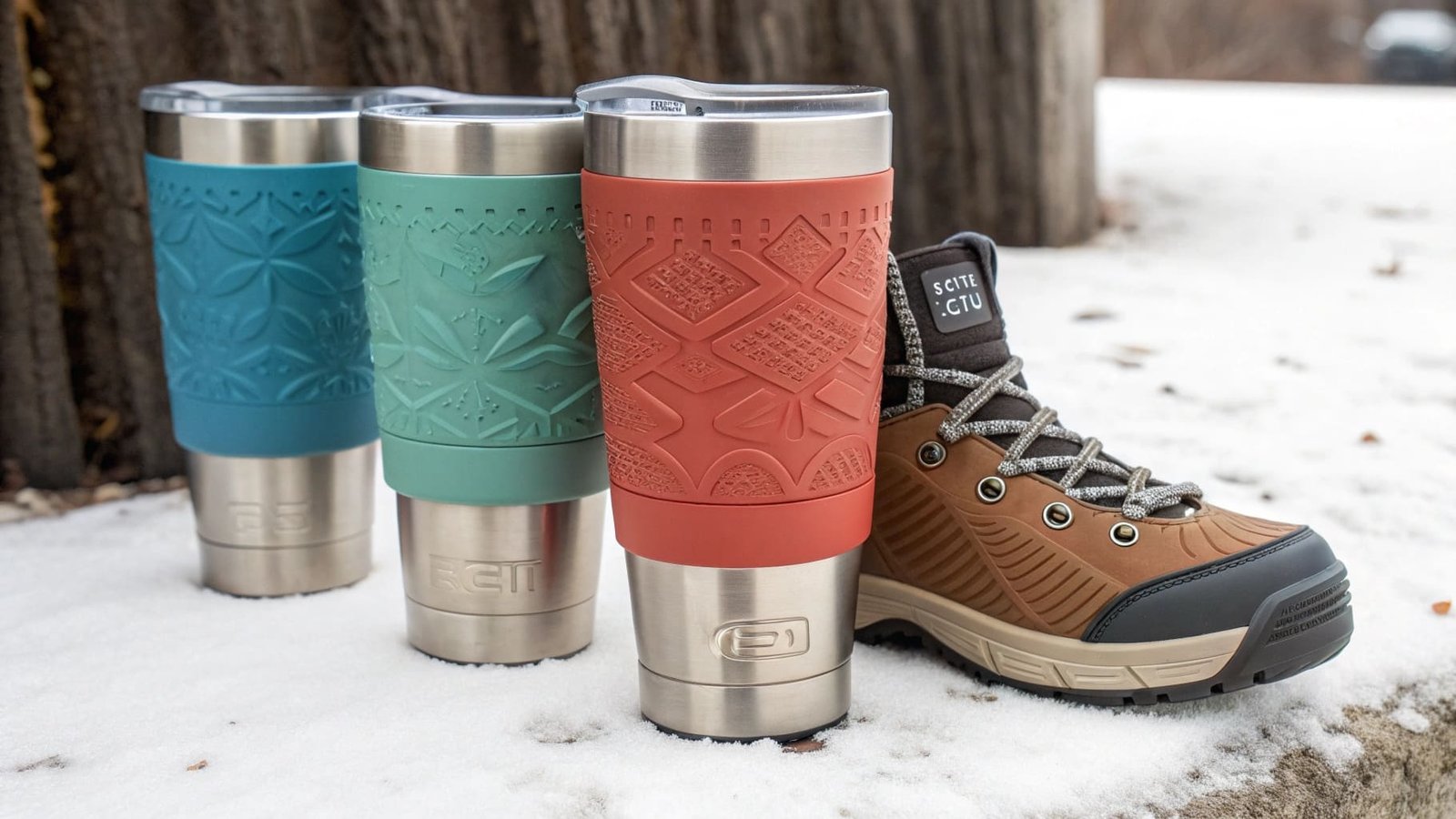
The 40oz Stanley Quencher needs a silicone boot with an internal diameter of roughly 3.5 inches. The cup stands about 10.7 inches tall. Any boot you source must match this base size exactly. A loose fit causes the boot to fall off. A tight fit is hard to install and frustrates end users.
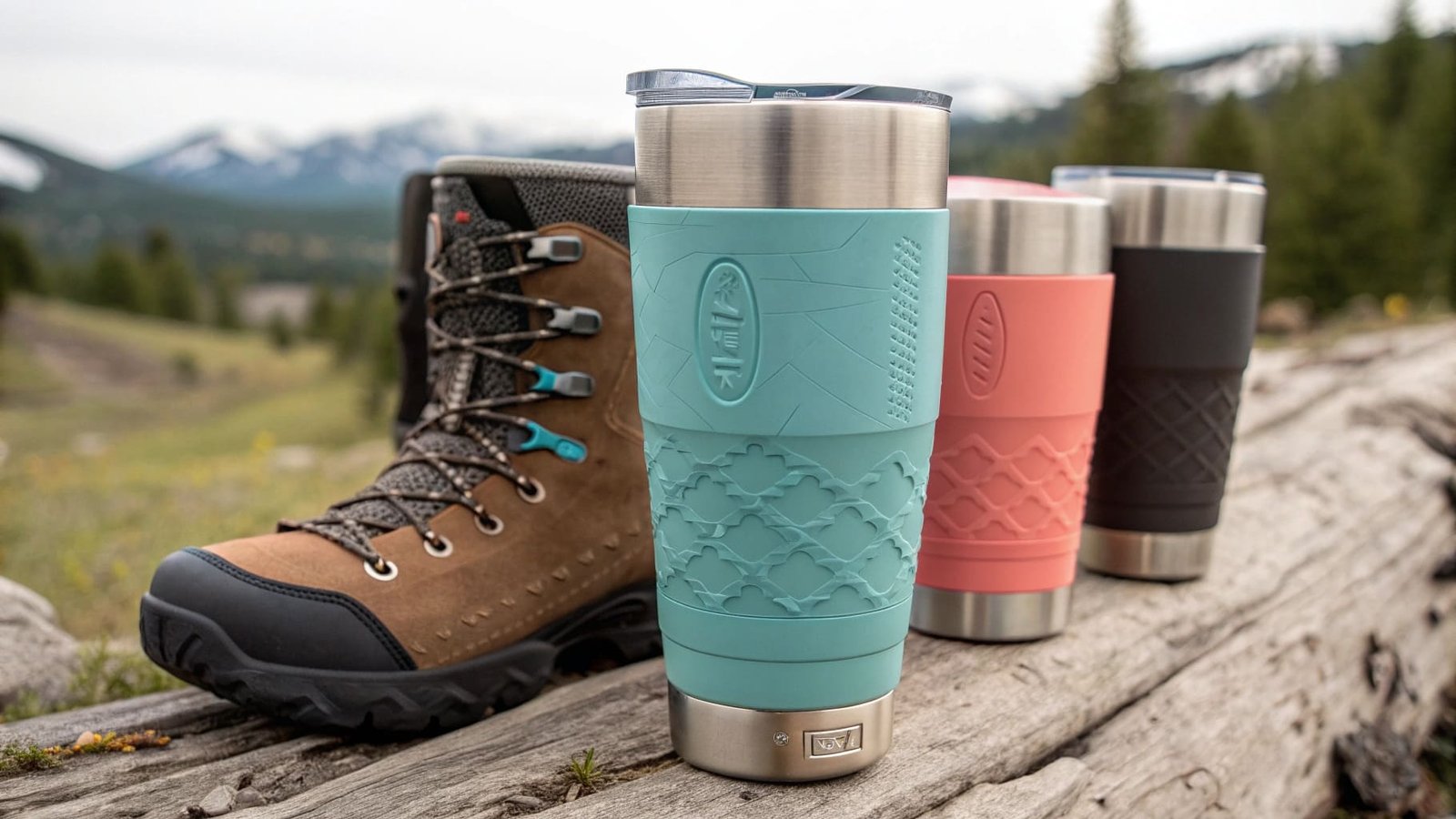
The 40oz Quencher is the best-selling Stanley cup in most retail channels.1 Consumers who spend premium money on a Stanley cup almost always look for a boot to protect it. That makes this a high-margin accessory category with strong and consistent demand. If you are building or expanding a retail accessories program, this is the size to start with.
How Big Is the Stanley 40oz Quencher?
Most procurement managers I talk to assume they already know the specs. Then they order a batch of boots and the fit is wrong. That is an expensive mistake.
The Stanley 40oz Quencher has a base diameter of about 3.5 inches. The cup is about 10.7 inches tall.2 These two numbers matter most when you are sourcing a silicone boot that must fit without glue or clips.
Breaking Down the Dimensions
The base diameter is the most important measurement. It determines whether the boot stays on during daily use. The height of the cup matters less for boot sourcing, but the overall size tells you a lot about who is using this cup and how.
Here is how the 40oz Quencher compares to the other sizes in the lineup:
| Cup Size | Height (approx.) | Base Diameter (approx.) | Common User Profile |
|---|---|---|---|
| 20oz | 7.8 inches | 3.0 inches | Teens, light users |
| 30oz | 9.4 inches | 3.2 inches | Office workers |
| 40oz | 10.7 inches | 3.5 inches | Active adults, commuters |
The 40oz cup is the largest in the lineup. It is also the heaviest when full. That extra weight means the boot takes more stress from being set down hard on surfaces. This is why I always tell buyers that material quality matters more for the 40oz boot than it does for the 20oz or 30oz versions.3 A soft, low-grade silicone boot on a full 40oz cup will compress unevenly and wear out fast.4 You need a boot made from food-grade silicone with a consistent wall thickness. This protects both the cup and the surface it sits on. Noise reduction and scratch prevention are the two main reasons consumers buy these boots. Your boot needs to deliver on both.
Why Are the Stanley 40oz Quenchers So Popular?
I have seen plenty of drinkware trends come and go. Most fade within two seasons. The 40oz Quencher has not faded. That tells me something real is driving the demand.
The 40oz size holds enough water for an average adult's full daily hydration goal.5 That means fewer refills. For people at work, at the gym, or running errands, that convenience is real and it matters.
What Makes This Cup Stick in the Market
The 40oz Quencher hit a specific gap in the market. It is large enough to be practical but still fits in most car cup holders. That combination is rare. Most oversized cups fail the cup holder test. The Quencher passed it, and that made it a daily carry item for a wide range of consumers.
Here is a breakdown of the key reasons behind its sustained popularity:
| Factor | Why It Matters to the Consumer | Why It Matters to Retail Buyers |
|---|---|---|
| Capacity | Meets daily hydration needs in one fill | High perceived value drives premium pricing |
| Cup holder fit | Works in most standard car holders | Broader consumer base = higher sales volume |
| Social media presence | Visible product with strong community culture | Drives repeat purchase and accessory attachment |
| Color variety | Stanley releases seasonal colorways | Consumers collect multiple cups, then buy boots for each |
| Brand trust | Stanley has a long heritage in durable goods | Lower return rates, fewer complaints |
The social media angle is worth paying attention to. Stanley Quencher owners post their cups. They show off their boots. They share accessories with their audience. This creates organic demand that I have not seen with other drinkware brands in recent years.6 For retail chains, this means the accessory category has a built-in marketing engine that costs you nothing. You just need the right product on the shelf at the right time.
The boot itself becomes part of the identity of the cup. Consumers match boot colors to their cup color, to their outfit, or to a season. That behavior creates repeat purchase opportunities that most accessories categories simply do not have. I have worked with retail buyers who added a second colorway of the 40oz boot and saw their category sell-through rate jump within one quarter.
Which Is the Most Popular Stanley Cup Size?
You might think the 30oz is the most popular because it looks more manageable. Most buyers assume that. The data says otherwise.
The 40oz Quencher is the best-selling Stanley cup size across most retail channels in North America. It outsells the 30oz and 20oz versions in both units and revenue in most markets where I have seen category data.
What This Means for Your Inventory Strategy
For retail chains building an accessories program around Stanley cups, the 40oz size is where you put your primary focus. Stocking the wrong size ratio is one of the most common mistakes I see procurement managers make in this category.
Here is a simple inventory structure that tends to perform well:
| Boot Size | Recommended Stock Share | Reasoning |
|---|---|---|
| 40oz compatible | 60% to 70% of total boot inventory | Highest cup sales volume, strongest accessory attachment |
| 30oz compatible | 20% to 25% of total boot inventory | Steady demand, but lower conversion rate |
| 20oz compatible | 10% to 15% of total boot inventory | Niche users, lower average spend |
When sourcing 40oz boots specifically, there are three technical details that determine whether a boot works well in retail:
Internal diameter tolerance. The boot must fit snugly at 3.5 inches. Acceptable tolerance in production is usually plus or minus 0.1 inches. Anything beyond that and you get inconsistent fit across a batch.
Wall thickness. A thicker wall absorbs more impact and lasts longer. I recommend a minimum wall thickness of 4mm for the 40oz size. Thinner than that and the boot loses its protective function quickly.
Grip texture on the base. The bottom of the boot needs a non-slip texture. Consumers set these cups down on car consoles, office desks, and gym floor surfaces. A flat silicone base slides. A textured base stays put. This is a small detail that generates outsized positive feedback from end users.
Color selection also matters more for the 40oz boot than for any other size. Stanley releases seasonal colors regularly. Your silicone boot supplier needs to be able to turn around new colorways fast. At Silijoy, we maintain a flexible production setup that allows retail buyers to request custom colors with reasonable lead times. That kind of flexibility is what separates a long-term supplier relationship from a one-time order.
Conclusion
The 40oz Stanley Quencher is the dominant size in the market. Its 3.5-inch base requires a precise-fit silicone boot. Prioritize this size in your inventory and work with a supplier who controls dimensional tolerances.
-
"Retail Industry Market Research & Consumer Data - Circana", https://www.circana.com/industries/retail. Retail scanner data or industry reporting from a market-measurement firm identifies the Stanley Quencher as a leading insulated tumbler product and, where size-level data are reported, can substantiate whether the 40 oz version leads sales among Stanley cup sizes. Evidence role: statistic; source type: institution. Supports: Industry sales data should show whether the 40oz Quencher leads Stanley cup sales by unit volume or revenue across major retail channels.. Scope note: Public summaries may confirm Stanley or Quencher popularity without disclosing size-level sales by channel, so they may provide contextual rather than direct proof of the exact ranking. ↩
-
"The Quencher H2.0 Flowstate Tumbler | 40oz | Stanley 1913 US", https://www.stanley1913.com/products/adventure-quencher-travel-tumbler-40-oz. Stanley product specifications for the 40 oz Quencher list the cup’s approximate external dimensions, providing a primary-source basis for using a 3.5-inch base measurement and roughly 10.7-inch height in accessory fit planning. Evidence role: case_reference; source type: other. Supports: A manufacturer specification page or dimensional drawing should verify the approximate height and base diameter of the 40oz Stanley Quencher model discussed.. Scope note: Manufacturer specifications are primary-source product data and may vary by model generation, lid, handle, straw configuration, or measurement method. ↩
-
"Fluid ounce - Wikipedia", https://en.wikipedia.org/wiki/Fluid_ounce. Materials-engineering literature on silicone rubber describes compression set and deformation under sustained or repeated loads, supporting the mechanical rationale that a heavier filled 40 oz cup can place greater stress on a protective silicone boot than smaller filled cups. Evidence role: mechanism; source type: paper. Supports: A materials or mechanics source should support the principle that higher load and repeated compression can increase deformation, compression set, or wear in silicone rubber parts.. Scope note: This supports the load-and-material mechanism generally; it does not establish a tested failure-rate difference for this specific boot design. ↩
-
"Evolution of Shore Hardness under Uniaxial Tension/Compression ...", https://pmc.ncbi.nlm.nih.gov/articles/PMC9697891/. Studies of silicone elastomers report that formulation, hardness, and compression-set behavior affect deformation and durability under compressive loading, supporting the claim that an inadequately specified soft silicone boot may deform and wear more quickly in use. Evidence role: mechanism; source type: paper. Supports: Material testing literature should show that silicone hardness, formulation, and compression set influence deformation and long-term durability under load.. Scope note: The evidence is material-level rather than product-specific and would not quantify wear speed for a particular Stanley boot without direct testing. ↩
-
"About Water and Healthier Drinks | Healthy Weight and Growth - CDC", https://www.cdc.gov/healthy-weight-growth/water-healthy-drinks/index.html. National Academies guidance reports adequate total water intakes of about 2.7 liters per day for adult women and 3.7 liters per day for adult men from all beverages and foods; a 40 oz container holds about 1.18 liters, so it may cover a substantial portion but not necessarily the full daily intake for an average adult. Evidence role: statistic; source type: government. Supports: A public health or nutrition source should establish typical adult daily water intake recommendations and allow comparison with a 40oz volume.. Scope note: This contextualizes the hydration claim and may weaken the wording because total daily water needs often exceed 40 oz. ↩
-
"Stanley drinkware sensation offers a vivid example of the power of ...", https://www.qu.edu/quinnipiac-today/stanley-cups-ride-the-wave-of-tiktok-popularity-2024-01-09/. Research on user-generated content and social commerce finds that peer-created posts, social proof, and online engagement can increase consumer purchase intention, providing a mechanism for social media visibility to contribute to demand for products such as drinkware accessories. Evidence role: mechanism; source type: paper. Supports: Marketing research should support the mechanism that user-generated social media content can increase purchase intention and product demand.. Scope note: The evidence supports the marketing mechanism generally and does not by itself prove that Stanley’s organic demand exceeds every other drinkware brand. ↩