Which Gasket Materials Work Best for Water Filtration System Wholesale?
Choosing the wrong gasket material for a water filtration system can cost you customers, compliance, and profit. The right material is not always obvious. Here is what you need to know.
Silicone rubber is the best material for water filtration gaskets at the wholesale level.1 It resists extreme temperatures, stays flexible over time, and does not release harmful substances into water.2 It meets FDA and WRAS standards. It is the top choice for drinking water systems in North America and Europe.
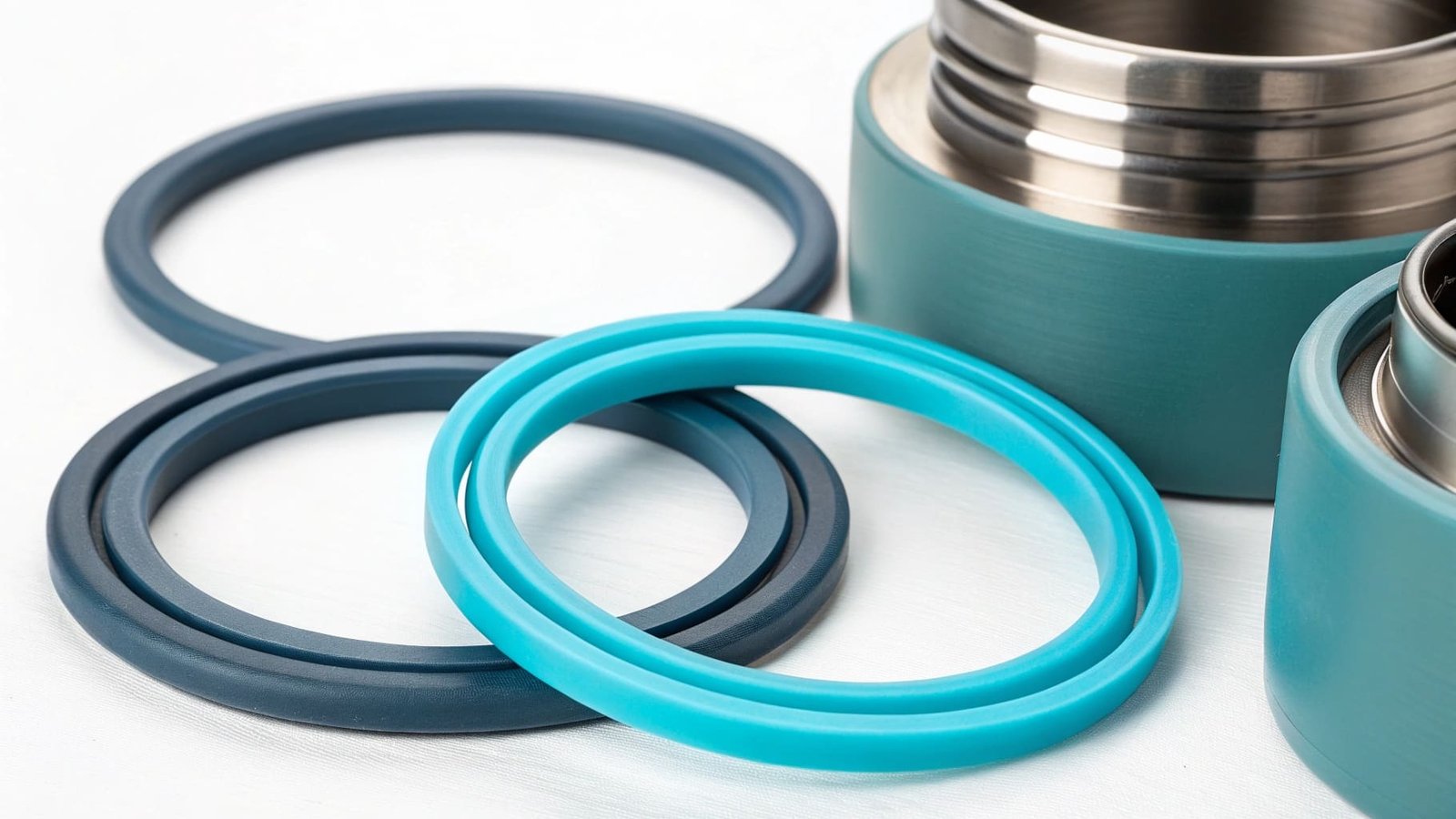
Material choice seems simple until it is not. I have seen buyers lock in a supplier, place a large order, and only discover compliance issues after the goods arrive. That kind of mistake is expensive. The sections below will walk you through the most important material decisions, step by step. By the end, you will know exactly what to look for before you place your next order.
What Is the Best Rubber Gasket Material for Water?
Most buyers assume all rubber gaskets work the same in water. They do not. The wrong material can contaminate the water, fail early, and damage your brand.
Food-grade silicone is the best rubber gasket material for water contact applications.3 It does not leach chemicals into water. It handles both hot and cold water without breaking down. It is also compliant with FDA 21 CFR 177.2600 and EU 10/2011, which are the two most common standards required by buyers in North America and Europe.
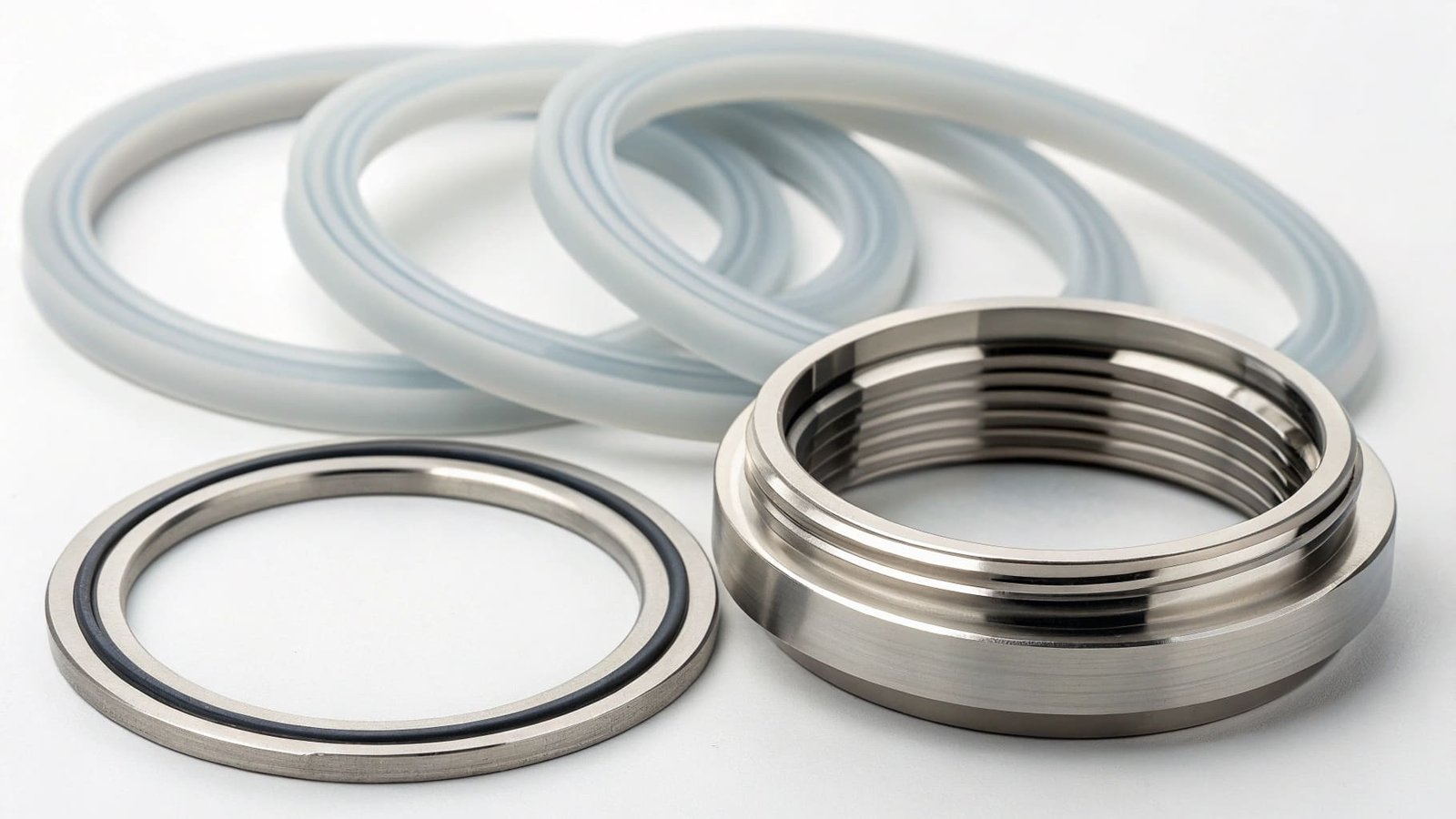
Silicone is not the only option, but it is the most reliable one for water filtration. Let me explain why it stands apart from other materials, and where other rubbers still have a role to play.
How Does Silicone Compare to Other Rubber Materials?
Other rubber materials like EPDM and NBR are widely used. Each has strengths and weaknesses. Knowing the difference helps you choose the right material for the right application.
| Material | Temperature Range | FDA Compliant | Best Use Case | Weakness |
|---|---|---|---|---|
| Silicone | -60°C to 230°C | Yes | Drinking water, RO systems | Higher unit cost |
| EPDM | -50°C to 150°C | Conditional | Hot water, steam systems | Limited chemical resistance |
| NBR (Nitrile) | -40°C to 120°C | No (standard grade) | Non-potable water systems | Fails in ozone and UV |
Silicone covers the widest temperature range of the three.4 It also has the broadest chemical compatibility. This matters in residential water treatment, where the water may pass through various filtration stages before it reaches the consumer.
EPDM has strong mechanical properties. It holds up well under pressure and in hot water.5 But it is not always FDA compliant in its standard form. You need to verify the specific grade before specifying it for drinking water applications.
NBR is the cheapest option. I see it used often in non-potable systems, irrigation, and industrial water lines. If your buyer is sourcing for agricultural or industrial use, NBR can work. But the moment drinking water is involved, NBR is not a safe choice.
The premium residential water filter segment is moving toward silicone. I have seen this trend clearly in my conversations with buyers from North America and Europe. Health-conscious consumers are pushing brands to use cleaner materials. Brands are then pushing that requirement down to their wholesale suppliers.
What Is the Best Material for a Water Pump Gasket?
Water pump gaskets face different demands than filter gaskets. They deal with pressure, heat, and continuous mechanical stress. A material that works well in a static seal may fail quickly in a pump.
EPDM is the most common choice for water pump gaskets because it handles high pressure and hot water well.6 But silicone remains the better choice when water purity is a concern, or when the pump operates across a wide temperature range. The right answer depends on your specific operating conditions.
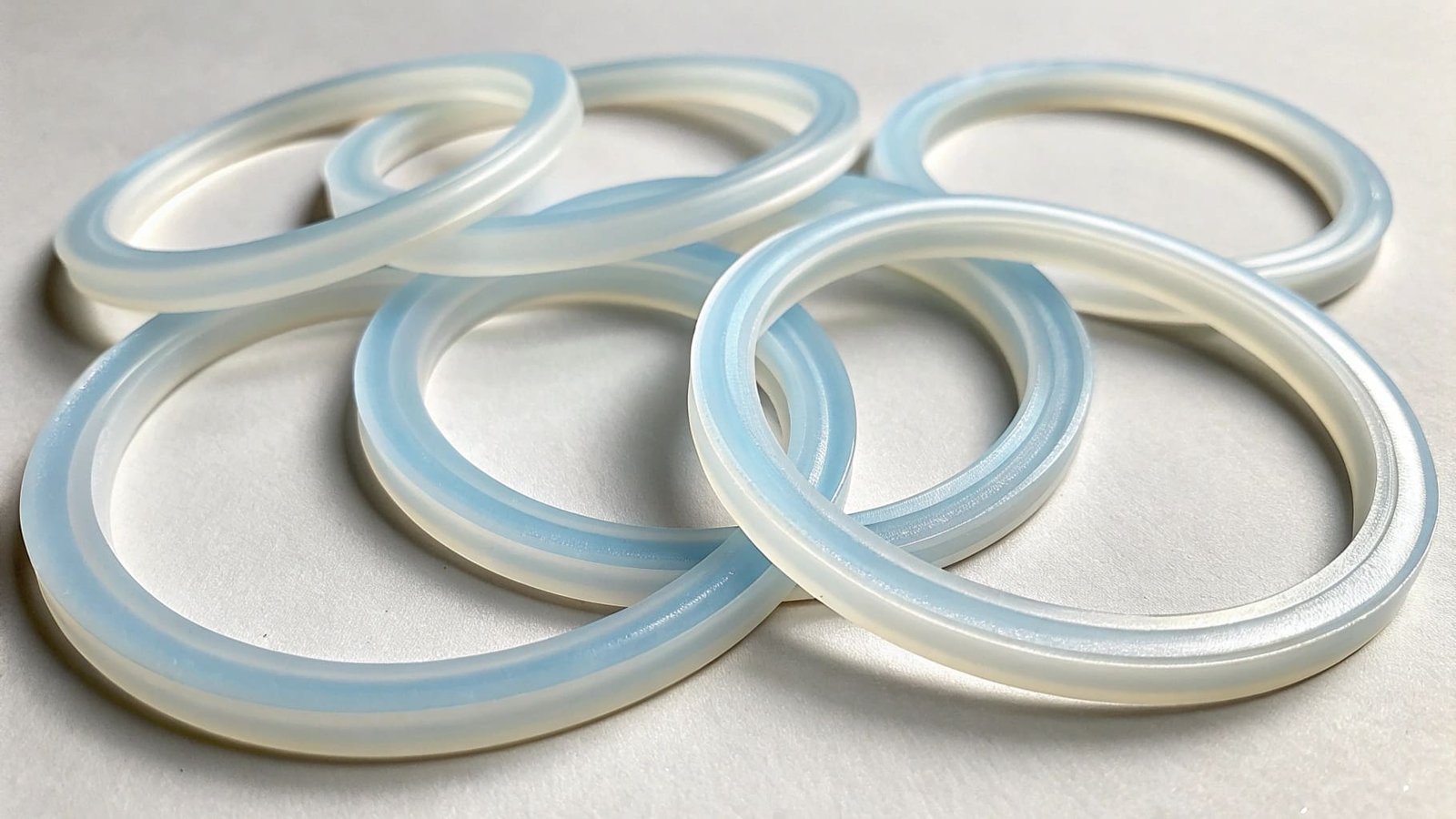
Pump gaskets fail for different reasons than filter gaskets. Pressure is the main factor in pump applications. Understanding this difference will save you from specifying the wrong material and dealing with returns.
What Operating Conditions Determine the Right Pump Gasket Material?
The operating conditions of a pump tell you almost everything about what material to use. I always ask buyers to share their operating specs before recommending a material. Without those numbers, any recommendation is just a guess.
| Condition | Recommended Material | Why |
|---|---|---|
| High pressure, hot water | EPDM | Superior mechanical strength under pressure |
| Wide temperature range | Silicone | Stable from -60°C to 230°C |
| Potable water contact | Silicone | FDA and WRAS compliant |
| Non-potable, cost-sensitive | NBR | Lower price, acceptable for industrial use |
| Steam or steam-adjacent | EPDM | Designed for steam environments |
Commercial water pumps often run at higher pressures than residential ones. In those cases, EPDM provides the mechanical toughness needed to hold the seal under load. But if the pump is part of a drinking water system, even in a commercial building, silicone is still the safer specification.
One thing I want to point out here. Many buyers I work with focus entirely on the initial unit price. They look at a silicone gasket and see a higher cost. Then they switch to EPDM or NBR to save money. But the pump gasket is not a visible component. When it fails, the customer does not see a cheap part. They see a broken pump and a service call. That changes the total cost picture entirely.
Silicone gaskets typically cost 20% to 40% more than their EPDM or NBR counterparts at the unit level. But they last longer in most water contact applications. Over a product lifecycle, that higher upfront cost often results in fewer replacements and fewer warranty claims.
How to Select Gasket Material?
Most buyers approach material selection the wrong way. They start with price. Price matters, but it is the last factor you should look at, not the first. Starting with price almost always leads to compliance problems or field failures.
A proper gasket material selection process starts with regulatory requirements, then moves to operating conditions, then lifecycle cost, and finally price. Following this order protects you from costly mistakes and helps you build a more reliable product line.
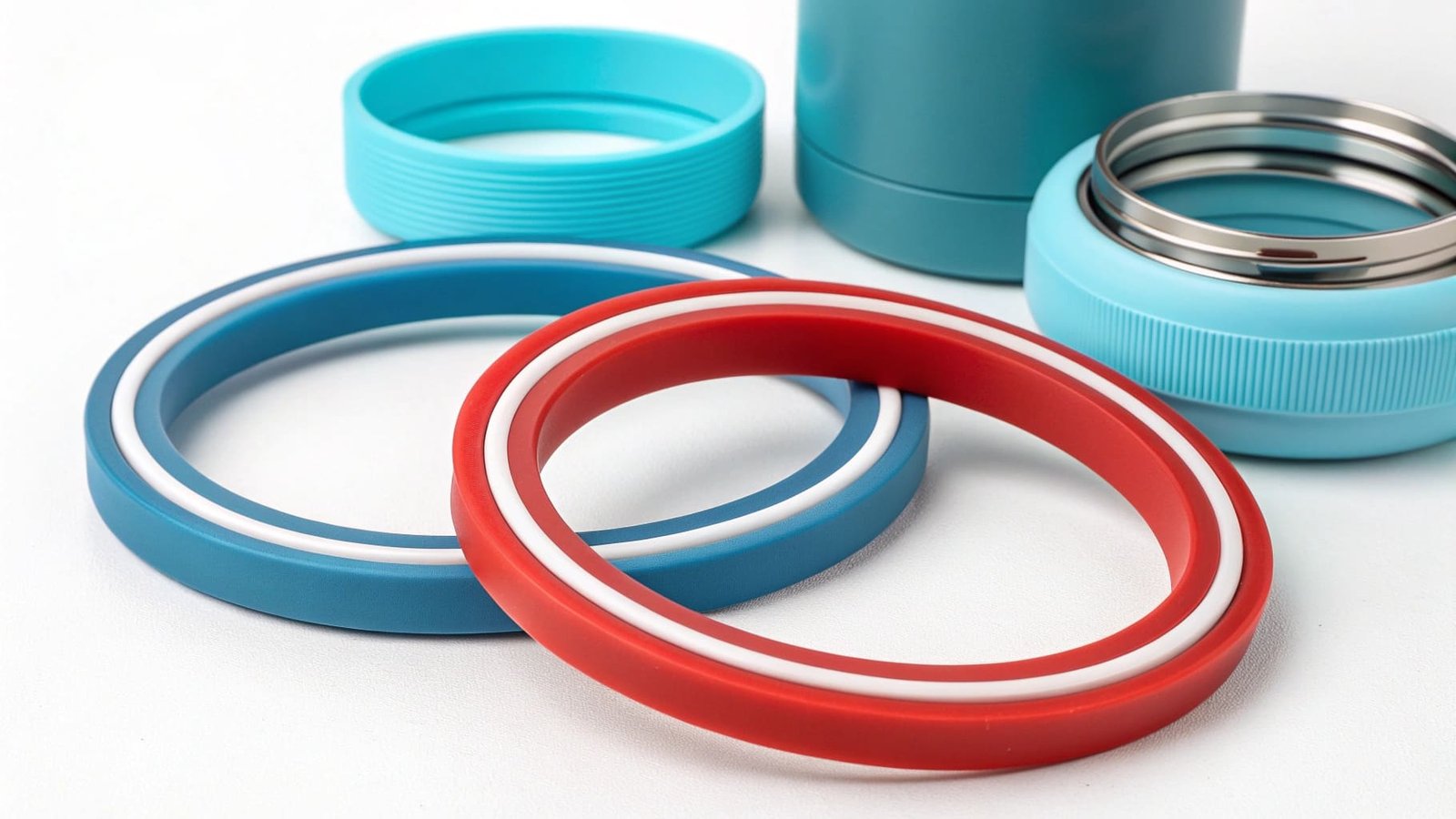
I have put together a practical framework below. This is the same process I walk buyers through when they come to me asking for a recommendation. It works for water filtration gaskets, pump gaskets, and most other water contact sealing applications.
What Four Factors Should Guide Your Material Selection?
There are four factors that matter most. Each one needs to be addressed before you move to the next. Skipping any of them creates risk.
Factor One: Regulatory Compliance
This is non-negotiable. Before anything else, you need to know which standards apply to your target market. If you are selling into North America, you need NSF-61 or FDA 21 CFR 177.2600 compliance. If you are selling into Europe, you need EU 10/2011 compliance. WRAS applies to the UK market.
| Standard | Region | Application |
|---|---|---|
| FDA 21 CFR 177.2600 | USA | Food and drinking water contact |
| NSF-61 | USA/Canada | Drinking water system components |
| EU 10/2011 | Europe | Food contact materials |
| WRAS | UK | Water fittings and materials |
I have seen cases where a supplier provided a certificate that looked legitimate but was either expired or applied to a different product. Always ask for the actual test report, not just the certificate. Ask for the specific grade of material tested. Silicone, for example, exists in food-grade and industrial-grade versions. Only food-grade silicone carries the compliance you need.
Factor Two: Operating Parameters
Once compliance is confirmed, look at the actual working conditions. Ask your buyer or your product engineer for the following numbers: maximum working temperature, peak pressure, fluid type, and expected service life.
These numbers narrow your material choices quickly. A gasket running at 150°C in a hot water booster pump has different needs than one sitting in a cold-water inline filter. Temperature and pressure data should drive your shortlist.
Factor Three: Lifecycle Cost Analysis
I mentioned this earlier, but it deserves its own space here. The unit price of a gasket is a small number. The cost of a product failure is a large number. When you look at the total cost of ownership, premium materials like silicone often pay for themselves through reduced replacement rates and fewer warranty issues.
Run a simple calculation. If a silicone gasket costs $0.40 and lasts five years, and an EPDM gasket costs $0.25 but lasts three years, the silicone option is cheaper over a ten-year product life. That math is easy to share with procurement teams who are focused on unit cost.
Factor Four: End-User and Brand Expectations
The final factor is market positioning. If your buyer is building a premium water filtration brand, they will want materials that support their brand story. Silicone, with its clean safety profile and certifications, supports a health-focused brand message. NBR does not.
Buyers in North America and Europe are increasingly asking for material transparency. They want to put the material name and its certification on their product packaging. That is only possible with a material that has the right paperwork. Silicone delivers that. Cheaper alternatives generally do not.
Conclusion
Material selection for water filtration gaskets comes down to compliance, operating conditions, lifecycle cost, and brand fit. Silicone leads in most categories and is worth the premium.
-
"[PDF] design and analysis of silicone gasket sealing for waterproof", https://rex.libraries.wsu.edu/view/pdfCoverPage?instCode=01ALLIANCE_WSU&filePid=13338221280001842&download=true. A technical materials source describes silicone elastomers as suitable for sealing applications requiring broad temperature stability and relatively inert behavior in food- or water-contact contexts; this supports the material rationale, though it does not prove that silicone is universally the single best choice for every wholesale filtration design. Evidence role: expert_consensus; source type: education. Supports: A technical source should support that silicone elastomers are widely used for seals and gaskets where temperature stability, flexibility, and low extractables are important in water or food-contact applications.. Scope note: Contextual support only; material selection still depends on grade, certification, pressure, chemistry, and application design. ↩
-
"21 CFR 177.2600 -- Rubber articles intended for repeated use. - eCFR", https://www.ecfr.gov/current/title-21/chapter-I/subchapter-B/part-177/subpart-C/section-177.2600. Published materials data and food-contact regulations indicate that silicone elastomers can retain flexibility over wide temperature ranges and that compliant grades are evaluated through extractives or migration limits; this supports the safety and performance rationale for certified silicone, but not for uncertified industrial silicone formulations. Evidence role: mechanism; source type: paper. Supports: A peer-reviewed or regulatory source should support that properly formulated food-grade silicone can maintain elastomeric properties across a broad temperature range and is regulated through extractives or migration limits for repeated food-contact use.. Scope note: Applies to compliant, properly compounded silicone grades rather than all silicone products. ↩
-
"EPDM vs Silicone: a simple guide - Essentra Components", https://www.essentracomponents.com/en-us/news/solutions/general-protection/epdm-vs-silicone-a-simple-guide?srsltid=AfmBOooQeaHt3TYM8YTQ5hCqRAA5Qmr3MoKHv4I_bm9thIL-Vh-RVQUy. Materials-selection literature identifies food-grade silicone as a common elastomer for seals in applications requiring water or food contact, wide temperature tolerance, and low extractables; this supports the article's preference for silicone, although it does not establish superiority in every pressure, cost, or chemical environment. Evidence role: general_support; source type: research. Supports: A neutral materials-selection source should support that food-grade silicone is commonly selected for water-contact seals because of its thermal stability, low odor/taste contribution, and food-contact compliance potential.. Scope note: Contextual support; EPDM or other elastomers may be preferable in specific pump, steam, or pressure applications. ↩
-
"[PDF] O-Ring Applications", https://data.ntsb.gov/Docket/Document/docBLOB?ID=40465105&FileExtension=.PDF&FileName=Parker%20O-Ring%20Handbook%20Pages%203-4-Master.PDF. Elastomer handbooks commonly list silicone rubber with a broader typical service-temperature range than EPDM and nitrile rubber, supporting the comparative temperature statement while noting that exact limits depend on compound formulation, exposure duration, and application conditions. Evidence role: general_support; source type: institution. Supports: A technical elastomer handbook or standards-based material guide should support typical service-temperature ranges for silicone, EPDM, and nitrile rubber.. Scope note: Typical ranges are not product guarantees and must be confirmed from the supplier's data sheet. ↩
-
"EPDM Rubber Gasket Specifications: Key Material Properties", https://www.yosonseals.com/epdm-rubber-gasket-specifications-key-material-properties/. Technical elastomer references describe EPDM as having good resistance to hot water and steam and as suitable for many sealing applications requiring weathering and heat resistance; this supports its use in hot-water gasket contexts, subject to compound-specific pressure and compression-set performance. Evidence role: mechanism; source type: research. Supports: A technical source should support EPDM's resistance to hot water and steam and its use in seals where mechanical durability and compression set are relevant.. Scope note: Pressure performance depends on gasket design, hardness, reinforcement, compression, and flange geometry, not only on polymer family. ↩
-
"Water Pump Installation: Gaskets and Sealant - YouTube", https://www.youtube.com/watch?v=QJjeKb8g2a8. Sealing-engineering references identify EPDM as a common elastomer for water-service gaskets and seals because of its resistance to hot water, steam, and weathering; this supports the material rationale, although it does not quantify EPDM's market share in water pump gaskets. Evidence role: general_support; source type: institution. Supports: A pump or sealing engineering source should support EPDM's common use in water-service seals and its resistance to hot water and steam.. Scope note: Supports common suitability, not a measured claim that EPDM is the most frequently used material in all pump categories. ↩