Which Lid Gasket Materials Offer Best Durability for OEM Production Runs?
I remember talking to Mark last month. His batch failed quality checks after six months. He lost his best retail client. Material choice matters more than most buyers realize.
Food-grade silicone offers the best durability for OEM lid gaskets1. It resists temperatures from -40°F to 446°F, maintains seal integrity for 3-5 years, and meets FDA and LFGB standards without degradation.
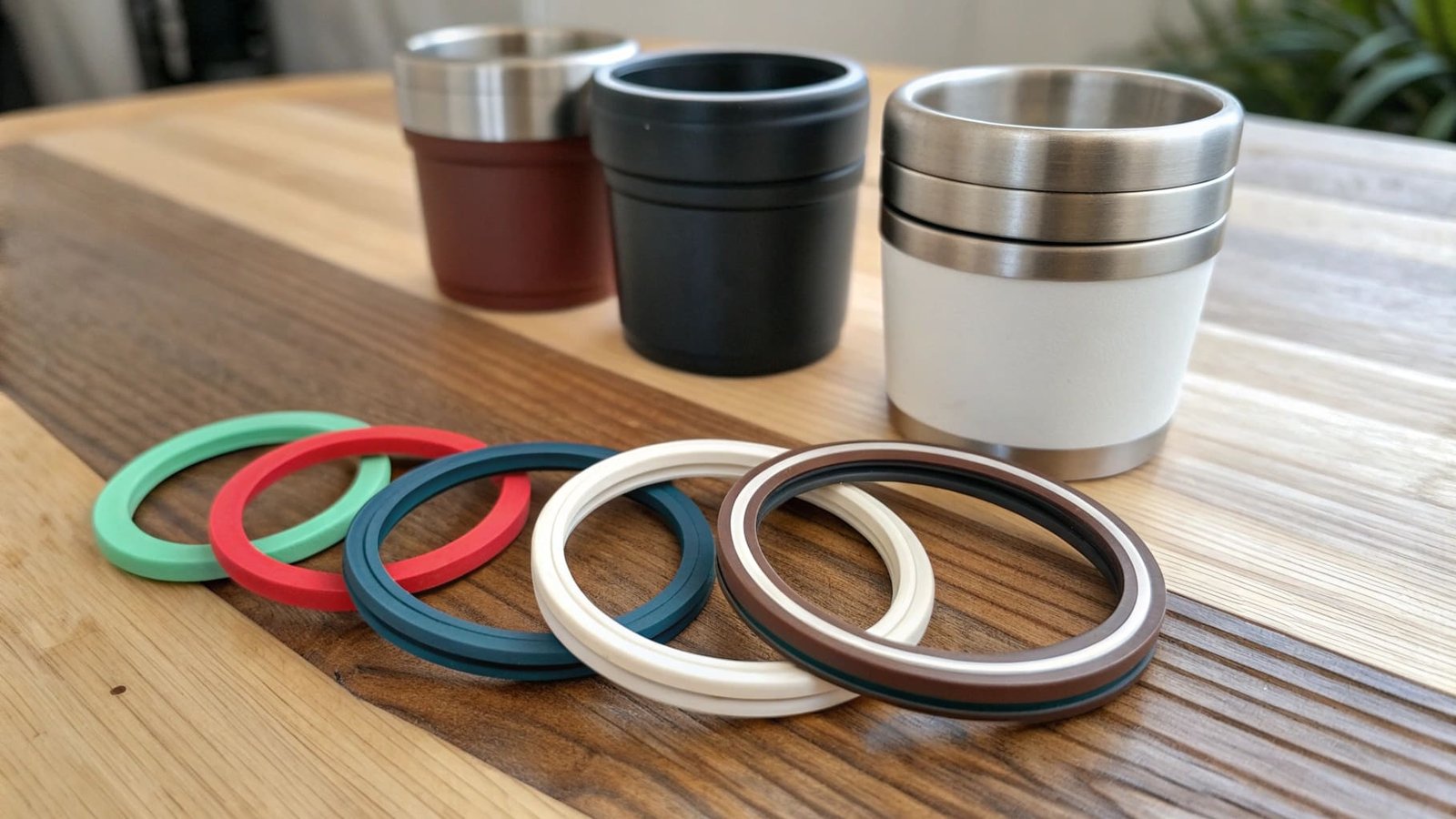
I've seen this pattern repeat itself. Buyers choose cheaper rubber gaskets to save $0.15 per unit. Then they deal with customer complaints, warranty claims, and damaged relationships. The initial savings disappear fast. Smart procurement officers now ask me about material performance before they ask about price.
What's the Best Material to Use for Gasket Material?
Most suppliers will tell you rubber works fine. They're not wrong. But they're not telling you the full story either. Rubber works until it doesn't.
Silicone outperforms traditional rubber in temperature range, chemical resistance, and lifespan. EPDM rubber works for basic applications, but silicone handles extreme conditions while maintaining food safety compliance across multiple regulatory frameworks.
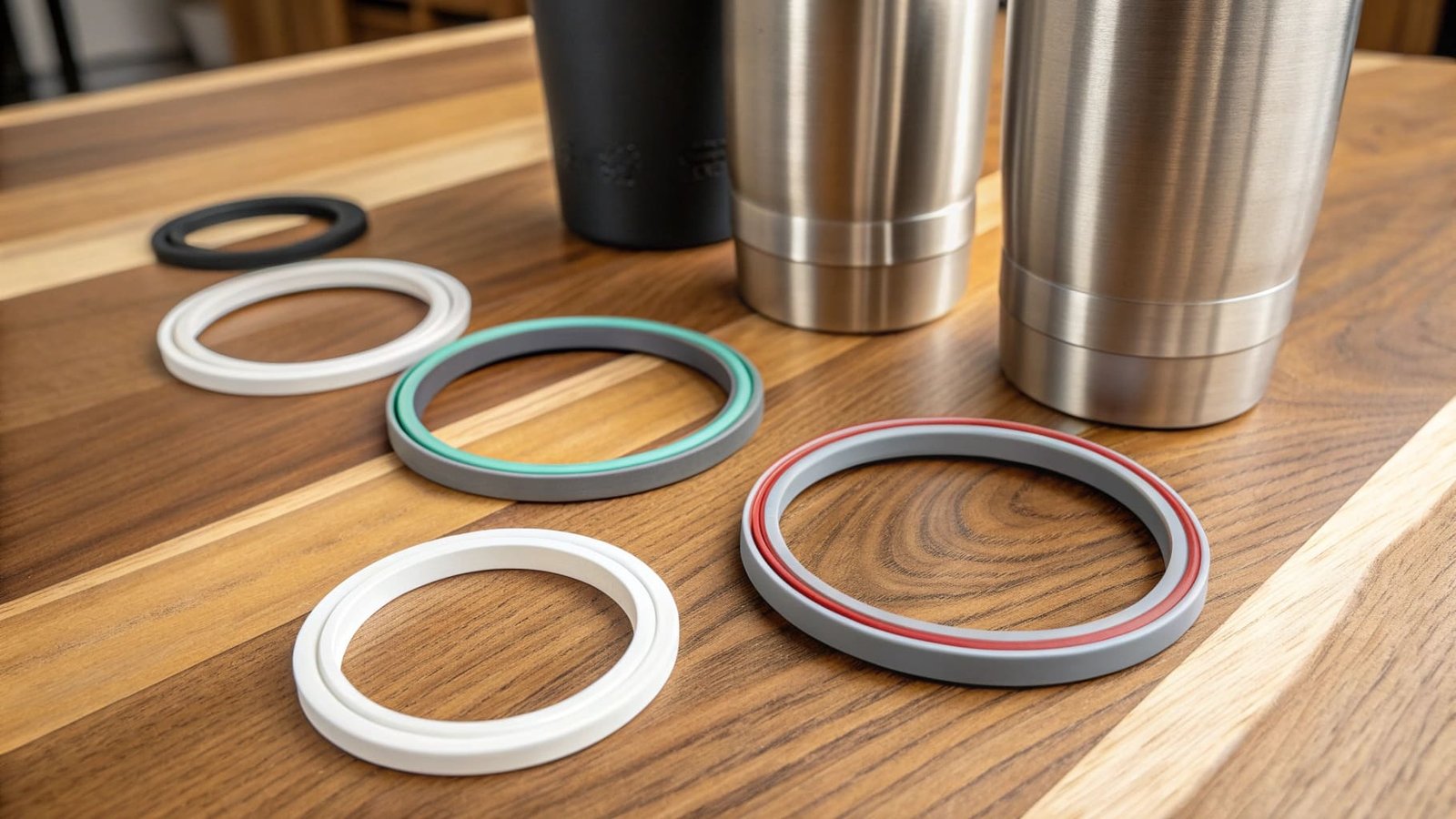
Material Comparison for Lid Gaskets
I've tested hundreds of gasket materials over the years. Here's what actually matters in production:
| Material | Temperature Range | Expected Lifespan | UV Resistance | Food Safety |
|---|---|---|---|---|
| Silicone | -40°F to 446°F | 3-5 years | Excellent | FDA/LFGB |
| EPDM Rubber | -40°F to 248°F | 1-2 years | Poor | Limited |
| Nitrile Rubber | -22°F to 212°F | 6-12 months | Poor | Not recommended |
| Neoprene | -40°F to 230°F | 1-2 years | Fair | Limited |
The real test comes during production runs. I worked with a startup last year. They wanted 50,000 tumbler boots. We used platinum-cured silicone2. Their customers are still using those products today. No complaints. No returns. That's what durability means in real terms.
Why Silicone Wins for OEM Production
Silicone handles thermal cycling better than any alternative. Your customers will put lids in dishwashers, microwaves, and freezers. Sometimes all in the same day. Standard rubber cracks under this kind of stress. Silicone just keeps working.
The material also resists oils, acids, and alkaline substances. This matters for food storage applications. Coffee stains won't degrade the seal. Tomato sauce won't break down the material. Your gasket performs the same on day 500 as it did on day one.
What is an OEM Gasket?
I get this question from new buyers all the time. They think OEM just means "custom." That's part of it. But there's more to understand.
An OEM gasket is a custom-manufactured sealing component built to your exact specifications. It includes specific dimensions, material grades, hardness levels, and quality certifications. Production requires precise tooling and consistent batch control.
The Real Definition of OEM in Gasket Production
OEM stands for Original Equipment Manufacturer. In the gasket world, this means the component is made specifically for your product line. It's not a generic part you buy off the shelf.
I produce OEM gaskets for tumbler brands across North America and Europe. Each client needs different specifications:
Key OEM Requirements:
- Exact dimensional tolerances
- Material certifications
- Batch traceability
- Quality documentation
- Custom hardness specifications
- Color matching requirements
One client needed gaskets with a Shore A hardness of 50. Another wanted 60. That 10-point difference affects seal performance. Standard products can't give you this level of control. OEM production can.
Why OEM Matters for Your Supply Chain
Generic gaskets create problems. They don't fit properly. They leak. They fail quality checks. I've seen distributors lose entire shipments because they used standard parts instead of OEM components.
OEM production gives you consistency across batches. When you order 10,000 units in January and another 10,000 in July, they perform identically. The dimensions match. The material properties stay the same. Your customers get reliable products every time.
This consistency directly impacts your brand reputation. Mark learned this the hard way. He mixed OEM and generic gaskets in one shipment. His retail partner noticed immediately. The generic parts failed leak tests. He lost that account.
How Durable Are Silicone Gaskets?
Buyers always want numbers. They want to know exactly how long a gasket will last. I give them honest answers based on real production data.
Silicone gaskets maintain compression set resistance and elasticity for 3-5 years under normal use conditions. They resist temperatures from -40°F to 446°F without material degradation. UV exposure and ozone don't affect performance.
Real-World Durability Testing
I run accelerated aging tests on every material batch. We cycle gaskets through extreme temperatures. We expose them to chemicals. We test compression set after 1,000 hours of stress. Here's what we found:
| Test Condition | Silicone Performance | EPDM Performance |
|---|---|---|
| 1000hr at 158°F | 5% compression set | 25% compression set |
| 500 thermal cycles | No cracking | Surface cracks appear |
| UV exposure (500hr) | No color change | Brittleness develops |
| Chemical resistance | Maintains seal | Seal degradation |
Compression set is the key metric. It measures how well a gasket returns to its original shape after being compressed. Low compression set means good seal performance over time. Silicone maintains low compression set far longer than alternatives.
What Affects Silicone Gasket Lifespan
Not all silicone is equal. I use platinum-cured silicone for food applications. It costs more than peroxide-cured options. But the durability difference is significant.
Temperature extremes affect lifespan. A gasket used in normal kitchen conditions lasts longer than one exposed to industrial heat. But even under harsh conditions, silicone outperforms rubber by years.
Proper design matters too. A gasket with the wrong compression ratio will fail early regardless of material. I work with clients to optimize groove dimensions. This ensures the silicone compresses correctly without over-stressing the material.
The Cost-Performance Reality
Here's the truth about silicone gaskets. They cost more upfront. Buyers see the price difference and hesitate. Then I show them the math.
A silicone gasket costs $0.30. An EPDM gasket costs $0.15. Over three years, you'll replace the EPDM gasket twice. That's $0.45 in material costs plus shipping, handling, and potential customer complaints. The silicone gasket is still working after three years. You saved money and protected your brand reputation.
I've built my business on this principle. Quality materials reduce total cost of ownership. They eliminate supply chain headaches. They keep your customers happy. That's worth more than saving a few cents per unit.
Conclusion
Silicone delivers superior durability for OEM lid gaskets through proven temperature resistance, chemical stability, and multi-year performance consistency. Material choice directly impacts your bottom line and brand reputation.