Which O-Ring Size Chart Should OEM Manufacturers Use for U.S. Standards?
Getting O-ring sizing wrong costs more than a rejected shipment. It can kill a product launch. Here is what every OEM manufacturer needs to know before entering the U.S. market.
The AS568 standard is the O-ring size chart OEM manufacturers should use for U.S. markets.1 It defines over 300 standard sizes using a dash number system. Each dash number maps to a specific inside diameter (ID) and cross-sectional diameter (CS). This makes specification and sourcing consistent across the entire supply chain.
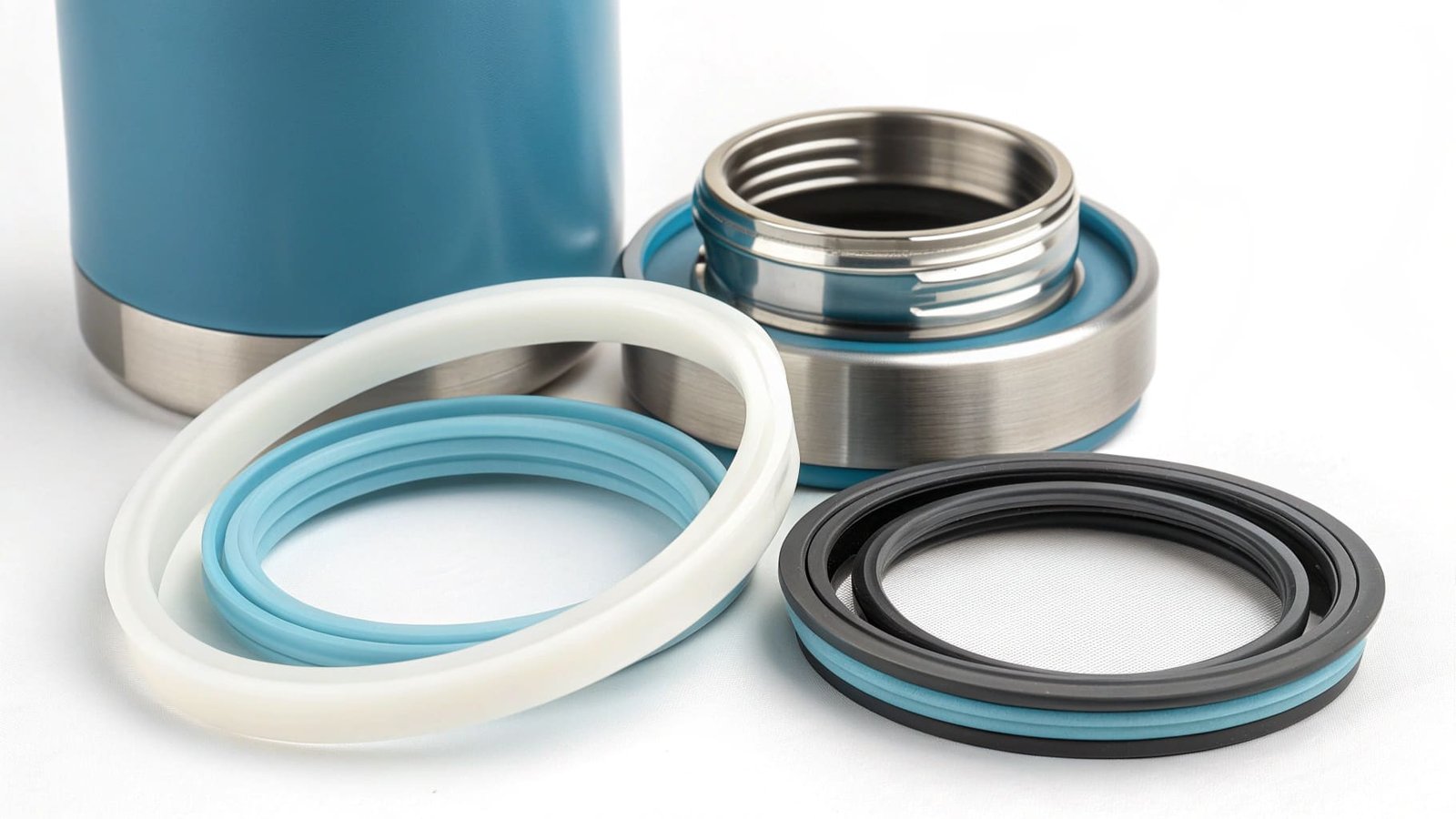
Most manufacturers I speak with already know they need O-rings. What they do not know is which standard to follow, or why the wrong choice creates problems three months down the line. The gap between "ordering an O-ring" and "ordering the right O-ring for the U.S. market" is exactly where costly mistakes happen. Let me walk you through each piece of this puzzle so you leave with a clear picture.
How to Determine What Size O-Ring to Use?
Picking an O-ring size by feel or by eye is one of the most expensive habits in manufacturing. One wrong measurement can compromise the entire seal.
To determine the correct O-ring size, measure three dimensions: the inside diameter (ID), the cross-sectional diameter (CS), and the groove where the O-ring will sit.2 These three numbers together define whether the O-ring will seal correctly under pressure, temperature change, and repeated use.
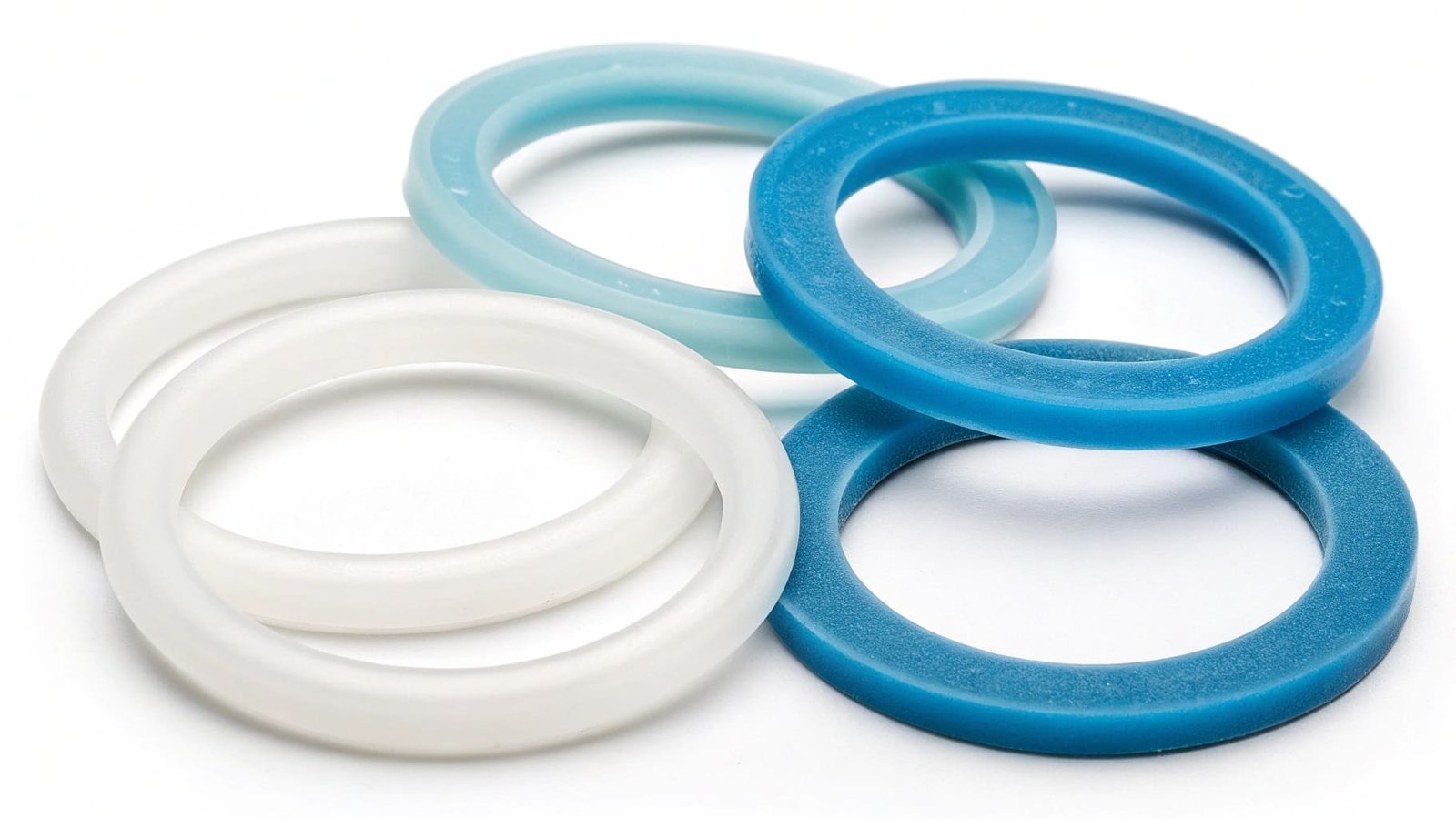
This sounds simple. In practice, it is where most sourcing errors happen.
Why All Three Dimensions Matter
Many buyers focus only on the ID. They match the O-ring's inner opening to the pipe or housing, place the order, and consider the job done. The problem shows up later, when the O-ring either extrudes out of the groove under pressure or sits too loosely to form a seal.
The cross-sectional diameter determines how much the O-ring compresses when installed.3 Too little compression and the seal leaks. Too much and the material degrades faster than it should. The groove dimensions control both of these outcomes.
Here is a simple breakdown of what each dimension controls:
| Dimension | What It Controls | What Happens If Wrong |
|---|---|---|
| Inside Diameter (ID) | Fit to the shaft or bore | O-ring won't seat correctly |
| Cross-Section (CS) | Compression level in the groove | Leaks or premature wear |
| Groove Width & Depth | How the O-ring sits under load | Extrusion, blowout, or poor seal |
The AS568 standard ties all three together. Each dash number in the AS568 chart corresponds to a fixed ID and CS combination. Once you have your dash number, the groove dimensions follow from published engineering tables. This removes guesswork and makes the specification portable across suppliers, factories, and audit reports.
In my own experience sourcing silicone O-rings for U.S.-bound products, I have seen buyers skip groove verification entirely. They match the dash number and move forward. The issue is that groove dimensions vary depending on the application — static seals, dynamic seals, and face seals each require different groove geometry. Confirming all three dimensions before finalizing a purchase order is not extra work. It is the minimum standard for a reliable product.
What Is Ring Size O in the USA?
"Ring size O" is a term that means different things in different contexts. In the U.S., it depends entirely on which standard you are referencing.
In the U.S., O-ring sizing follows the AS568 standard, not a single "size O" designation.4 The AS568 system uses dash numbers from -001 to -475. Each number represents a unique combination of inside diameter and cross-sectional diameter, covering a wide range of applications from miniature seals to large industrial fittings.
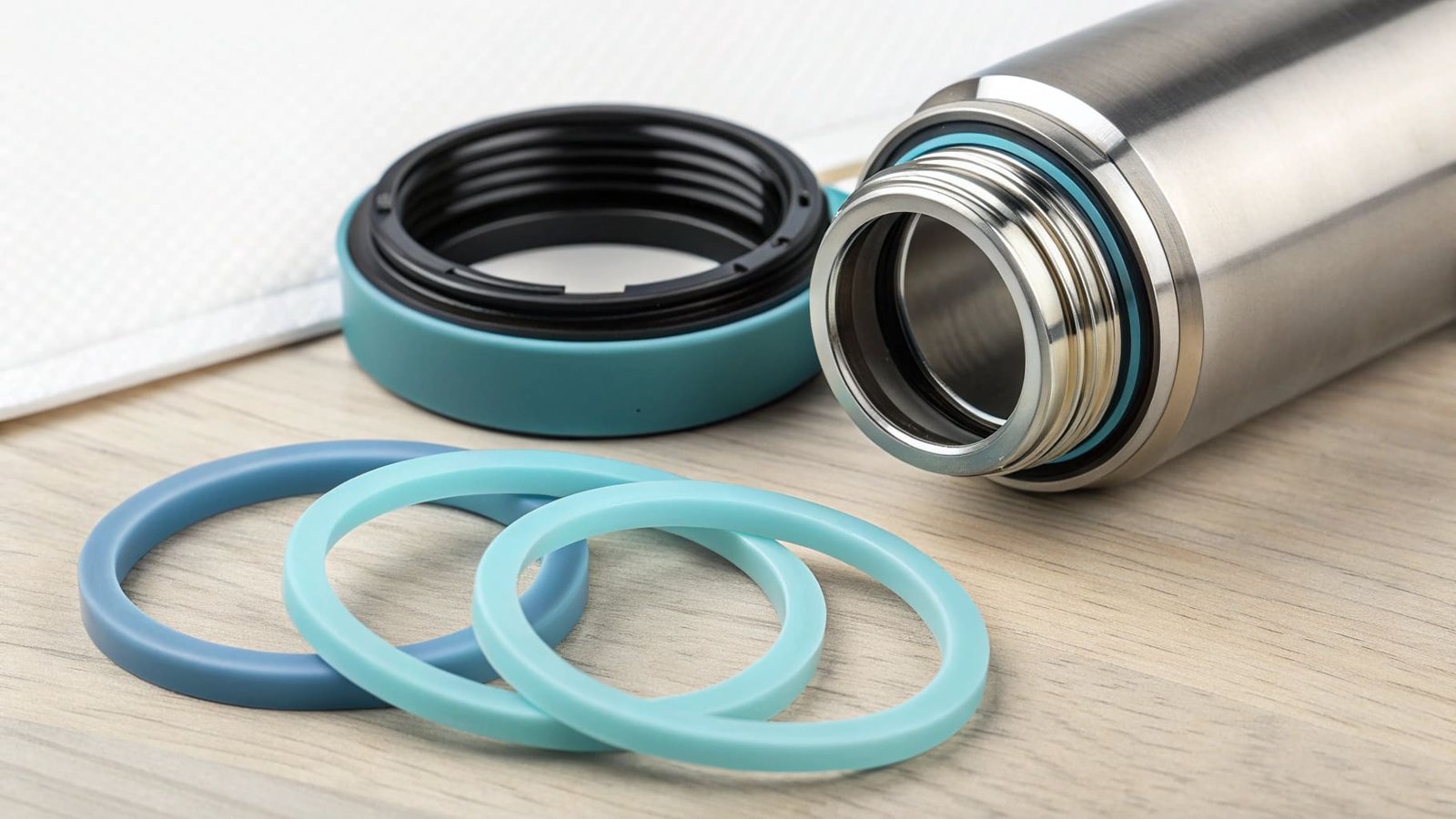
The confusion usually comes from mixing up different sizing systems. The U.S. uses AS568. The U.K. uses BS1806. The metric system uses dimensions in millimeters without a dash number code.5 When someone asks for "size O" without specifying a standard, there is real risk of receiving the wrong part.
How the AS568 Dash Number System Works
The AS568 system groups O-rings by cross-sectional diameter. Within each group, the inside diameter increases as the dash number increases. This structure makes it easy to navigate the chart once you understand the grouping logic.
| Dash Number Range | Cross-Section (CS) | Typical ID Range |
|---|---|---|
| -001 to -099 | 0.070 inch | Very small IDs |
| -100 to -199 | 0.103 inch | Small to medium IDs |
| -200 to -299 | 0.139 inch | Medium IDs |
| -300 to -399 | 0.210 inch | Larger IDs |
| -400 to -475 | 0.275 inch | Large IDs |
For OEM manufacturers, understanding this structure has a direct sourcing benefit. When you communicate using dash numbers, your supplier knows exactly what you need. There is no back-and-forth about metric conversions or ambiguous descriptions. First-article inspection reports, material certifications, and quality records all reference the same dash number. This consistency shortens lead times and reduces the risk of specification errors during production runs.
I work with buyers who are entering the U.S. market for the first time. One of the first things I recommend is building an internal reference sheet that maps your product's seal requirements to their AS568 dash numbers. It takes one hour to build and saves weeks of correction cycles later.
What Is the Standard for ASTM O-Ring?
Many buyers hear "ASTM standard" and assume it tells them which O-ring size to order. It does not. ASTM covers something different, and mixing up the two standards leads to incomplete specifications.
ASTM does not define O-ring dimensions. Instead, ASTM standards define material properties and performance requirements.6 The two most relevant standards are ASTM D1418, which classifies elastomer types, and ASTM D2000, which sets material performance grades based on heat resistance and fluid compatibility.
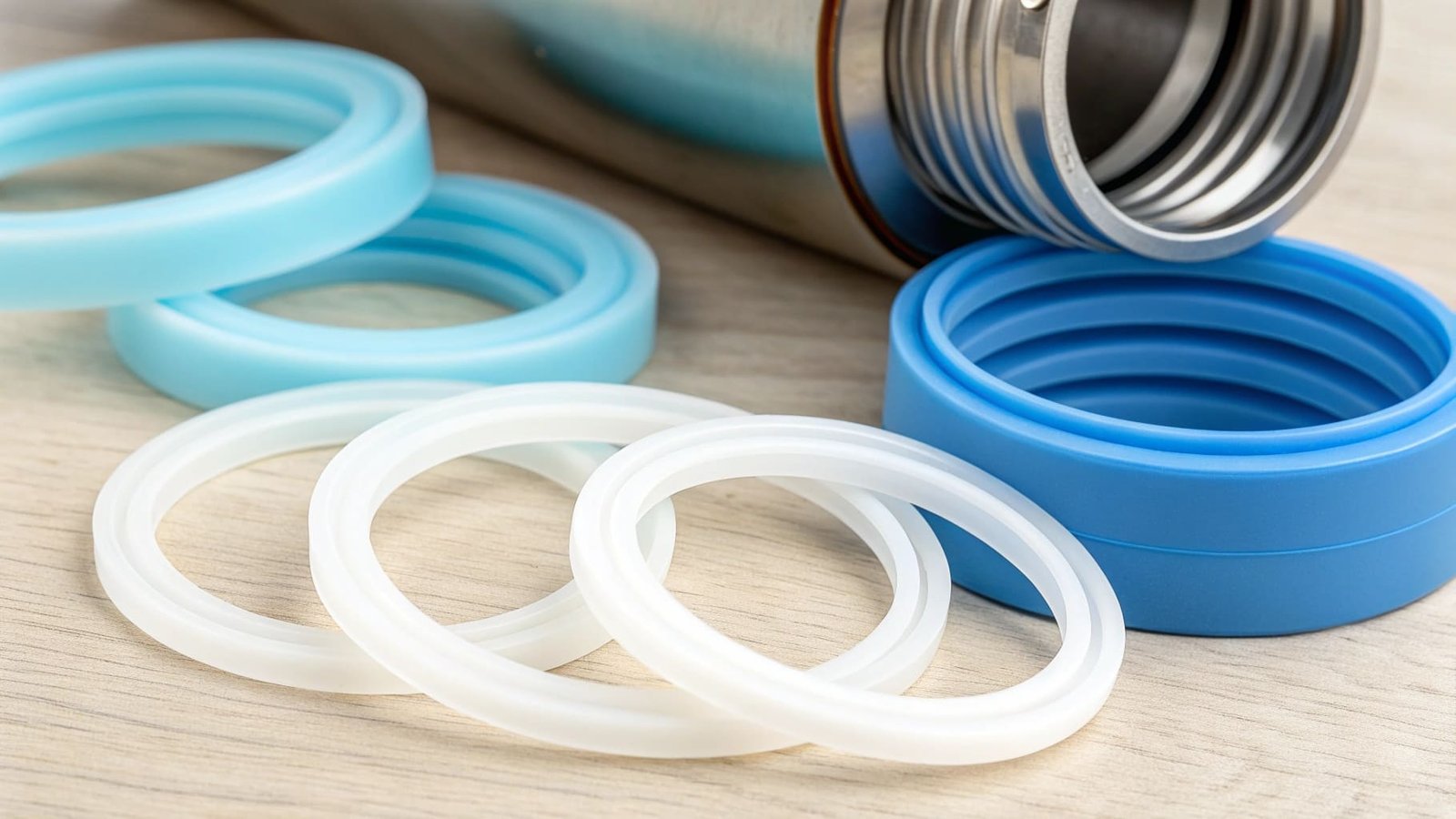
This distinction matters because a correctly sized O-ring made from the wrong material will still fail. And a correctly specified material in the wrong size will also fail. Both standards are necessary. Neither one replaces the other.
How AS568 and ASTM Work Together
The clearest way to think about this is that AS568 defines the shape and AS568 the material. You need both to write a complete O-ring specification.
| Standard | What It Covers | What It Does Not Cover |
|---|---|---|
| AS568 | Dimensions: ID, CS, tolerances | Material type or performance |
| ASTM D1418 | Elastomer classification (e.g., VMQ for silicone) | Dimensions or groove geometry |
| ASTM D2000 | Material performance grades (heat, fluid resistance) | Physical size or fitting |
For silicone O-rings specifically, the material code under ASTM D1418 is VMQ.7 Under ASTM D2000, the grade selected should reflect the operating temperature range and the type of fluid the O-ring will contact. Silicone performs well across wide temperature ranges but has lower resistance to petroleum-based fluids. Matching the ASTM grade to the application prevents failures that no amount of correct sizing can fix.
From a procurement standpoint, the practical requirement for U.S. market entry is to receive documentation that covers both standards. Dimensional compliance must reference AS568 with first-article inspection data showing actual measured ID and CS values. Material compliance must reference the relevant ASTM standards with a material certificate from the supplier. If a supplier can only provide one of these, the specification is incomplete. I have seen certificate fraud in this space. Asking for both document types, with third-party verification when the order size justifies it, is a reasonable and standard practice that protects your business.
Conclusion
Use AS568 for O-ring dimensions, ASTM for material compliance, and always verify both before placing a production order. This combination protects your product and your market position.
-
"O-ring - Wikipedia", https://en.wikipedia.org/wiki/O-ring. SAE AS568 identifies standardized O-ring sizes and associated dimensional tolerances, providing the dimensional reference commonly used for inch-series O-ring specification in U.S. engineering contexts. Evidence role: definition; source type: institution. Supports: SAE AS568 is a standard that defines O-ring sizes by inside diameter, cross-section, tolerances, and identifying dash numbers.. Scope note: This supports AS568 as the relevant dimensional standard, but it does not by itself prove that every U.S. OEM application must use AS568. ↩
-
"Vacuum Seals Design Criteria - NASA's Lessons Learned database", https://llis.nasa.gov/lesson/674. Engineering handbooks on O-ring gland design describe seal selection as a function of O-ring inside diameter, cross-section, and gland geometry, because these parameters determine stretch, squeeze, and gland fill. Evidence role: mechanism; source type: research. Supports: O-ring seal design depends on the O-ring's dimensions and the gland or groove dimensions that control squeeze, stretch, and volume fill.. Scope note: Handbook guidance is general engineering support and must be adapted to the application's pressure, media, motion, and tolerance stack-up. ↩
-
"Understanding O-Ring Squeeze, Stretch & Compression", https://www.marcorubber.com/o-ring-groove-design-considerations.htm/. O-ring design references define squeeze as the reduction of the O-ring cross-section after installation, making cross-sectional diameter and gland depth central variables in determining compression. Evidence role: mechanism; source type: research. Supports: Installed O-ring squeeze is calculated from the cross-sectional diameter and the gland depth or opposing sealing surfaces.. ↩
-
"AS568 O-Ring Size Chart & Dimensions - Marco Rubber & Plastics", https://www.marcorubber.com/o-ring-size-chart-as568.htm/. SAE AS568 specifies O-ring dimensions through dash-number designations rather than alphabetic ring-size labels, supporting the distinction between AS568 O-ring sizing and other uses of the term 'size O.' Evidence role: definition; source type: institution. Supports: AS568 uses dash-number designations for O-ring sizes and does not use a single alphabetic 'size O' designation.. Scope note: This supports the naming convention for AS568; it does not address every informal or legacy naming practice used by suppliers. ↩
-
"AS568 Size Chart - Global O-Ring and Seal", https://www.globaloring.com/as568-size-chart/. Standards references distinguish AS568 inch-series dash-number O-rings from BS1806 British inch-series sizes and metric O-ring dimensions expressed in millimeters. Evidence role: historical_context; source type: institution. Supports: AS568, BS1806, and metric O-ring dimensions are distinct sizing systems used in different standards contexts.. Scope note: The geographical shorthand is contextual; global suppliers may stock and use multiple standards regardless of country. ↩
-
"Standard Practice for Rubber and Rubber Latices—Nomenclature", https://www.astm.org/d1418-21a.html. ASTM D1418 addresses nomenclature and classification for rubber and rubber lattices, and ASTM D2000 classifies rubber materials by property requirements, whereas O-ring dimensions are specified in dimensional standards such as SAE AS568. Evidence role: definition; source type: institution. Supports: ASTM D1418 classifies rubber and elastomer materials, while ASTM D2000 provides a classification system for rubber properties; neither is the primary dimensional size chart for O-rings.. Scope note: ASTM may publish test methods relevant to dimensional measurement or material testing, but D1418 and D2000 are not O-ring size-chart standards. ↩
-
"Silicone Rubber (MQ, VMQ, PVMQ) - Actum Sweden AB", https://actumsweden.com/silicone-rubber-mq-vmq-pvmq/. ASTM D1418 elastomer nomenclature identifies VMQ as a silicone rubber designation, supporting its use when specifying silicone O-ring material families. Evidence role: definition; source type: institution. Supports: VMQ is the ASTM D1418 designation for a class of silicone rubber elastomers.. Scope note: The VMQ designation identifies the elastomer family, not a complete compound formulation or performance grade. ↩