Why Are Water Bottle Seals Critical for Leak-Proof Wholesale Products?
Buying thousands of water bottles only to get flooded with return requests is a nightmare. One bad seal batch can wipe out your margins and your reputation at the same time.
Water bottle seals are the single most important factor in leak-proof performance.1 A quality silicone seal creates a tight, pressure-resistant barrier at every closure point.2 Without it, even a well-designed bottle fails. For wholesale buyers, choosing the right seal means fewer complaints, fewer returns, and stronger long-term sales.
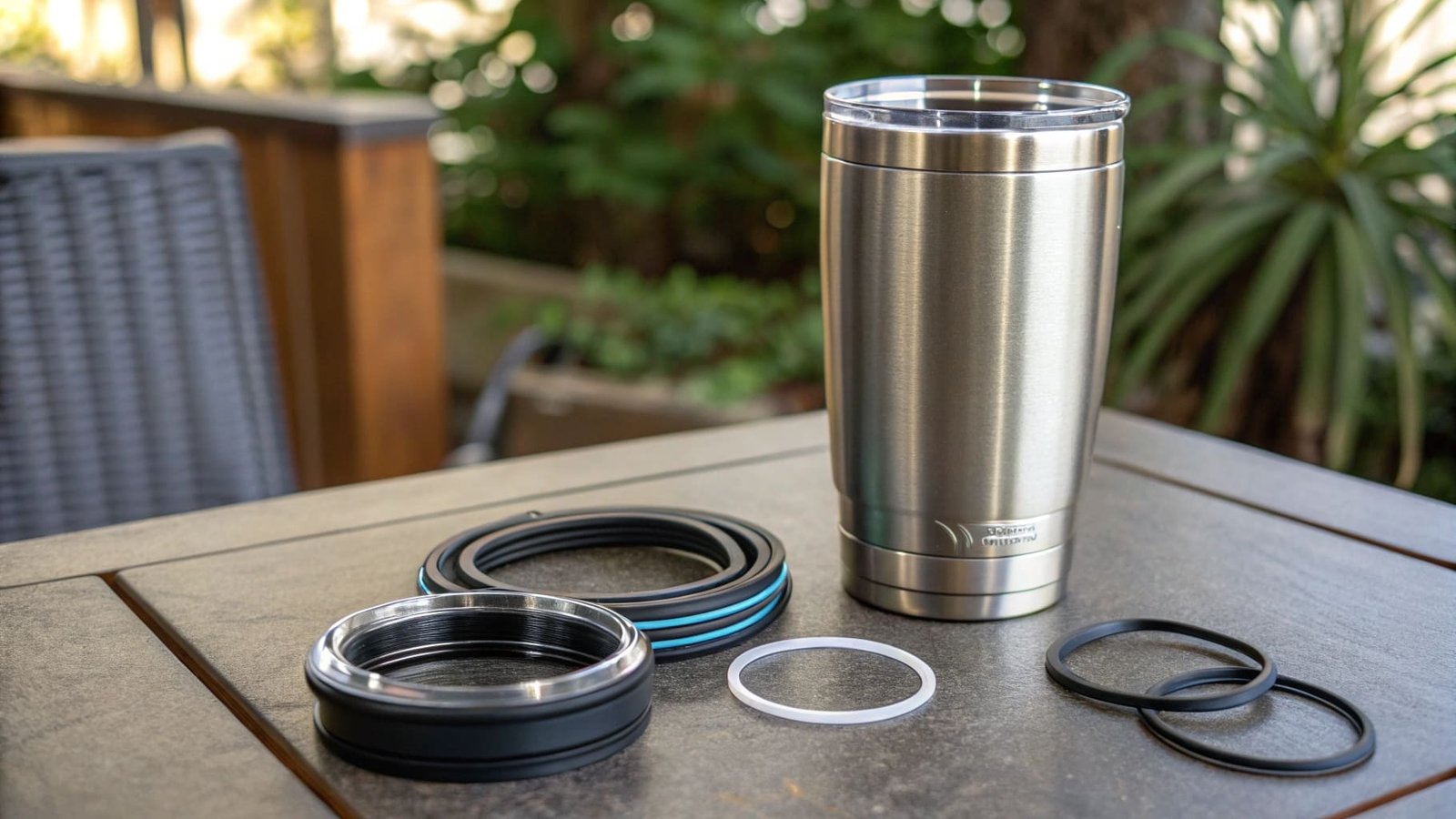
I have worked with wholesale buyers across North America and Europe for years. One thing I keep seeing is this: buyers spend weeks comparing bottle shapes, lid styles, and colors. Then they lose entire seasons of sales because the seal failed. The seal is small. The damage it causes is not. This article breaks down exactly what makes a seal work, what separates leak-proof from spill-proof, and how to find the most reliable option when you are buying at scale.
What Makes a Water Bottle Leak Proof?
Most buyers assume a tight lid is enough. It is not. A loose or low-grade seal will let water through the moment the bottle tips, compresses, or heats up.
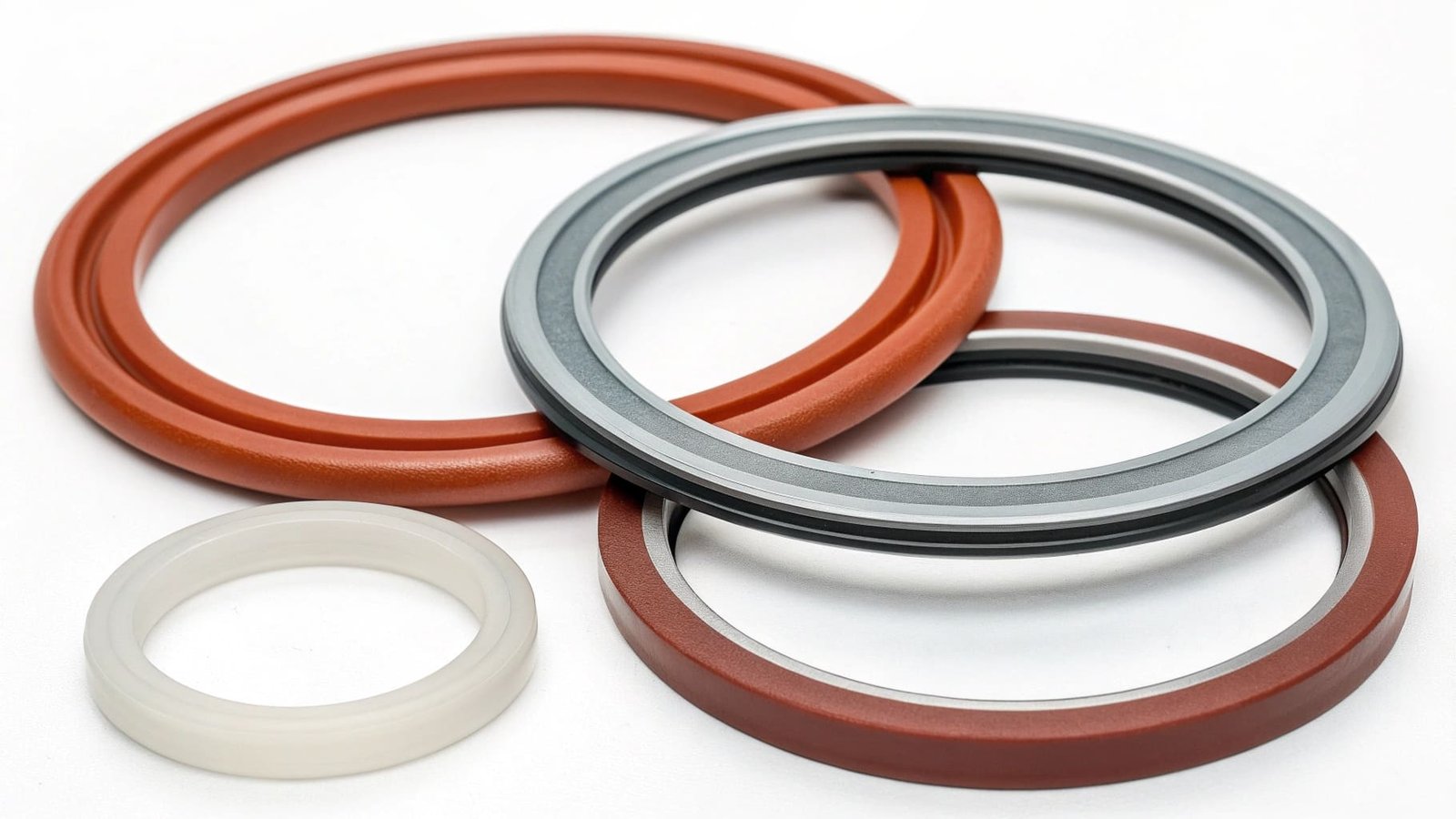
A truly leak-proof bottle needs a multi-point sealing system.3 This means a food-grade silicone gasket sits at each closure point and works together with a threaded or locking lid mechanism. The result is an airtight barrier that holds even under pressure or when the bottle is flipped upside down.
Let me break this down further, because the details matter a lot when you are placing large orders.
What Are the Core Parts of a Leak-Proof Seal System?
A leak-proof seal is not one single part. It is a system made up of several components working together. Each part plays a specific role.
| Component | Function | Common Material |
|---|---|---|
| O-ring / Gasket | Creates compression seal at the lid | Food-grade silicone |
| Lid thread | Locks the seal under mechanical pressure | BPA-free plastic or stainless steel |
| Valve or plug | Controls flow without breaking the seal | Silicone |
| Seal groove | Holds the gasket in exact position | Molded into lid or body |
When one of these components is poorly made, the whole system fails. I have seen batches where the gasket groove was even slightly off-spec. That tiny error caused seal gaps that showed up only after the bottles were already distributed to retail shelves.
Silicone is the preferred material for seals because it keeps its shape through heat, cold, and repeated use.4 Rubber degrades faster and loses elasticity after many open-close cycles.5 At wholesale volume, a seal that holds for 500 uses instead of 5,000 is not a cost saving. It is a future return.
Precision molding is also critical. A gasket that is 0.2mm too thin will not compress correctly. A groove that is 0.3mm too wide will not hold the gasket in place. These are not visible problems. They show up months later as customer complaints.
For any wholesale buyer, I recommend asking your supplier for cross-section drawings of the seal design and batch compression test results before you commit to a large order.
What Is the Difference Between Leak Proof and Spill Proof Water Bottles?
These two terms sound the same. They are not. Mixing them up is one of the most common and most expensive mistakes wholesale buyers make.
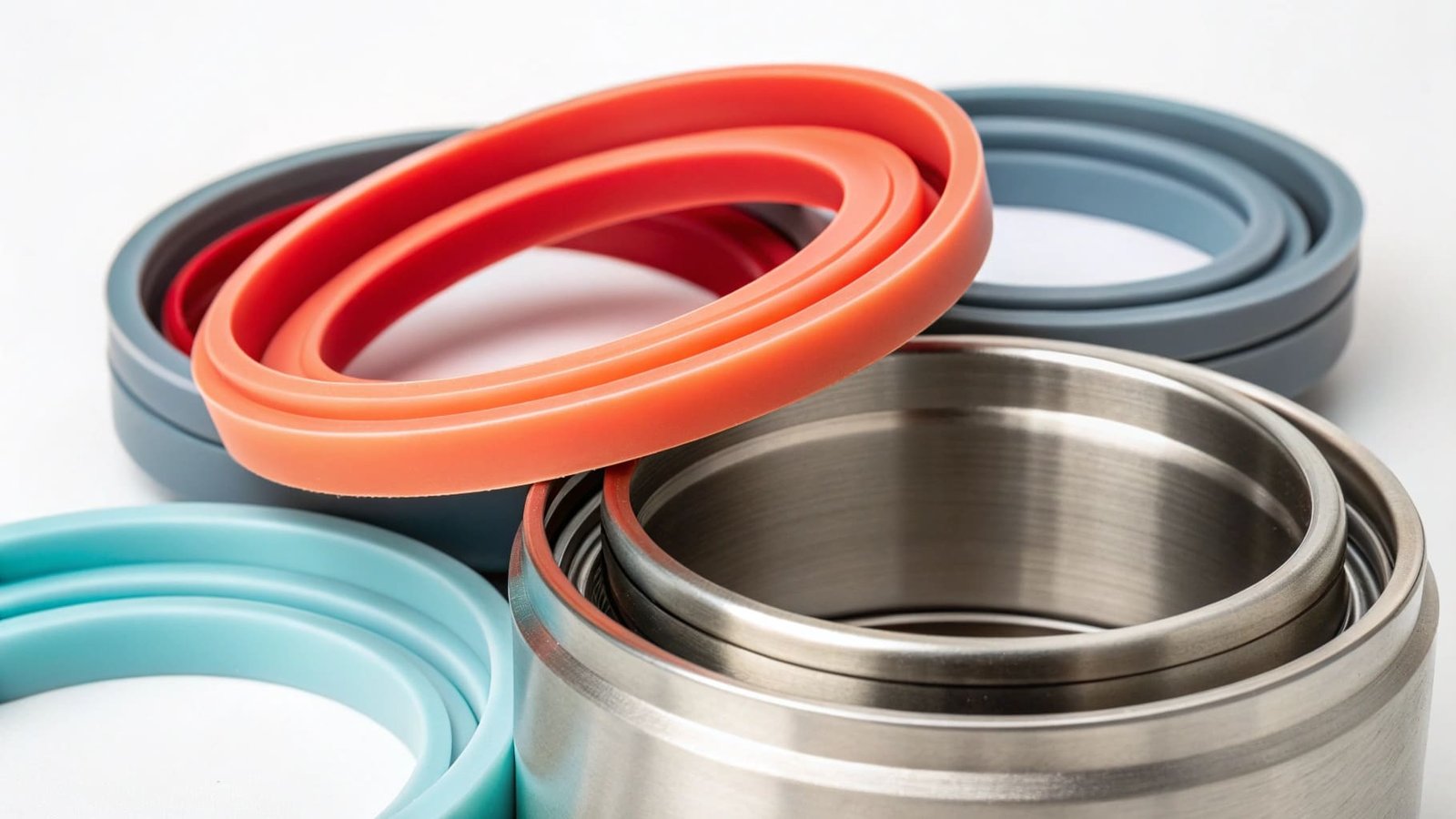
A spill-proof bottle stops liquid from spilling during normal use when the bottle is upright. A leak-proof bottle goes further.6 It keeps water inside even when the bottle is tilted, shaken, dropped into a bag, or subjected to pressure changes during transport.
This distinction has a direct impact on your product positioning and your return rate.
How Do Spill Proof and Leak Proof Perform in Real Conditions?
Here is a side-by-side comparison of how these two designs perform across common real-world situations that your customers will face.
| Situation | Spill Proof | Leak Proof |
|---|---|---|
| Upright on a desk | Passes | Passes |
| Tilted 90 degrees | May fail | Passes |
| Inside a bag under pressure | Likely fails | Passes |
| Temperature change (hot to cold) | Seal may contract and gap | Passes if silicone-grade |
| Dropped from table height | May unseat the lid | Passes if locking system is engaged |
| Inverted for 30 seconds | Fails | Passes |
If your customers carry bottles in gym bags, backpacks, or travel bags, spill-proof is not good enough. Your buyers will return the product. They will not come back for a second order.
The engineering difference comes down to seal compression. A leak-proof design uses a gasket with a specific durometer rating. Durometer measures how firm or soft a silicone seal is. A seal that is too soft will compress too easily and lose contact. A seal that is too firm will not compress enough to fill the closure gap.7 Getting this right requires engineering experience, not just a standard part from a catalog.
I always tell buyers: if a supplier cannot tell you the durometer of their seal material, that is a warning sign. It means they have not engineered the seal. They have just assembled parts.
What Is the Most Leak Proof Water Bottle?
There is no single brand that wins for every buyer. But there are clear engineering features that separate the best-performing bottles from the rest.
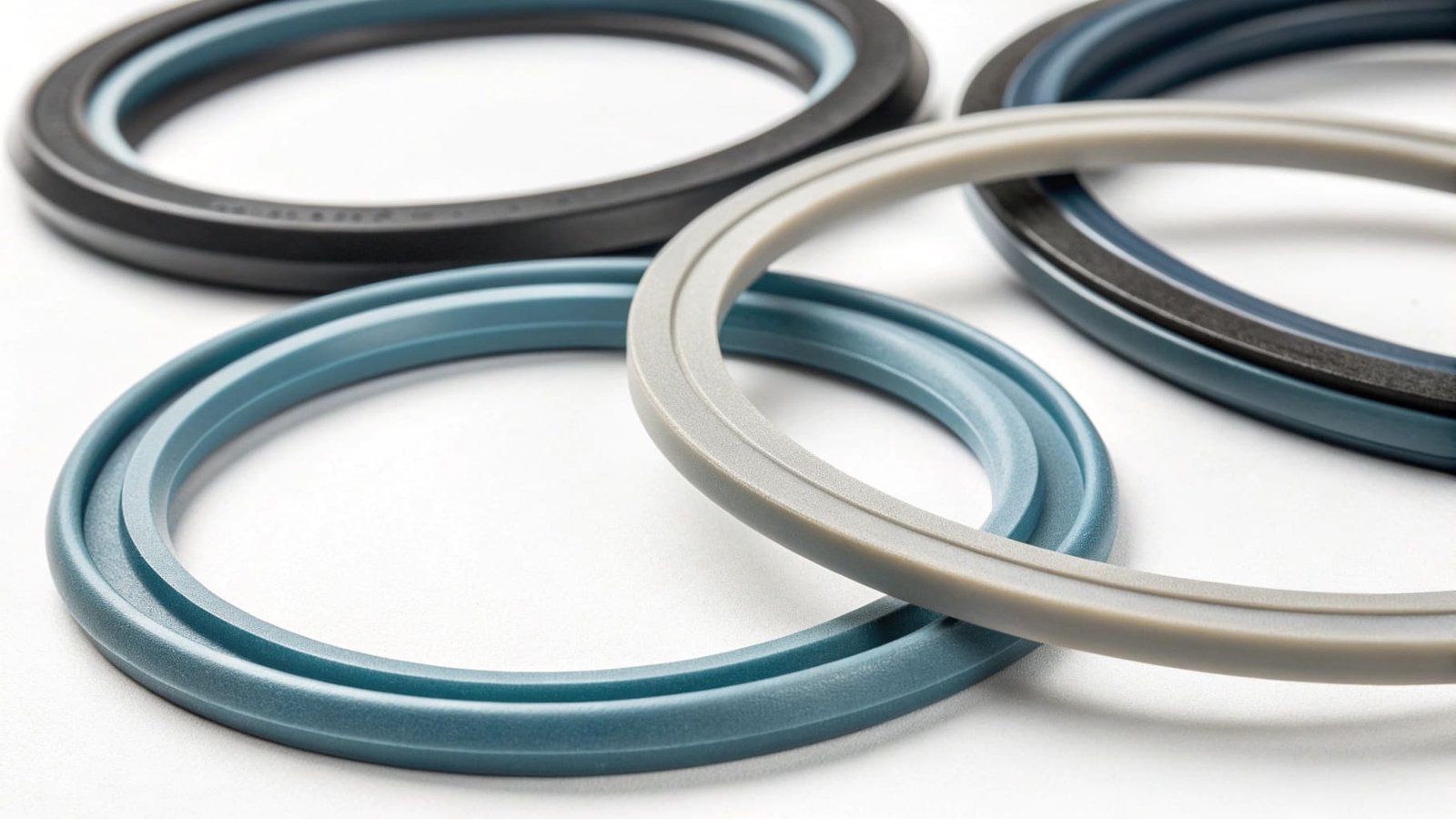
The most leak-proof bottles share three things: precision-molded silicone O-rings at every compression point, an integrated valve or plug system that controls flow without weakening the seal, and manufacturer testing protocols that go beyond simple fill-and-tip checks.
When you are buying wholesale, the bottle itself is only part of the picture. The supplier's quality control process is just as important.
What Should Wholesale Buyers Look for in a Supplier's Leak-Proof Claims?
Any supplier can say their bottles are leak proof. Very few can prove it at the batch level. Here is what separates a reliable supplier from one that will cost you money later.
| What to Ask | Why It Matters | Red Flag Answer |
|---|---|---|
| Do you have batch-level test reports? | Confirms consistency across production runs | "We test one sample per design" |
| What seal material do you use? | Food-grade silicone outperforms rubber | "Standard rubber or unnamed silicone" |
| What is the cycle life of your seal? | Tells you how long the seal holds up in real use | No data or vague answer |
| Do you test under pressure or inversion? | Real-world simulation, not just basic fill test | "We fill and check for drips" |
| What certifications does the seal material carry? | Proves food safety and material quality | Certificates with no traceable issuer |
I have personally dealt with suppliers who showed certificates that turned out to be falsified. This is more common than buyers expect. I always recommend third-party verification before placing your first large order with any new supplier.
At scale, even a one-percent seal failure rate becomes a significant problem.8 If you order 10,000 bottles and 100 of them leak, that is 100 returns, 100 unhappy customers, and a hit to your brand that takes months to recover from.
The best wholesale suppliers will share their internal seal fatigue data. Seal fatigue means how the seal performs after repeated use over time.9 A seal that is fine when the bottle is new but gaps after 200 open-close cycles is not a quality product. Ask for this data. If the supplier does not have it, that tells you everything you need to know.
Conclusion
Water bottle seals are small, but they carry the weight of your entire product's reputation. Choose the right seal, ask the right questions, and your wholesale business stays protected.
-
"O-ring - Wikipedia", https://en.wikipedia.org/wiki/O-ring. A technical reference on O-rings describes their function as preventing the passage of liquids or gases by being compressed between two or more parts, supporting the article's emphasis on seals as central to leak prevention. Evidence role: mechanism; source type: encyclopedia. Supports: A source should explain that O-rings and gaskets prevent leakage by forming a compressed seal between mating surfaces.. Scope note: This supports the general sealing mechanism but does not prove that seals are the single most important factor for every water bottle design. ↩
-
"[PDF] Elastomer Characteristics", https://www.nrc.gov/docs/ML0720/ML072040257.pdf. Materials references on silicone elastomers identify their use in gaskets and seals because they retain elastic sealing properties under compression and variable service conditions. Evidence role: mechanism; source type: research. Supports: A source should support that silicone elastomers are commonly used as gaskets because they can maintain sealing contact under compression and environmental variation.. Scope note: The source would support the material mechanism generally, not verify the performance of a specific bottle seal. ↩
-
"RTV Silicone Sealing Method for Component Interfaces | T2 Portal", https://technology.nasa.gov/patent/MSC-TOPS-127. Seal-design guidance explains that leakage control depends on sealing each interface or potential leak path, providing contextual support for the need to seal multiple closure points in a bottle. Evidence role: mechanism; source type: research. Supports: A source should explain that leakage occurs through unsealed paths or interfaces and that effective sealing design addresses each potential leak path.. Scope note: The evidence is based on general sealing engineering rather than a water-bottle-specific standard. ↩
-
"Compression Set of Elastomeric Materials", https://www.stockwell.com/compression-set-testing/. Materials data for silicone rubber report wide service-temperature capability and use in seals and gaskets, supporting the claim that silicone can maintain sealing function through heat, cold, and repeated compression. Evidence role: general_support; source type: research. Supports: A source should document that silicone rubber is used in seals and gaskets due to thermal stability, flexibility, and resistance to compression set.. Scope note: The source supports typical silicone material behavior, while actual durability depends on formulation, geometry, and manufacturing quality. ↩
-
"Correlations between the Aging Behavior and Finite Element ... - PMC", https://pmc.ncbi.nlm.nih.gov/articles/PMC11355852/. Studies of elastomer aging and compression set show that rubber seals can lose elastic recovery after repeated compression and environmental exposure, offering contextual support for durability concerns in repeatedly opened closures. Evidence role: general_support; source type: paper. Supports: A source should compare elastomer aging or compression set behavior and explain how some rubbers lose elasticity under repeated compression and environmental exposure.. Scope note: This evidence is contextual because the term 'rubber' covers many elastomer formulations with different durability profiles. ↩
-
"[PDF] NASA TECHNICAL STANDARD LEAK TEST REQUIREMENTS", https://standards.nasa.gov/sites/default/files/standards/NASA/A/0/2023-02-22-NASA-STD-7012A-Approved.pdf. Testing and product-safety terminology commonly distinguishes ordinary spill resistance from leakage resistance under inversion, pressure, or transport conditions, supporting the article's distinction between spill-proof and leak-proof designs. Evidence role: definition; source type: institution. Supports: A source should distinguish leakage resistance from ordinary spill prevention or describe test conditions such as inversion and pressure that exceed normal upright use.. Scope note: Definitions vary by product category, and there may be no single universal legal definition for water bottles. ↩
-
"[PDF] Evaluation of a Conductive Elastomer Seal for Spacecraft", https://ntrs.nasa.gov/api/citations/20170000887/downloads/20170000887.pdf. Seal-design references describe durometer and squeeze as variables that determine contact pressure and gap filling, supporting the claim that both overly soft and overly hard seals can compromise sealing. Evidence role: mechanism; source type: research. Supports: A source should explain that elastomer hardness and compression affect seal contact pressure and the ability to fill the sealing gap.. Scope note: The source supports the engineering mechanism generally; exact failure thresholds depend on seal geometry and material formulation. ↩
-
"Cost of Poor Quality: How to Calculate and Reduce COPQ", https://www.jamasoftware.com/blog/cost-of-poor-quality/. Quality-management literature on the cost of poor quality identifies defects as sources of return, warranty, rework, and customer-satisfaction costs, supporting the article's point that even low failure rates matter at wholesale scale. Evidence role: general_support; source type: institution. Supports: A source should support that defects impose measurable costs through returns, rework, customer dissatisfaction, or warranty handling.. Scope note: The evidence supports the business principle rather than quantifying the exact cost of a one-percent water-bottle seal failure rate. ↩
-
"Rubber Fatigue Revisited: A State-of-the-Art Review Expanding on ...", https://pmc.ncbi.nlm.nih.gov/articles/PMC11991106/. Research on elastomer fatigue and compression set describes how repeated compression cycles can reduce elastic recovery and sealing performance over time, supporting the article's definition of seal fatigue. Evidence role: definition; source type: paper. Supports: A source should describe elastomer fatigue, compression set, or cyclic loading as mechanisms by which seals lose performance after repeated use.. Scope note: Terminology may vary between 'fatigue,' 'compression set,' and 'aging' depending on the testing method and material. ↩