Why Should Wholesalers Consider High Temperature Resistant Silicone Tumbler Boots?
The drinkware accessories market is growing fast.1 If you are missing this category, you are leaving real money on the table — and your competitors are not.
High temperature resistant silicone tumbler boots are protective covers that fit around the base of premium tumblers. They absorb impact from drops, prevent scratches, and resist heat from dishwashers and hot car interiors.2 For wholesalers, they offer strong margins, low unit cost, and growing repeat demand.
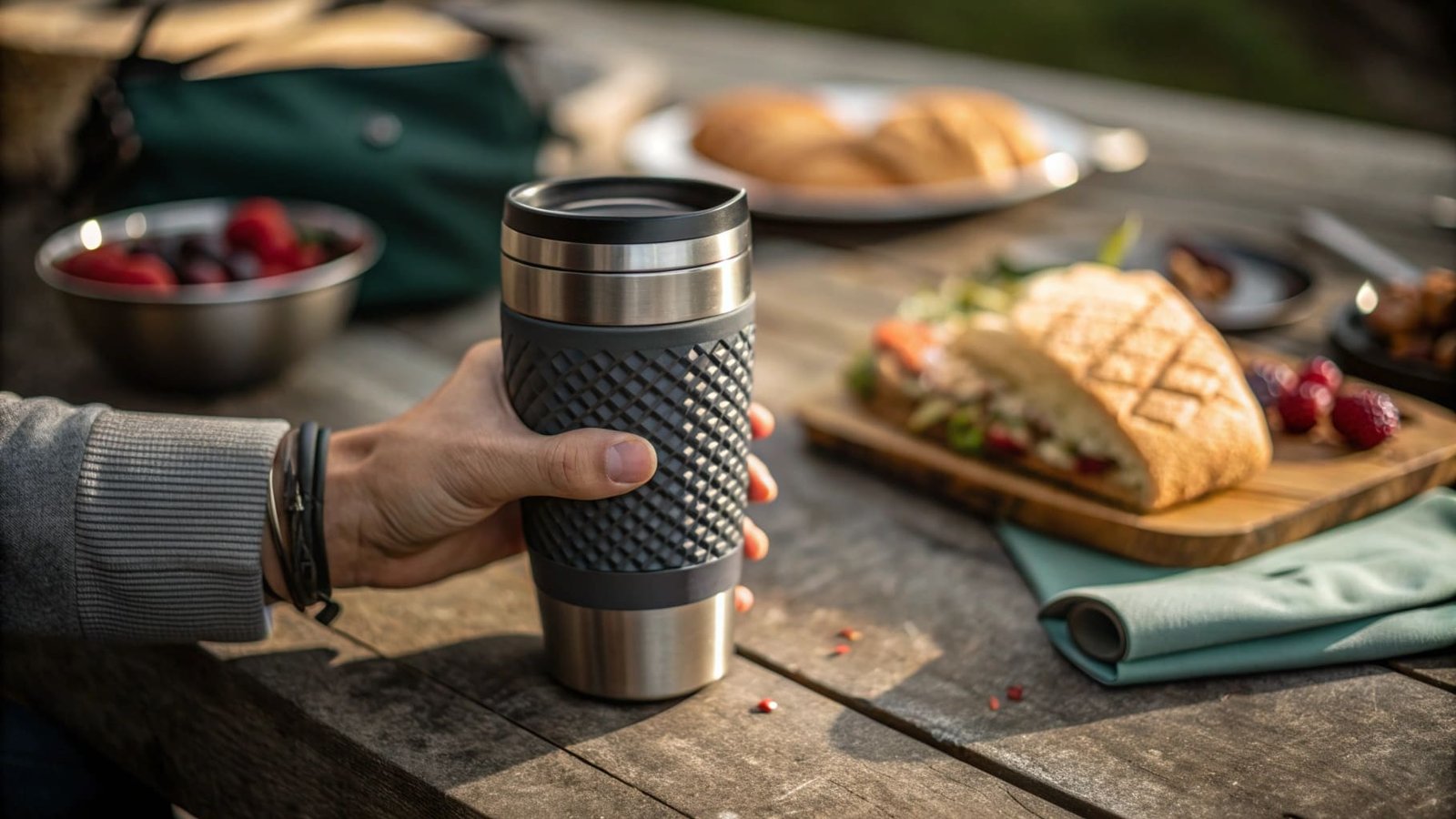
The premium drinkware market has changed. Consumers are no longer just buying a cup. They are buying a Stanley. They are buying an Owala. These are status items, and people want to protect them. That shift in consumer behavior has created a fast-growing market for protective accessories — and silicone tumbler boots sit right at the center of it. This article will walk you through why this product category makes sense for your wholesale business, starting with the brands driving the demand.
What Is the Purpose of a Stanley Boot?
Stanley tumblers are not cheap. When a customer drops one on concrete and scratches the finish, they feel it. That frustration is exactly what creates demand for a protective boot.
A Stanley boot is a silicone sleeve that fits around the bottom of a Stanley tumbler. It protects the powder-coated exterior from drops, scratches, and surface wear. It also improves grip, which matters for a tumbler that goes everywhere — desks, gym bags, car cup holders, and outdoor trips.
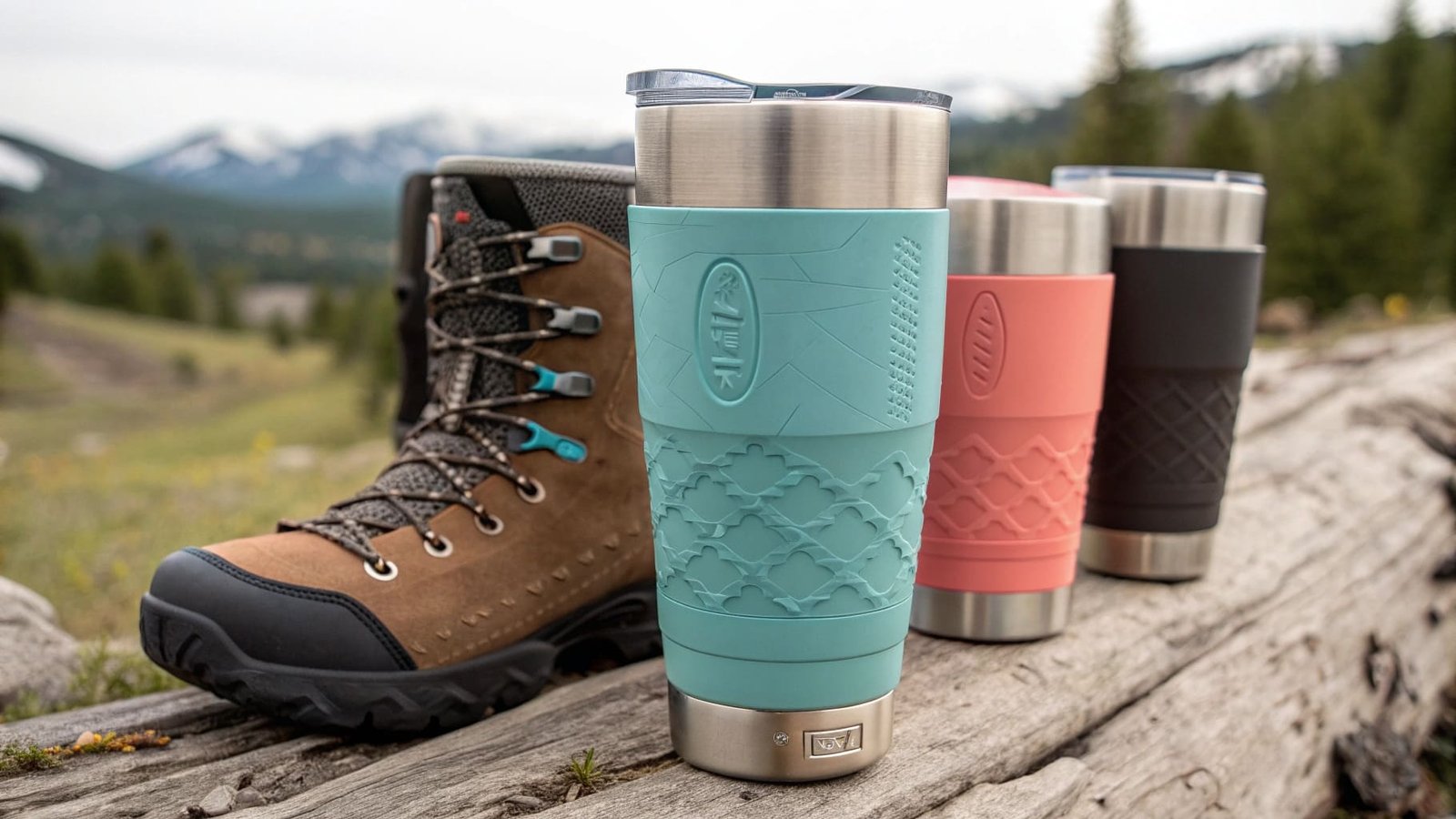
Stanley tumblers have become one of the most recognized drinkware brands in North America.3 Their distinctive finish and wide-handle design have made them a daily carry item for millions of people. But that popularity also means heavy use, and heavy use means wear and tear.
The powder-coated exterior on a Stanley tumbler looks great when it is new. After a few months of drops and rough surfaces, it starts to show damage.4 A silicone boot sits between the tumbler and the world. It takes the impact instead of the finish.
Here is what a quality silicone tumbler boot does for a Stanley user:
| Function | Benefit to the User |
|---|---|
| Impact absorption | Protects the base from cracks and dents during drops |
| Scratch prevention | Keeps powder coat finish looking new longer |
| Grip improvement | Reduces slipping on smooth or wet surfaces |
| Surface protection | Prevents scratching on desks, counters, and car holders |
| Heat resistance | Stays stable in hot cars and dishwashers without cracking |
For wholesalers, the Stanley connection is a built-in selling point. You do not need to explain what a Stanley tumbler is. Your retail customers already know. You are simply offering them something that makes a popular product better and longer-lasting. That is an easy conversation.
I have seen buyers in this space respond differently once they understand the brand fit. When the product ties directly to something their end customers already love, the buying decision becomes much faster. The product sells itself.
What Are Owala Bottle Boots For?
Owala bottles have a smooth bottom and a curved profile. That combination looks clean, but it also slides. On a wet countertop or in a loose cup holder, it is a problem waiting to happen.
An Owala bottle boot is a textured silicone sleeve that adds friction to the base of an Owala bottle. It keeps the bottle stable on surfaces and in cup holders, and it protects the bottom from wear caused by repeated placing and picking up throughout the day.
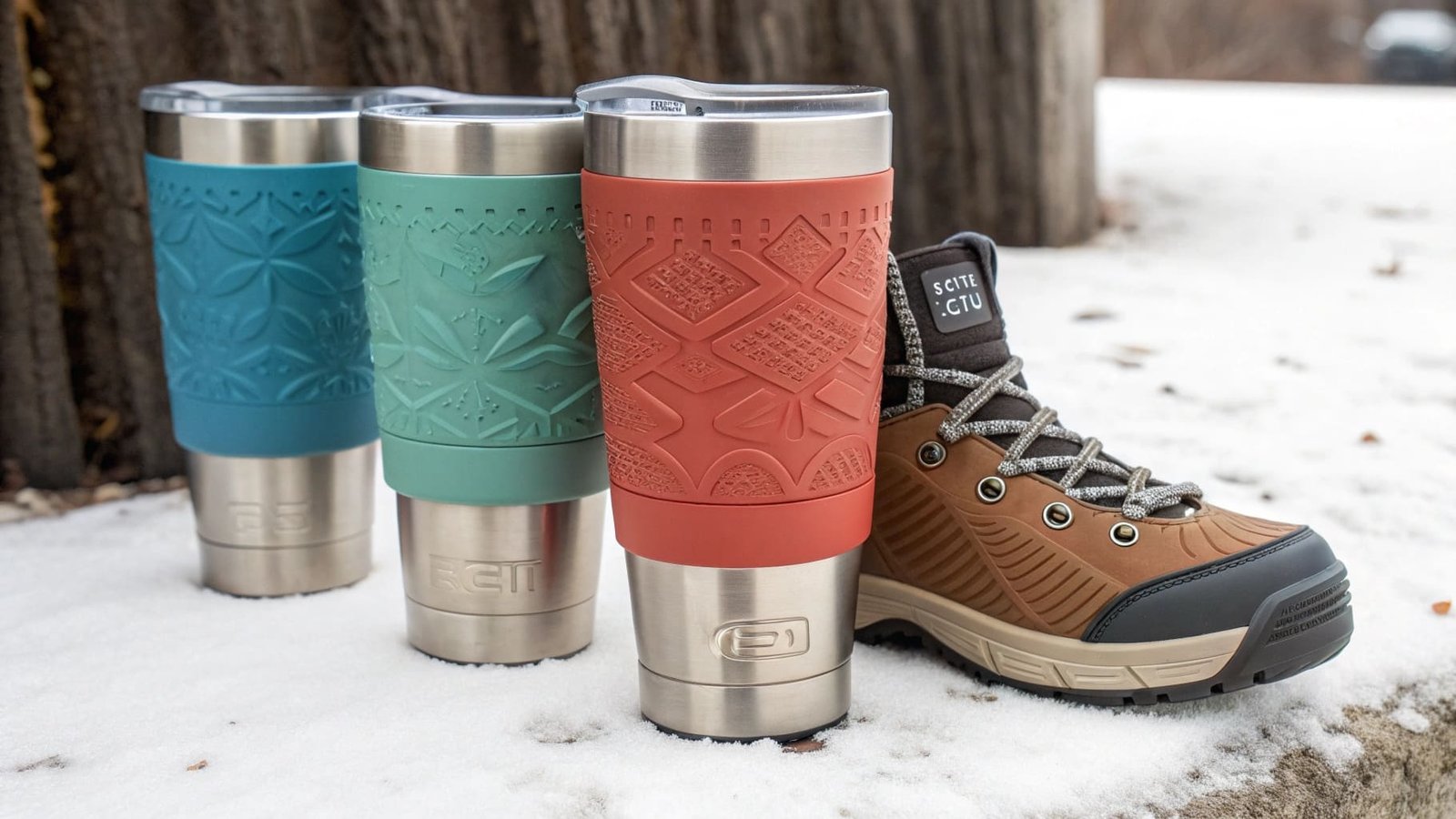
Owala has built a strong following among active users — people who carry their bottle to work, to the gym, on hikes, and everywhere in between. That constant movement means the bottom of the bottle hits a lot of different surfaces. Over time, that contact leaves marks and causes wear.
The textured surface of a silicone boot changes the entire experience. It grips instead of slides. It cushions instead of scrapes. For a user who already paid a premium for their Owala, that protection feels worth it.
Here is a side-by-side look at what happens with and without a boot:
| Situation | Without a Boot | With a Silicone Boot |
|---|---|---|
| Wet countertop | Bottle slides easily | Boot grips the surface |
| Car cup holder | Rattles and tips | Stays snug and stable |
| Daily desk use | Bottom scratches over time | Boot absorbs the contact |
| Gym bag placement | Hard base knocks around | Soft base reduces impact |
| Dishwasher cycle | Fine, but base stays exposed | Boot protects through wash cycles |
What I find interesting about Owala users is that they tend to be detail-focused. They chose Owala over other options for a reason, and they care about how their gear performs. That makes them exactly the kind of customer who will notice a well-made accessory and buy it without much convincing.
For wholesalers, Owala and Stanley together cover a large portion of the premium tumbler market.5 Stocking silicone boots that fit both brands means you are reaching a wide audience with a single product category. That kind of range in a small product footprint is hard to find.
How Long Does Silicone Last?
Silicone has a reputation for being durable. But not all silicone is the same, and the difference matters a lot when you are buying wholesale and building a brand around quality.
High-quality food-grade silicone maintains its shape, flexibility, and protective properties for five to ten years under normal daily use.6 High temperature resistant silicone performs even longer because it handles heat without breaking down. It does not crack, discolor, or lose elasticity the way lower-grade materials do.
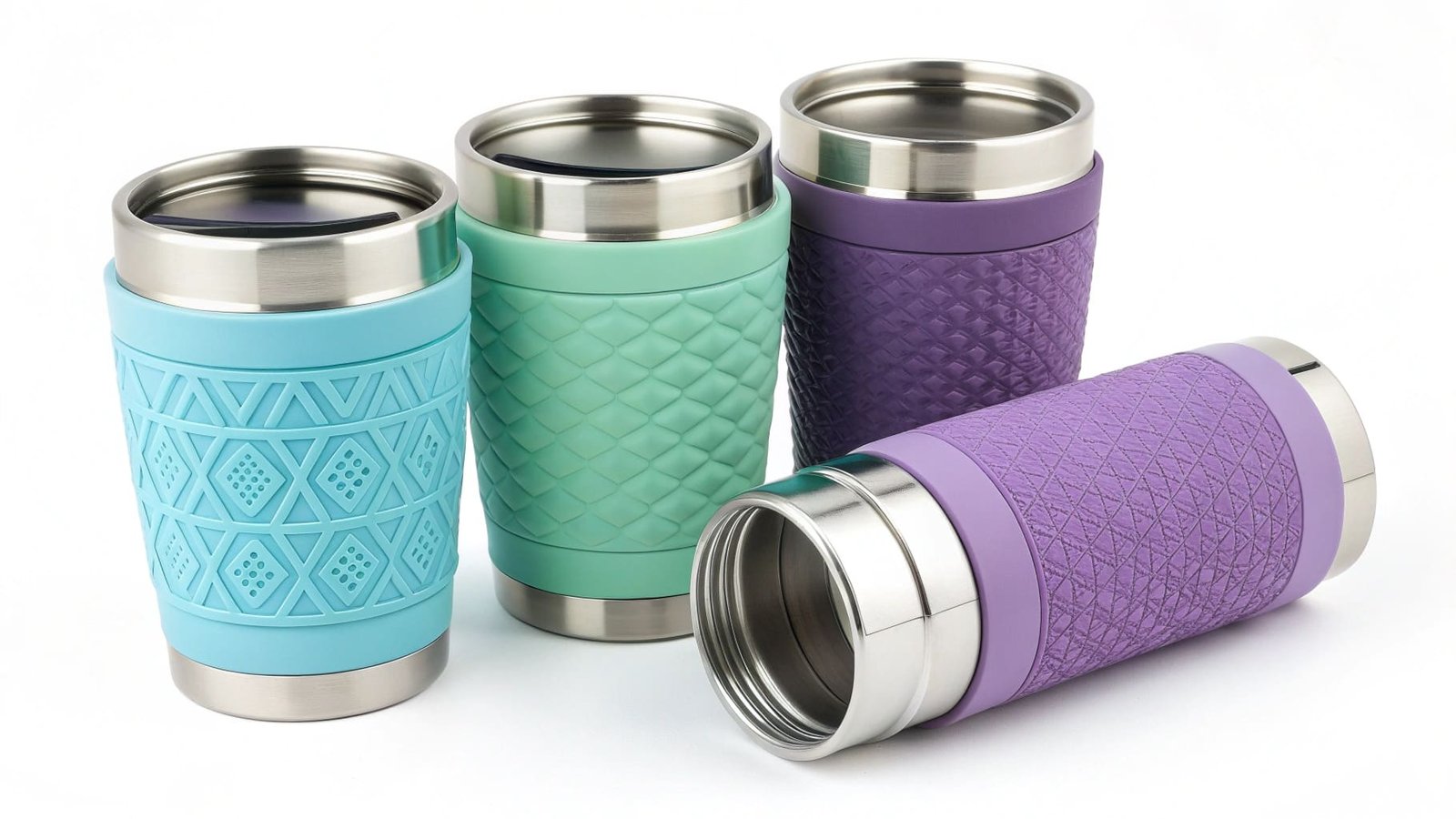
The temperature resistance factor is where premium silicone separates itself from commodity options. Standard silicone can handle heat up to around 400°F. High temperature resistant silicone holds its properties at 500°F or higher.7 For a tumbler boot, that difference shows up in real-world conditions that your customers will actually experience.
Think about what a tumbler boot goes through in a normal week:
| Heat Source | Approximate Temperature | Standard Silicone | High Temp Silicone |
|---|---|---|---|
| Dishwasher cycle | 140–160°F | Fine short-term | Fine long-term |
| Parked car interior | 150–180°F in summer | May soften over time | Stays stable |
| Near stovetop or hot surfaces | 300°F+ | Risk of deformation | Maintains shape |
| Repeated hot washing | Cumulative stress | Degrades faster | Holds up longer |
When a boot cracks, fades, or loses its grip after a few months, your customer notices. They may not complain directly to you. But they will not reorder, and they will not recommend your products. That is a quiet loss that adds up over time.
I have talked with procurement officers who learned this the hard way. They chose a lower-cost silicone option to save on unit cost, and within a season they were dealing with returns and unhappy retail partners. The margin they saved on materials disappeared in customer service costs and lost reorders.
The business case for high temperature resistant silicone is simple. You pay a bit more per unit. You get a product that performs consistently. Your retail customers stay happy. Your reorder rate goes up. That is the kind of math that makes sense for a wholesale operation built on long-term relationships.
There is also a certification angle worth knowing. Food-grade silicone that meets FDA or LFGB standards gives you a document you can show buyers who ask about safety and compliance. In markets like the US and Canada, that documentation is not just a bonus — it is often expected, especially by larger retail accounts. Working with a supplier who can provide verified certifications removes one more friction point from your sales process.
Conclusion
Silicone tumbler boots protect premium drinkware, solve real user problems, and offer wholesalers a low-risk entry into a growing accessories category with strong repeat demand.
-
"Team Water Bottle Final Analysis Report", https://madd.seas.gwu.edu/showcase/2024-Fall/water-bottles.html. Market research on reusable drinkware and related accessories reports continued growth in consumer demand for reusable bottles and tumblers, providing contextual support for growth in adjacent accessory categories. Evidence role: statistic; source type: research. Supports: Independent market data showing growth in reusable drinkware, tumblers, or related accessories.. Scope note: Most available sources track broader drinkware or reusable bottle markets rather than silicone tumbler boots specifically. ↩
-
"A High-Temperature-Resistant and Conductive Flexible Silicone ...", https://pmc.ncbi.nlm.nih.gov/articles/PMC12073532/. Studies of silicone elastomers describe their thermal stability, elasticity, and resistance to environmental degradation, which explains why silicone can function as a heat-tolerant protective cover. Evidence role: mechanism; source type: paper. Supports: Silicone elastomers have thermal stability and flexible mechanical properties that make them suitable for protective cushioning applications.. Scope note: Such studies usually address silicone materials generally, not the performance of a specific tumbler boot design. ↩
-
"Stanley (drinkware company) - Wikipedia", https://en.wikipedia.org/wiki/Stanley_(drinkware_company). Business reporting on Stanley’s Quencher line documents substantial sales growth and widespread consumer attention in North America, supporting the claim that the brand has become highly recognizable. Evidence role: general_support; source type: other. Supports: Reliable business reporting showing Stanley’s rapid sales growth and mainstream visibility in North America.. Scope note: Sales growth and media visibility are indirect measures of brand recognition unless paired with survey data. ↩
-
"[PDF] Powder Coatings Technology Update - US EPA", https://19january2017snapshot.epa.gov/sites/production/files/2016-01/documents/powdercoatingstechupdate.pdf. Coatings literature identifies abrasion, scratching, and impact as mechanisms that can damage powder-coated surfaces, supporting the general claim that repeated rough contact can degrade a tumbler finish. Evidence role: mechanism; source type: paper. Supports: Powder coatings can be damaged by abrasion, scratching, and impact despite their general durability.. Scope note: The evidence concerns powder coatings generally and does not measure wear on Stanley tumblers specifically. ↩
-
"Water Bottle Wars — Blog - Particl", https://www.particl.com/reports/water-wars. Market or consumer research ranking leading reusable drinkware brands would support the claim that Stanley and Owala occupy an important position in the premium tumbler segment. Evidence role: statistic; source type: research. Supports: Market data or consumer research showing Stanley and Owala among leading premium reusable drinkware brands.. Scope note: If the source reports brand popularity rather than exact market share, it supports the claim directionally rather than quantitatively. ↩
-
"Review of Aging Evaluation Methods for Silicone Rubber Composite ...", https://pmc.ncbi.nlm.nih.gov/articles/PMC10006993/. Aging studies of silicone elastomers show that silicone can retain useful mechanical properties over extended periods under controlled or moderate service conditions, supporting the general durability claim. Evidence role: general_support; source type: paper. Supports: Long-term aging studies showing silicone elastomers can retain mechanical properties over extended periods under moderate conditions.. Scope note: A precise five-to-ten-year lifespan depends on formulation, thickness, UV exposure, washing chemistry, and use conditions. ↩
-
"[PDF] Elastomer Characteristics - NRC", https://www.nrc.gov/docs/ML0720/ML072040257.pdf. Materials references commonly identify silicone rubber as having a high continuous service temperature relative to many elastomers, with specialized high-temperature grades rated for higher thermal exposure. Evidence role: mechanism; source type: institution. Supports: Authoritative materials references describing typical service-temperature ranges for general-purpose and high-temperature silicone rubber.. Scope note: Exact temperature limits vary by formulation, filler system, exposure duration, and the property being measured. ↩